



Connecticut households pay some of the highest electricity rates in the U.S., according to the U.S. Energy Information Administration (EIA). The state’s average residential electricity price was $0.3224 per kWh in April 2026, compared with the national average of $0.1883 per kWh. That means a household using 1,000 kWh per month would pay about $322 in Connecticut, versus about $188 at the national average.
This gap helps explain why electric bills in Connecticut can feel unusually high, even for households with moderate energy use. A Connecticut electric bill includes not only the cost of the electricity consumed, but also charges related to delivery, transmission, public benefits, and other regulated costs. Understanding the components is the first step towards energy costs management.
How a Connecticut Electric Bill Is Structured
A Connecticut electric bill is typically divided into four major parts, each covering a different stage of producing, moving, and delivering electricity to the home.
- Supply: The cost of the electricity you use. This portion is based on your kWh consumption and may come from your utility’s Standard Service or a third-party supplier.
- Transmission: The cost of moving electricity across high-voltage towers and power lines before it reaches the local distribution system.
- Local Delivery: The cost of building, maintaining, and repairing the poles, wires, meters, and local infrastructure that deliver electricity from the substation to your home.
- Public Benefits: Charges that fund state-authorized programs, including energy efficiency, renewable energy, and customer assistance programs.
Standard Service vs. Third-Party Suppliers
Connecticut has a deregulated electricity market for the supply portion of the bill. Customers still receive electric delivery from Eversource or United Illuminating (UI), but they may either stay on the utility’s Standard Service supply rate or choose a licensed third-party supplier.
Standard Service is the default supply option. If your bill lists Eversource or UI as your electric supplier, you are on Standard Service. Starting July 1, 2026, the residential Standard Service supply rate is fixed at $0.1158/kWh for Eversource customers and $0.1195/kWh for UI customers. A supplier offering a lower rate may reduce the supply charge, but customers should also check the contract length, renewal terms, and supplier identity before enrolling.
A lower introductory rate does not always guarantee long-term savings. Supplier contracts may last for different periods, and the renewal rate may differ from the initial offer. Since Standard Service rates are updated every January and July, homeowners should continue comparing their supplier rate with the current Standard Service.
Time-of-Use Rates: Paying Based on When You Use Electricity
In addition to regular flat residential rates, Connecticut customers may choose optional time-of-use (TOU) rates. Under these plans, the price of electricity depends on when energy is used. EnergizeCT lists Eversource Rate 7 and UI Rate RT as residential TOU options, with peak hours from noon to 8 p.m. on weekdays and off-peak hours from 8 p.m. to noon on weekdays and all weekend hours.
For example, UI’s residential Rate RT for July 1 through December 31, 2026, charges $0.145802/kWh on-peak and $0.110802/kWh off-peak, while its regular residential Rate R charges a flat $0.119473/kWh regardless of time of use.
A TOU rate may make sense for households able to avoid using large amounts of electricity during weekday peak hours. It is especially suitable when homeowners:
- are usually away from home during weekday afternoons and early evenings.
- can reduce high-power loads such as A/C, EV charging, electric cooking, laundry, or dishwashing during peak hours.
- can flexibly shift electricity use to late nights, mornings, or weekends.
- have solar plus battery storage, so stored energy can power the home during peak hours instead of drawing from the grid.
Solar and Net Metering Credits in Connecticut
For Connecticut's solar homeowners, the current residential solar compensation program is the Residential Renewable Energy Solutions (RRES) program, which replaced legacy net metering for new customers. Under RRES, homeowners generally choose between Buy-All, where all solar generation is exported for compensation, and Netting, where the home uses solar first and exports only excess power.
Connecticut’s Netting option still provides near-retail-rate credit for excess solar exports. However, new 2026 Netting projects are also subject to a separate $0.0402/kWh Solar Energy Adjustment on total solar production, which reduces overall savings. For example, a system producing 10,000 kWh per year would see savings reduced by about $402. The Solar Energy Adjustment is billed as a separate line item on a Connecticut electric bill.
Solar is intermittent and not always available. Production depends on sunlight, weather, shading, and season, so excess solar exported during the day may not fully offset the cost of electricity used later during peak-demand hours. In addition, a standard grid-tied solar-only system will shut down during a grid outage for safety reasons, leaving the home without power even if the sun is shining.
How a Home Energy Management System with Battery Storage Helps Cut Electric Bills
A home energy management system with battery storage can create strong value in Connecticut, especially for households on TOU rates. Instead of sending all excess solar in exchange for compensated credits to offset future electricity use, which can be unpredictable due to volatile weather patterns, the system coordinates solar, battery, and grid power to maximize savings through strategically controlled energy use.
With intelligent energy management, the battery can charge from excess solar during the day or from cheap grid electricity during off-peak hours. The stored energy may then be shifted to peak-demand hours, fully covering peak usage without expensive grid purchases. The system can also schedule specific energy-intensive appliances (e.g., EV charging) to automatically run during off-peak hours to minimize electricity cost without manual intervention.
A home energy management system with battery storage also improves resiliency. The system is able to keep your entire home continuously powered even when the grid fails.
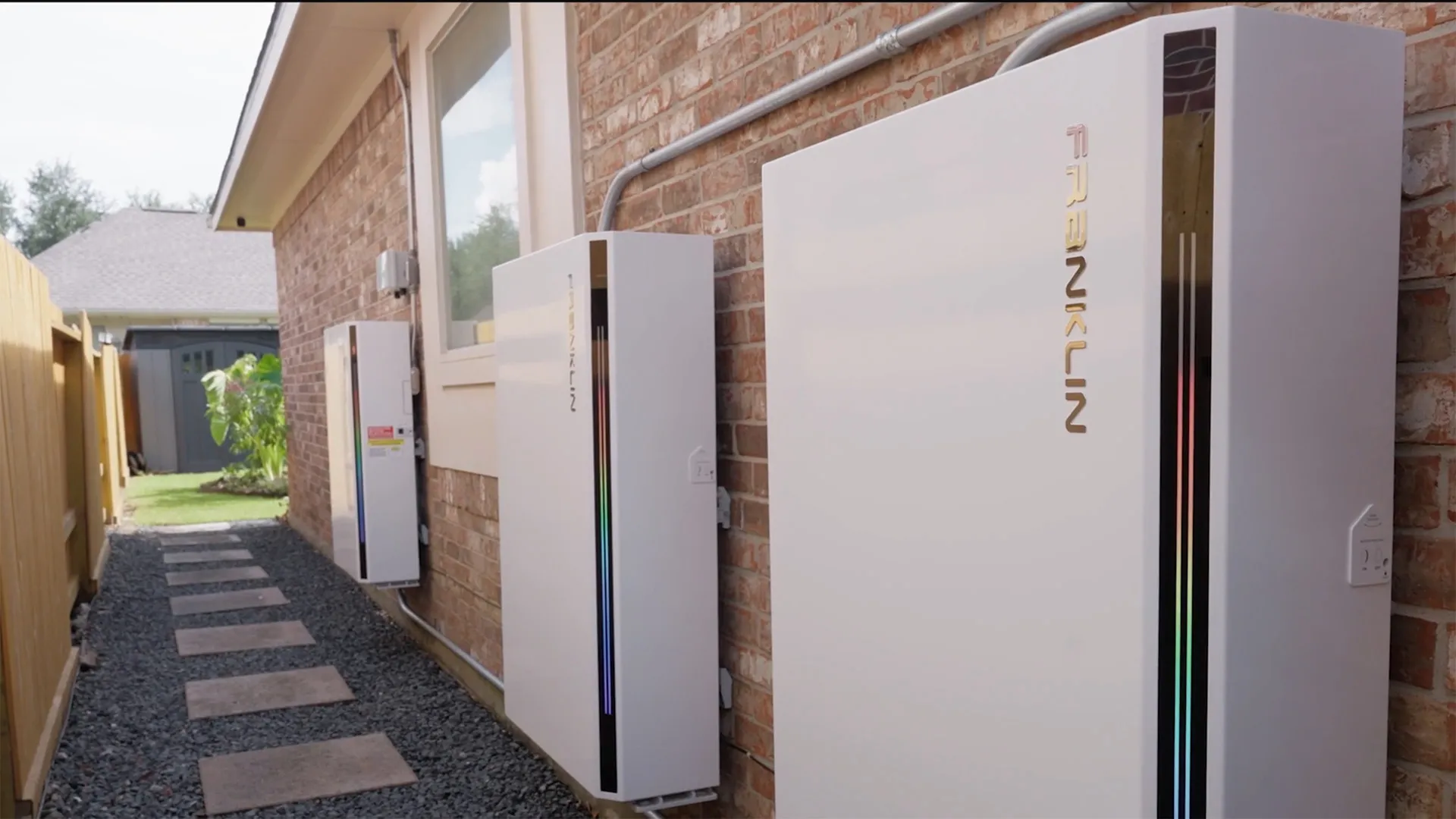
Connecticut homeowners may also benefit from the Energy Storage Solutions program. For a FranklinWH System with one 15 kWh aPower battery, the upfront enrollment incentive would be about $450 for a standard residential customer, or about $1,950 for a grid-edge customer (those whose homes are more vulnerable to outages) or underserved communities (as defined by the Department of Economic and Community Development), based on the program’s $30/kWh and $130/kWh enrollment rates.
The homeowner will also earn performance-based rewards. One 15 kWh aPower battery could potentially earn up to $9,000 in standard residential performance incentives over 10 years, with higher potential incentives for underserved or low-income customers. Final incentive amounts will vary based on several factors such as system configuration, length of the event, maintaining internet connectivity and the average performance delivered throughout the season.
Conclusion
For Connecticut homeowners, high electricity rates make energy cost management a financial necessity. While TOU rates and solar credits can help, their savings depend heavily on when electricity is used and how much solar is available. A home energy management system with battery storage addresses these limitations by storing excess solar or low-cost off-peak electricity and using it during expensive peak hours.
With attractive incentives from the Energy Storage Solutions program, a home energy management and battery storage solution, such as the FranklinWH System, can make home energy use much more flexible, resilient, and cost-efficient.
