


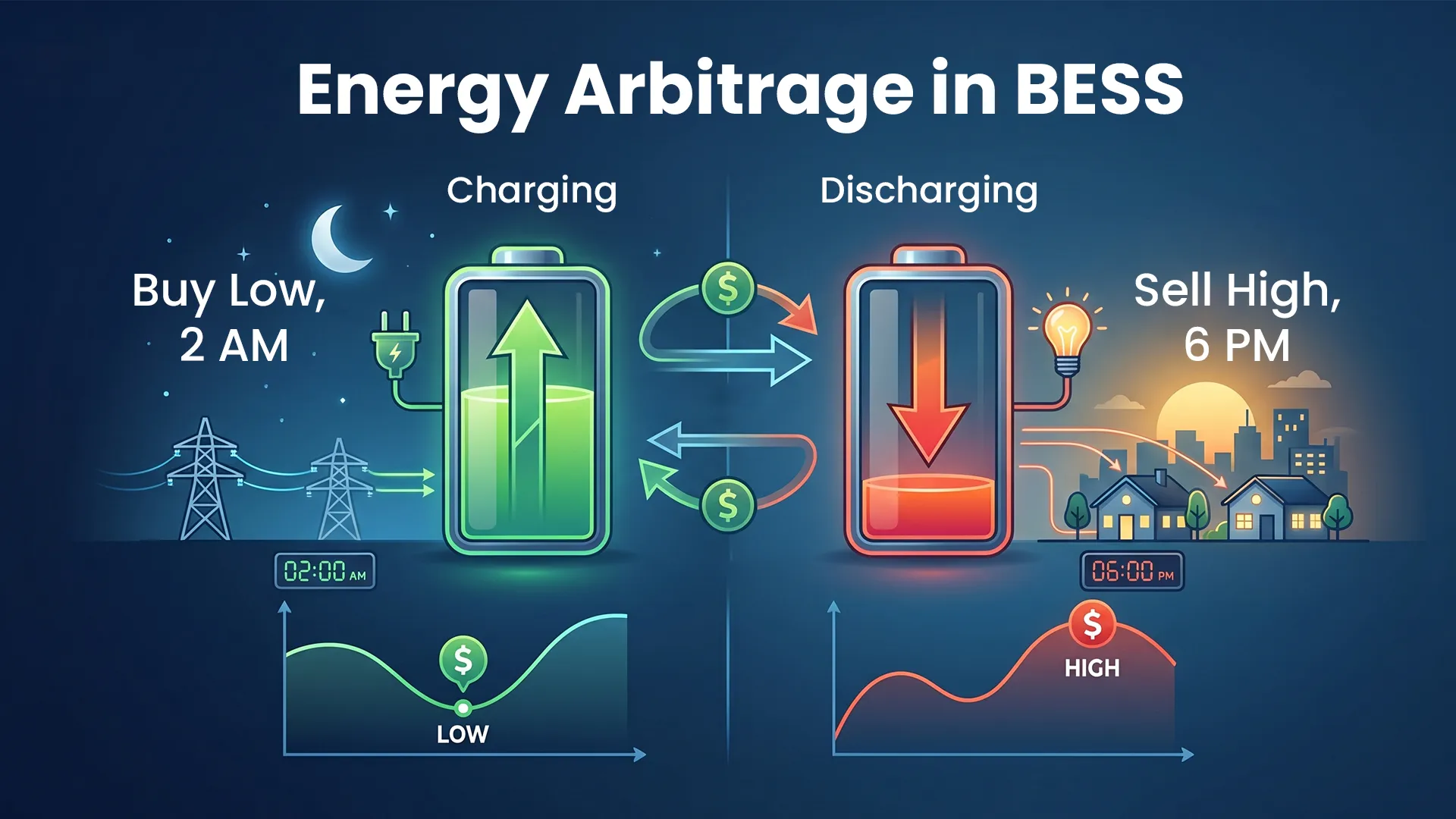
Rising electricity bills are frustrating enough, but for homeowners on Time-of-Use (TOU) tariffs, the challenge is even greater because electricity prices change throughout the day and are typically set to cost the most when households need power most, when demand is highest. That is why energy arbitrage is gaining attention as a smart way to save money. In this article, we will look at how this strategy can help homeowners cut costs under TOU tariffs and what to consider before deciding whether energy arbitrage is right for their home.
What Are TOU Tariffs?
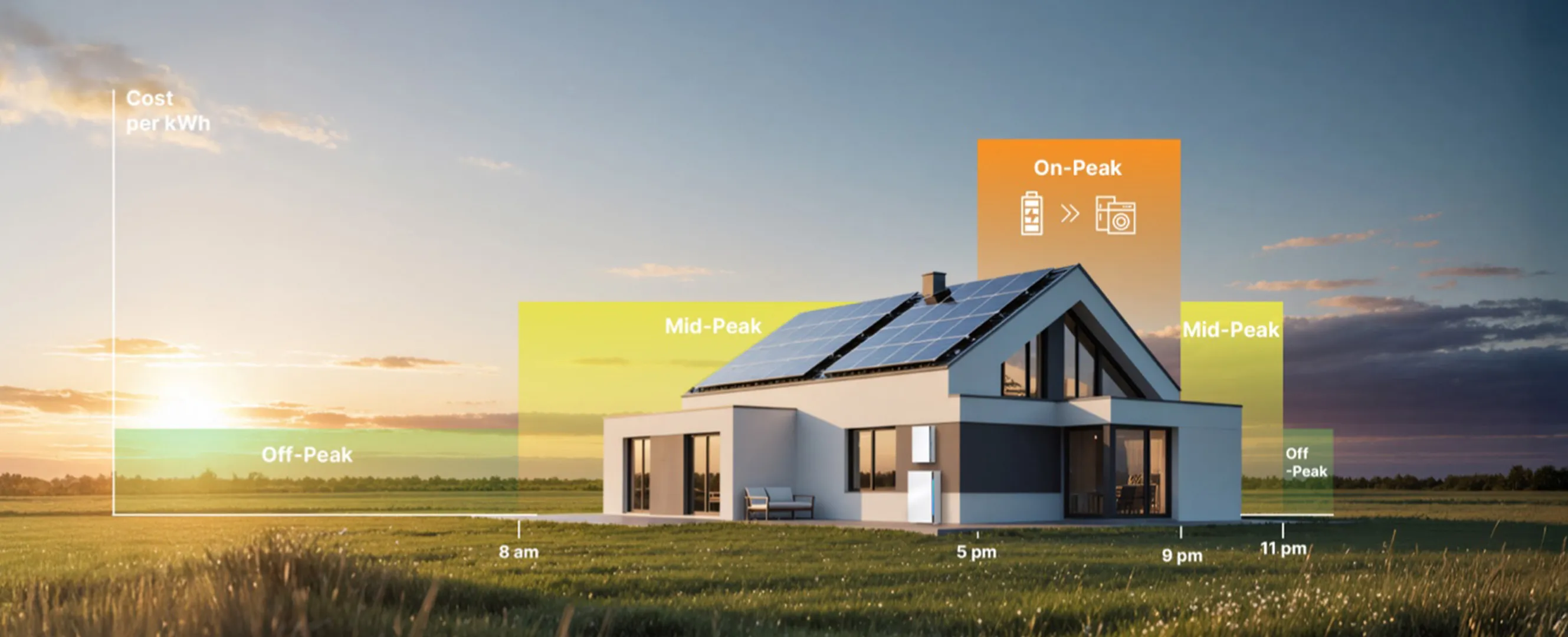
TOU tariffs are electricity rate plans where the price per kWh changes depending on when you use power, rather than staying the same all day. In many cases, the schedule and rates also change by season and sometimes by weekday versus weekend. PG&E describes this kind of plan as a way to encourage customers to shift usage away from higher-cost peak hours.
- Off-peak (lowest rate period): 12 a.m. to 3 p.m. every day
- Partial-peak (moderate rate periods): 3 p.m. to 4 p.m. and 9 p.m. to 12 a.m. every day
- Peak (highest rate period): 4 p.m. to 9 p.m. every day
- Summer season: June through September
- Winter season: October through May
For PG&E’s E-ELEC plan, clock periods of off-peak, partial-peak, and peak are the same year-round while pricing changes by season. The most expensive period is peak in summer, from 4:00 p.m. to 9:00 p.m. every day, including weekends and holidays, with a total bundled peak rate of 55.214¢/kWh in 2026.
For some TOU plans, such as SCE’s TOU-D-4-9PM, the highest rates apply during summer weekdays, at 58¢/kWh, while weekends and winter are treated differently in terms of both pricing and schedule.
How Energy Arbitrage Works
The word arbitrage comes from business. The basic idea is to take advantage of a price gap. If something can be bought when the price is low (e.g, stock) and used or sold when the price is higher, there is value in that difference. In the energy world, the same logic applies to electricity.
For homeowners, that usually happens through a home battery. The battery can store lower-cost electricity from the grid during off-peak hours, or store surplus solar energy produced during the day and then shift that stored energy to on-peak hours to reduce or even eliminate grid power use. This means you are using electricity at a discounted price when utility prices are highest.
In this way, the home battery helps homeowners make better use of the price gap under TOU tariffs and turn stored energy into a practical bill-saving tool. The price differences are your profit that will show up as savings on your monthly electric bill payment.
FranklinWH System: Enabling Automatic Energy Saving
The FranklinWH System is designed to do more than simply store electricity. It is an advanced home energy management solution built around the aGate and MAC controllers, a cloud-based platform with the FranklinWH App for homeowner control, and the aPower batteries. Together, these components allow the system to manage how and when energy is used in your home.
This intelligent setup allows automatic energy saving. Once a homeowner enters the TOU schedule of their electricity provider in the FranklinWH App and sets the system to follow that plan, the FranklinWH System will monitor the tariff structure and carry out energy arbitrage automatically. In other words, it responds to the pricing schedule on its own, without the homeowner having to manually control the system throughout the day.
Phase 1: Charging Low
While you are sleeping, when the grid is in its off-peak period and electricity is cheaper, the system charges the battery from the grid. In effect, it is storing lower-cost energy for future use.
Phase 2: Holding
During the day, the system keeps that stored energy in reserve. If solar is available, it will use solar power to support the home first, and any excess solar energy can be used to further charge the battery.
Phase 3: Discharging High
When electricity prices rise during on-peak hours, the system uses the lower-cost energy stored in the battery to power the home instead of relying as much on expensive grid electricity. This is often called peak shaving because it reduces how much electricity the home draws from the grid during the most expensive hours of the day.
Once the on-peak period ends and rates go down, the system switches back to the grid as the primary power source and starts for the next cycle.

How Much You Can Save through Energy Arbitrage: An Illustrative Example
To illustrate the potential savings, take SCE’s 2026 TOU-D-PRIME summer weekday rates: 26¢/kWh off-peak and 59¢/kWh on-peak, a 33-cent difference. Assume your household uses around 15 kWh of electricity each evening during those higher-priced peak hours.
If a FranklinWH System with one 15 kWh aPower battery charges during off-peak hours, that electricity would cost about $3.90. If the home instead had to buy the same 15 kWh during on-peak hours, it would cost about $8.85. That means the battery could help avoid roughly $4.95 per day, or about $148.50 per month, in this simplified scenario.
The estimated savings could be even higher if surplus solar energy is also available to charge the battery.

Is Energy Arbitrage Right for Your Home?
Energy arbitrage tends to work best when these conditions apply:
- You are on a TOU plan: savings depend on electricity prices changing by time of day.
- There is a meaningful price gap: the larger the gap between off-peak and peak rates, the greater the savings potential.
- Your home uses more power during peak hours: arbitrage is more useful when your household would otherwise buy expensive evening electricity.
- You have a modern home energy system: Intelligent controls make it easier to automate charging and discharging around the rate schedule.
Conclusion
Energy arbitrage offers homeowners a creative way to save money by protecting their home from the expensive peak-hour electricity rates. The FranklinWH System is an intelligent solution that can turn that strategy into an automated process of your everyday home energy use. Explore the FranklinWH System today!
