



When people ask, “Is gas cheaper than electric?”, the answer depends on what they are comparing. The question usually involves two different categories: using gas for home appliances and using gas for vehicles. Although both involve choosing between fossil fuels and electricity, the cost factors and math are different.
For home appliances, natural gas has historically been a lower-cost energy source than electricity in many parts of the U.S. because of its lower fuel price per unit of energy. For cars, it’s the opposite. The comparison is between gasoline-powered vehicles and electric vehicles (EVs). While gas cars may have a lower upfront purchase price in many cases, EVs typically have lower energy costs per mile because electric motors use energy more efficiently and electricity can cost less than gasoline when charging at home.
Home Appliances: Is Gas Cheaper Than Electric?
Many household appliances can use either natural gas or electricity as an energy source. Common examples include furnaces, water heaters, clothes dryers, and cooking appliances.
Taking heat appliances as an example, natural gas is often cheaper than electricity for producing the same amount of heat. For example, the U.S. Department of Energy (DOE)’s representative energy costs show that natural gas costs about $14.37 per million Btu (a unit to measure heat), compared with about $50.47 per million Btu for electricity based on 2025 average energy prices. This means gas can have a lower fuel cost for heat-intensive appliances such as furnaces and water heaters.
However, the actual cost of operating an appliance may vary depending on local utility rates, appliance efficiency, and how the equipment is used.
Pros and Cons of Electrification Upgrades of Home Appliances
Electrification means replacing appliances that use fossil fuels, such as natural gas, with electric alternatives, such as swapping gas stoves for induction cooktops.
The main advantage of electrification is improved efficiency. Modern electric technologies, such as heat pumps and induction cooktops, can use energy more efficiently than many traditional fuel-based appliances. Electrification can also reduce indoor air pollutants associated with gas combustion and may improve indoor air quality. Many municipalities and utility programs now offer rebates and incentives to help homeowners replace gas appliances with electric alternatives, accelerating the transition to cleaner homes.
However, electrification can increase reliance on electricity, which may lead to increased energy bills, particularly in areas with expensive electricity rates. Since electricity prices vary widely by location, homeowners should consider their local utility rates and expected energy use before replacing gas appliances with electric alternatives.
Home Energy Management System: Making Electricity Cheaper Than Gas
A home energy management system (HEMS), such as the FranklinWH System, is a game changer assisting homeowners in replacing gas appliances with electric alternatives while making electricity cheaper than gas.
The FranklinWH System integrates solar, battery storage, and the grid, monitors household energy consumption, and intelligently coordinates sources and loads to minimize grid reliance and electric costs. It helps homeowners maximize solar self-consumption, store lower-cost electricity, and use stored energy when electricity prices are higher, 100% offsetting the higher electricity demand created by electrified appliances. The system can also shift electricity use away from peak periods to eliminate expensive grid purchases.

Electric vs. Gas Cars: Which Is Cheaper to Drive?
The U.S. Environmental Protection Agency (EPA) uses MPGe (miles per gallon equivalent) to compare the energy efficiency of electric vehicles with gasoline-powered vehicles. MPGe measures how far an EV can travel using the same amount of energy contained in one gallon of gasoline.
According to EPA fuel economy data, many electric vehicles achieve over 100 MPGe, while many comparable gasoline vehicles typically achieve around 25–35 MPG. This means EVs generally require less energy to travel the same distance.
The difference can also be seen in annual fuel costs. Based on the average U.S. driving distance of 15,000 miles per year, the DOE estimates that fueling an EV generally costs less than fueling a gasoline vehicle. In comparison, the average cost to drive an electric vehicle is about half the cost per mile of a gasoline vehicle.
EVs also typically have lower maintenance costs because they have fewer moving parts and require fewer services, such as oil changes and engine maintenance. The DOE estimates maintenance costs at 6.1 cents per mile for EVs, compared with 10.1 cents for gasoline vehicles.
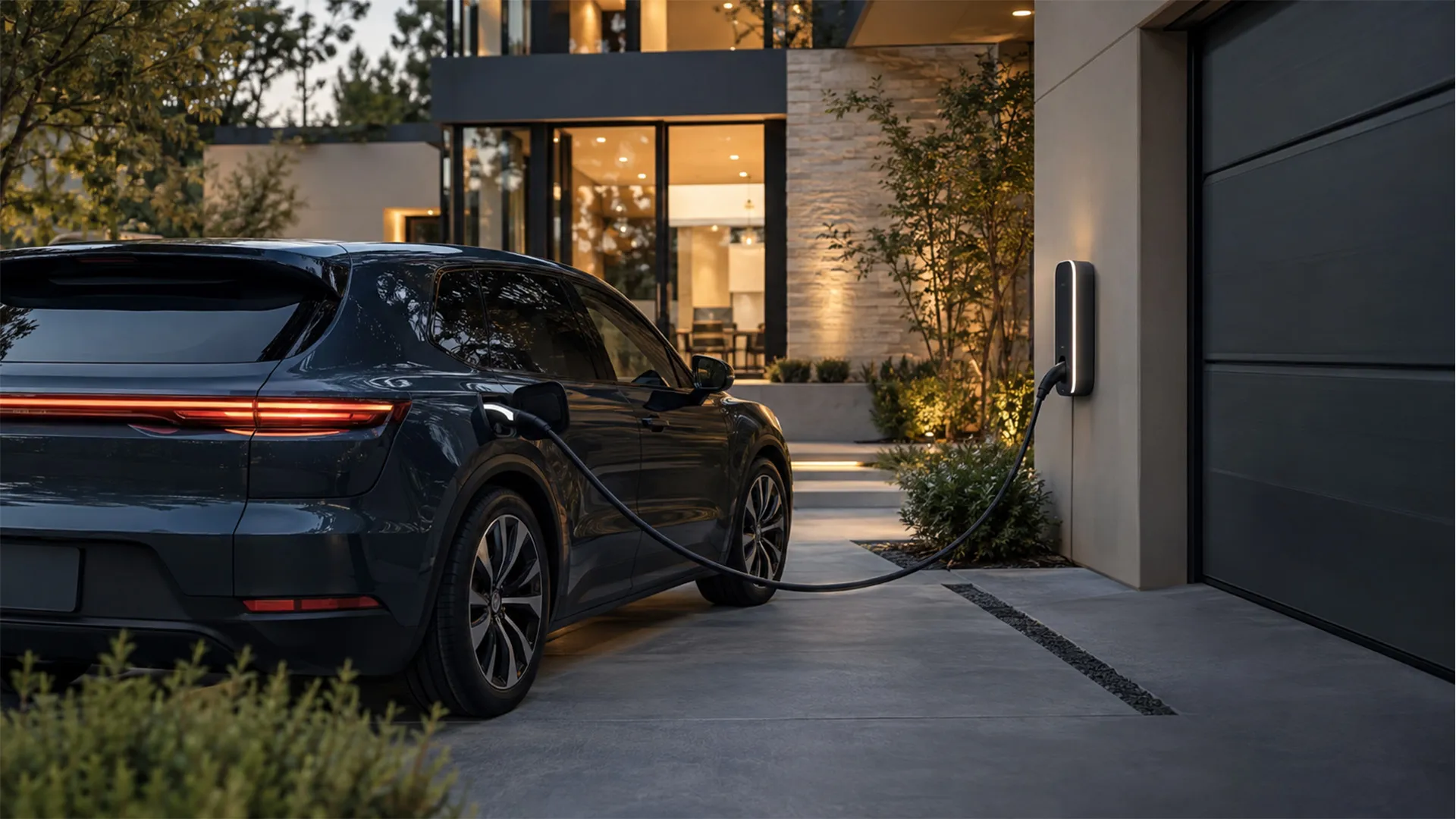
How to Calculate Your Own Fuel Cost for Cars
The actual cost of driving a gas or electric car depends on your local energy rates and driving habits. Gasoline is billed by gallon, while electricity is billed by kWh. To compare costs, calculate your vehicle’s fuel use per mile and multiply it by your local fuel price.
For a gasoline car, divide 1 by the vehicle’s MPG to get gallons per mile, then multiply by the gas price. For an EV, multiply its energy consumption (kWh per mile) by your electricity rate. For example, a gas car using 0.04 gallons per mile at $3.50 per gallon costs about 14 cents per mile, while an EV using 0.30 kWh per mile at $0.15 per kWh costs about 4.5 cents per mile.
How to Make EV Charging Cheaper
Although charging an EV is usually cheaper than fueling a gasoline car, it can still become a significant part of a home’s electricity bill because EV chargers are high-power loads that can consume large amounts of electricity over several hours if it’s not managed well.
A home energy management system (HEMS), such as the FranklinWH System, can effectively reduce EV charging costs by optimizing when and how the vehicle charges. Instead of charging whenever the EV is plugged in, the FranklinWH System can manage EV charging through its intelligent energy management and Smart Circuits. Homeowners can use stored solar energy from the home battery to power EV charging or schedule EV charging during late-night off-peak periods when electricity rates are much lower, reducing reliance on higher-cost grid electricity.
Conclusion
Gas is often more cost-effective per unit of energy for some home heating applications and gas-powered appliances, while electricity generally has a clear cost advantage for transportation due to the lower fueling and maintenance costs of EVs.
For homes transitioning to electric appliances, a premium home energy management system can change the cost equation by maximizing locally generated free solar energy and cutting electric costs close to zero. If you are considering an all-electric home, the FranklinWH System can be your best practical and reliable choice.
