


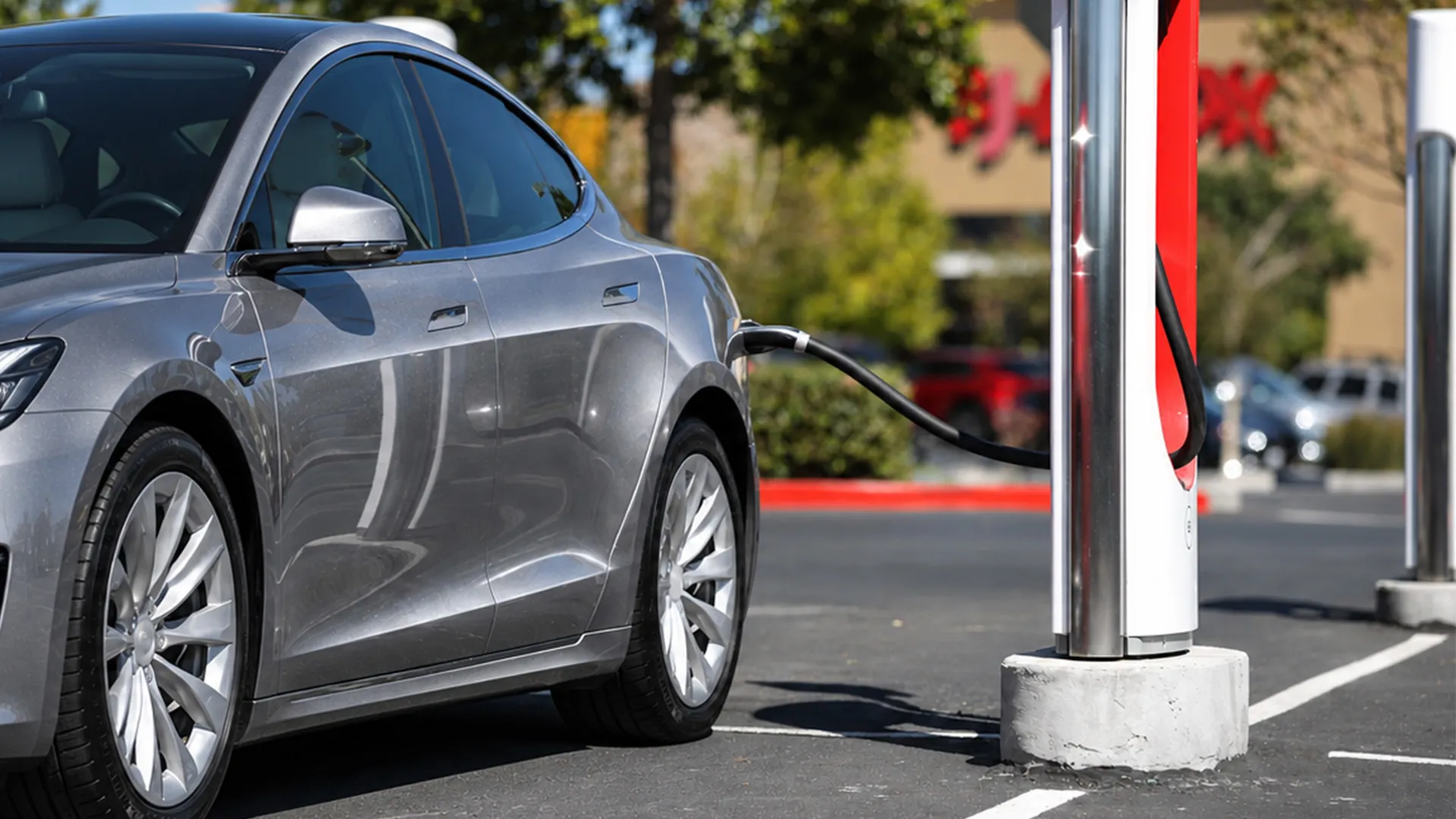
Electric vehicles (EVs) eliminate the need for gasoline, but charging costs can vary significantly depending on several factors such as battery capacity, electricity rates, charging locations, and vehicle energy efficiency. These can all influence how much drivers pay to keep their EVs running.
Understanding how to calculate EV charging costs can help homeowners better budget for their vehicle ownership, compare home and public charging options, and capture opportunities to reduce electricity expenses. This guide breaks down the key factors affecting EV charging costs, explains how to calculate them, and provides practical ways to help EV owners save on electricity charges.
What Determines the Cost of Charging an Electric Car?
The cost of charging an electric car varies depending on several key factors:
- Battery Capacity: Measured in kWh, battery capacity determines how much energy an EV can store. Larger batteries generally require more electricity for a full charge.
- Electricity Rates: Electricity prices vary by location, utility, and rate plan.
- Charging Location and Type: Home charging is generally cheaper than public charging, especially DC fast charging, which often involves higher rates and additional fees.
- Vehicle Energy Efficiency: Measured in kWh per 100 miles, energy efficiency determines electricity consumption over a given distance. More efficient EVs cost less to charge for the same mileage.
- Charging Efficiency: Energy losses during charging mean more electricity is drawn from the grid than is stored in the EV battery, increasing charging costs.
- Battery State of Charge (SOC): The EV battery's starting charge level and desired final level determine how much energy is needed.
Calculate Your Cost of EV Charging
Step 1. Find Your EV's Battery Capacity
Start by checking your EV’s battery capacity in the manufacturer's vehicle specifications or owner's manual. Look for the usable battery capacity, rather than the gross capacity, as it represents the amount of energy available for driving.
Step 2. Determine How Much Charge You Need
Charging an EV from empty to full requires more energy than simply topping up a partially charged battery. To calculate the energy needed, identify your battery's starting and target SOC, expressed as percentages, and use the following formula:
Energy needed (kWh) = Battery capacity × (Target SOC - Starting SOC)
Step 3. Account for Charging Losses
Not all electricity drawn from a charging source is stored in the EV battery. Some energy is lost during power conversion and as heat, meaning the total electricity consumed is higher than the energy added to the battery. To compensate for these losses, use the following formula:
Electricity drawn (kWh) = Energy needed / Charging efficiency
Step 4. Multiply by Your Electricity Rate
Charging cost ($) = Electricity Drawn (kWh) × Electricity Rate ($/kWh)
Step 5. A Real-World Example
Let's calculate the cost of charging a hypothetical EV from 20% to 80%, accounting for charging losses and electricity rates.
| Variables | Example |
| Usable battery capacity | 60 kWh |
| Starting charge level | 20% |
| Target charge level | 80% |
| Charging efficiency | 90% |
| Electricity rate | $0.18/kWh |
Calculations:
- Battery energy added: 60 × 60% = 36 kWh
- Electricity drawn: 36 ÷ 0.90 = 40 kWh
- Total charging cost: 40 × $0.18 = $7.20
Note that these figures are only illustrative. Actual costs vary depending on charging efficiency, electricity rates, and any additional charging fees.
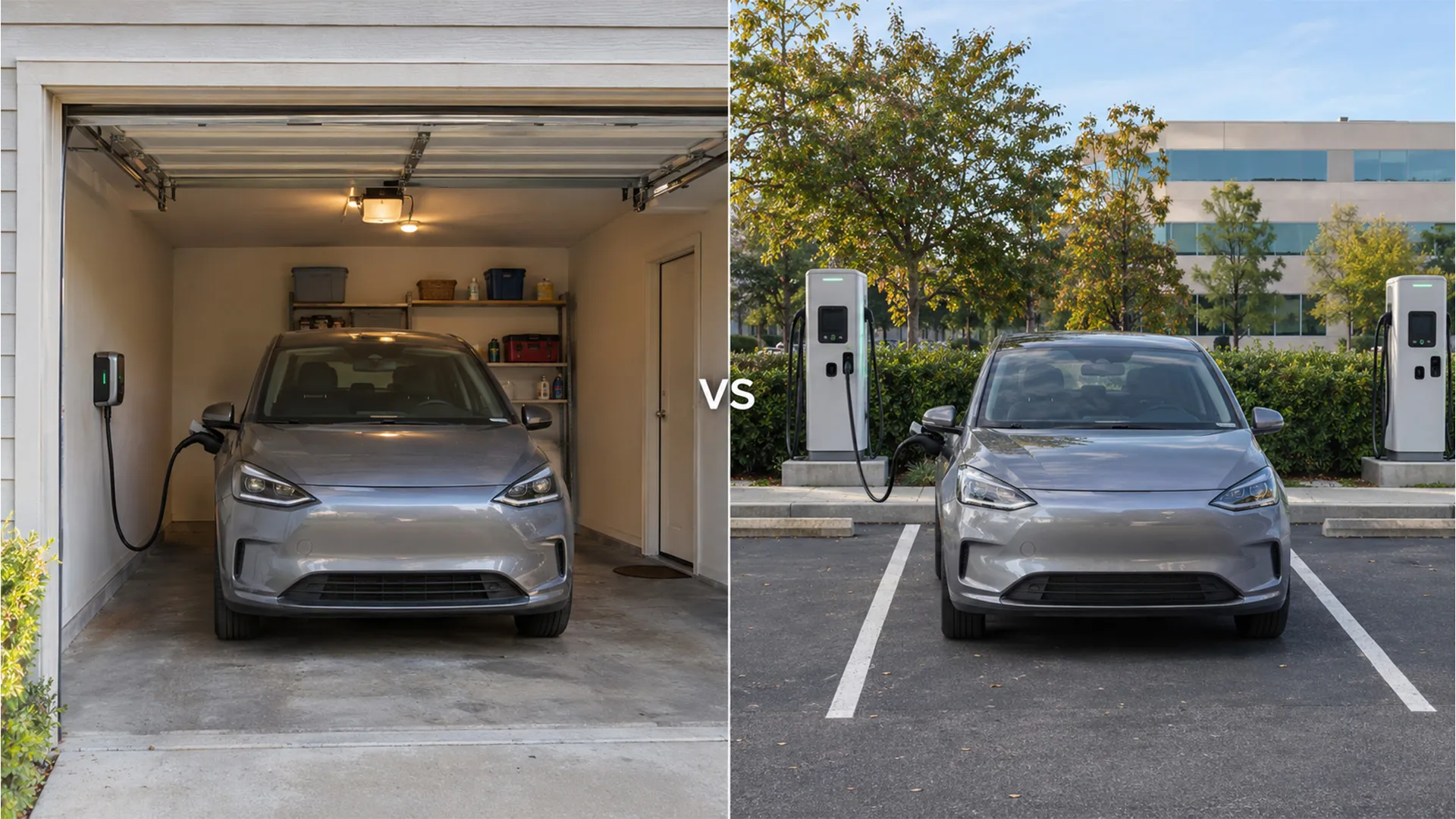
How Much Does It Cost to Charge an Electric Car at Home vs. a Public Station?
Home Charging: Level 1 and Level 2
Home EV charging typically uses Level 1 or Level 2 equipment. Level 1 charging uses a standard 120 V household outlet, while Level 2 uses 240 V electrical service to deliver faster charging. Electricity consumption is reflected in the household electricity bill.
Public Level 2 Charging
Public Level 2 chargers are common at workplaces, shopping centers, and parking facilities. Fees may be based on energy consumed or charging duration. While some stations offer free charging, public charging generally costs more than home charging.
The table below compares the cost of purchasing 40 kWh at different charging locations.
| Charging Location | Example Rate | Cost for 40 kWh |
| Home charging | $0.18/kWh | $7.20 |
| Public Level 2 | $0.30/kWh | $12.00 |
| DC fast charging | $0.50/kWh | $20.00 |
Note these fees are illustrative. Actual charging costs vary by location, provider, and additional charges.
How to Calculate Monthly and Annual EV Charging Costs
You can estimate long-term EV charging costs based on your driving distance and vehicle efficiency, typically measured in kWh per 100 miles. This figure is available on your vehicle's EPA fuel economy label.
Cost per mile = (kWh per 100 miles× $/kWh) / 100
Monthly charging cost: Monthly miles × Cost per mile
For example, driving 1,200 miles per month in an EV with an EPA-rated consumption of 30 kWh per 100 miles and electricity rate at $0.18/kWh, costs approximately $64.80 monthly or $777.60 annually, assuming a constant electricity rate, assuming the same electricity rate throughout.
Additional Costs That Can Affect EV Charging Expenses
Actual EV charging expenses may differ from initial estimates due to additional fees, equipment costs, and driving conditions.
- Charging Equipment and Installation: Home Level 2 charging may require upfront expenses for equipment, labor, permits, and electrical upgrades.
- Public Charging Fees: Session, parking, and idle fees may increase public charging costs
- Vehicle Efficiency and Driving Conditions: Driving speed, rapid acceleration, extreme temperatures, and climate control use can increase electricity consumption per mile, resulting in higher charging costs.
How to Reduce the Cost of Charging an Electric Car
Reducing EV charging expenses involves choosing affordable charging options, improving driving efficiency, and managing home energy use more intelligently.
- Charge During Off-Peak Hours: Take advantage of lower electricity rates under eligible time-of-use (TOU) plans. Use an EV charging schedule to avoid expensive peak periods.
- Compare Public Charging Prices: Check charging rates and additional fees before choosing a public charging station.
- Improve Driving Efficiency: Maintain appropriate tire pressure, avoid unnecessary aggressive acceleration, and use vehicle preconditioning where appropriate.
- Adopt a Home Energy Management System with Battery Storage: Premium solutions such as the FranklinWH System charge the battery using solar and cheap off-peak electricity and shift that stored energy to night hours when energy is usually needed most, powering appliances from essentials to energy-intensive ones such as an EV charger, offsetting expensive electricity drawn from the grid.
If you need to reserve your battery energy for other critical appliances during the peak night period, FranklinWH’s Smart Circuits allow you to connect individual heavy-duty loads such as an EV charger, and schedule them to automatically operate during off-peak hours such as midnight, so you can save a good amount of money without manual intervention.

Schedule a free consultation with FranklinWH to start your energy freedom journey!
