


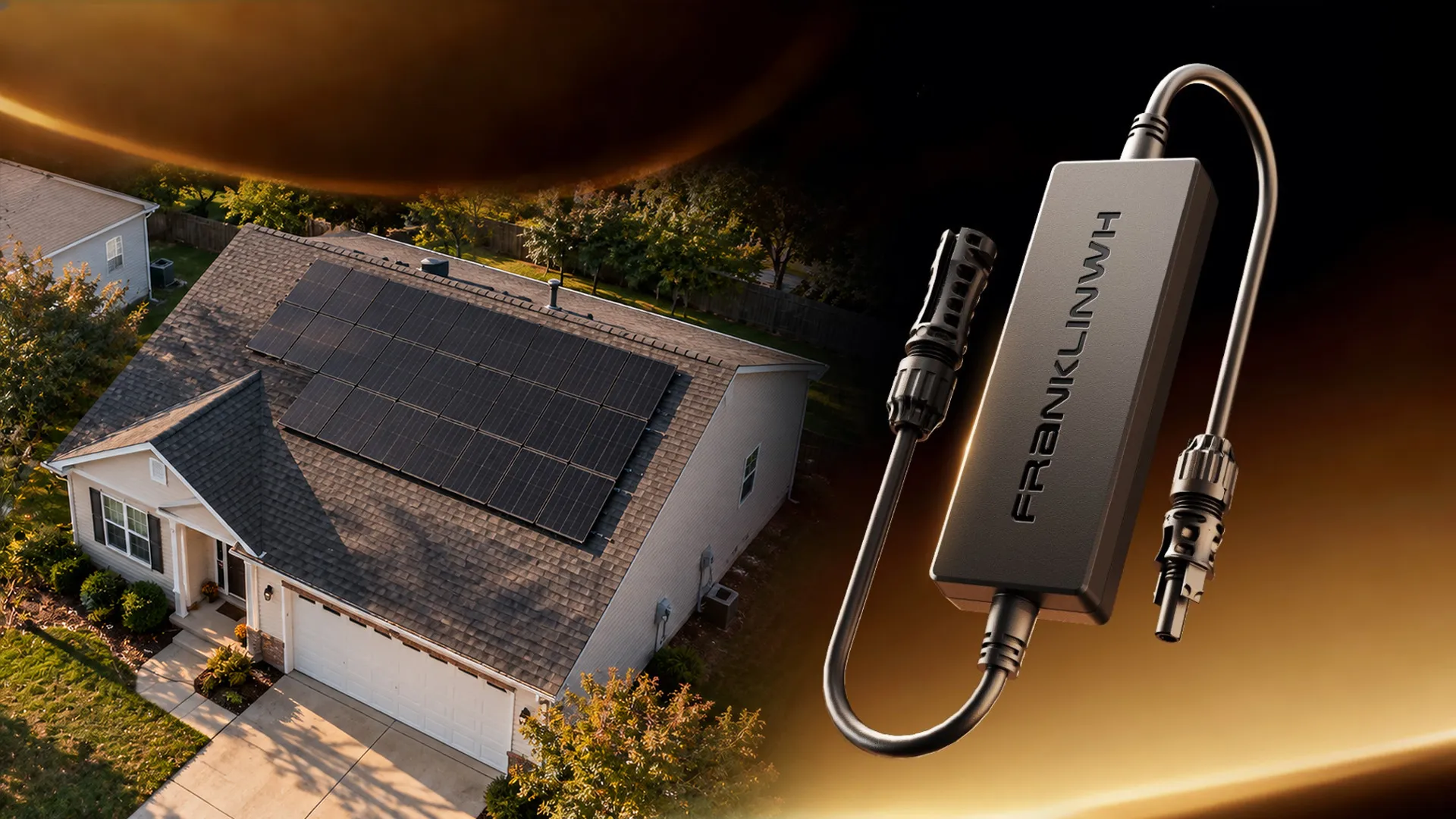
Rooftop solar has entered an era where safety, reliability, and long-term operating costs play an increasingly important role in project success. Rapid Shutdown Devices (RSDs) are essential for meeting electrical code requirements and protecting firefighters by rapidly reducing hazardous DC voltages during emergencies. However, these safety devices can also become potential points of failure, affecting solar generation and increasing long-term maintenance costs.
Installed beneath solar panels, conventional RSDs are exposed to constant temperature fluctuations, moisture, and thermal stress. Over time, these harsh conditions can contribute to component degradation and unexpected failures, resulting in solar generation interruptions, frustrated homeowners, and costly, often non-billable service visits for installers.
The FranklinWH RSD Duo is designed to address these challenges. Featuring a redundant dual-circuit architecture, improved thermal management, and simplified installation, it aims to significantly enhance rooftop solar safety and reliability while reducing long-term maintenance costs. This article explores its key technical innovations and the benefits it brings to residential solar installations.
The Root Cause of Rooftop Failure: Heat and Voltage Surges
To understand why improved RSD design matters, it is important to examine what causes conventional devices to fail.
Rooftops are demanding operating environments. Under intense sunlight, temperatures beneath solar modules can rise significantly. Meanwhile, electrical current flowing through the RSD's internal semiconductor switches, typically metal-oxide-semiconductor field-effect transistors (MOSFETs), generates additional heat. Excessive thermal stress can accelerate component degradation, increase the risk of open-circuit failures, and ultimately interrupt solar generation.
Second, transient overvoltage surges caused by grid fluctuations or lightning strikes routinely exceed the breakdown threshold of standard power semiconductors. Once a MOSFET suffers an overvoltage breakdown, its current-carrying capacity degrades, driving up internal resistance, accelerating thermal degradation, and eventually causing outright failure or fire hazards.
FranklinWH’s RSD Duo addresses both issues and maximizes solar availability through advanced structural and semiconductor engineering:
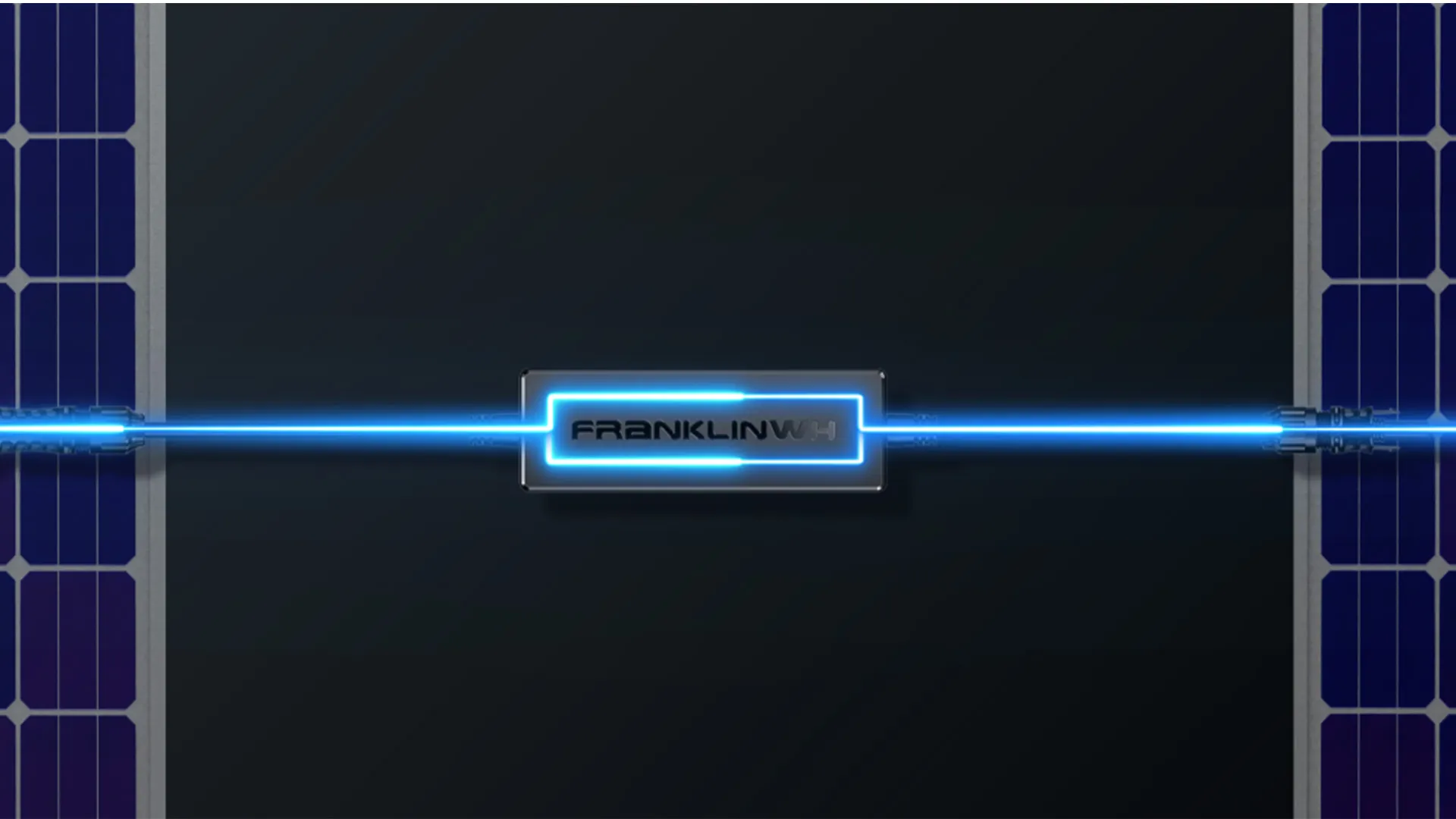
- Dual-Circuit Redundancy: Instead of relying on a single electrical path, the RSD Duo features two independent circuits. If one circuit fails, the other can continue supporting solar generation, reducing the risk of a single circuit failure shutting down the entire solar string.
- Superior Thermal Management: By combining automotive-grade semiconductors, a dual-circuit distributed layout, and high thermal conductivity encapsulant, the RSD Duo minimizes internal power losses and heat buildup. According to FranklinWH's internal testing, it achieves an approximately 50% lower temperature rise compared to a leading conventional RSD solution under the same test conditions, helping reduce thermal stress and improve long-term reliability.
- Robust Overvoltage Protection: The unit integrates four high-voltage-rated MOSFETs boasting a breakdown voltage tolerance of up to 600 V. This 600 V rating easily covers 100% of residential string scenarios, allowing the unit to absorb sudden transient surges without degrading.
Operational Efficiency: The 1-to-3 Design
From an installation perspective, traditional RSDs require mounting a separate device behind nearly every individual solar module. On a typical 12-panel string, that translates to 12 individual failure points and 12 separate mechanical mounts.
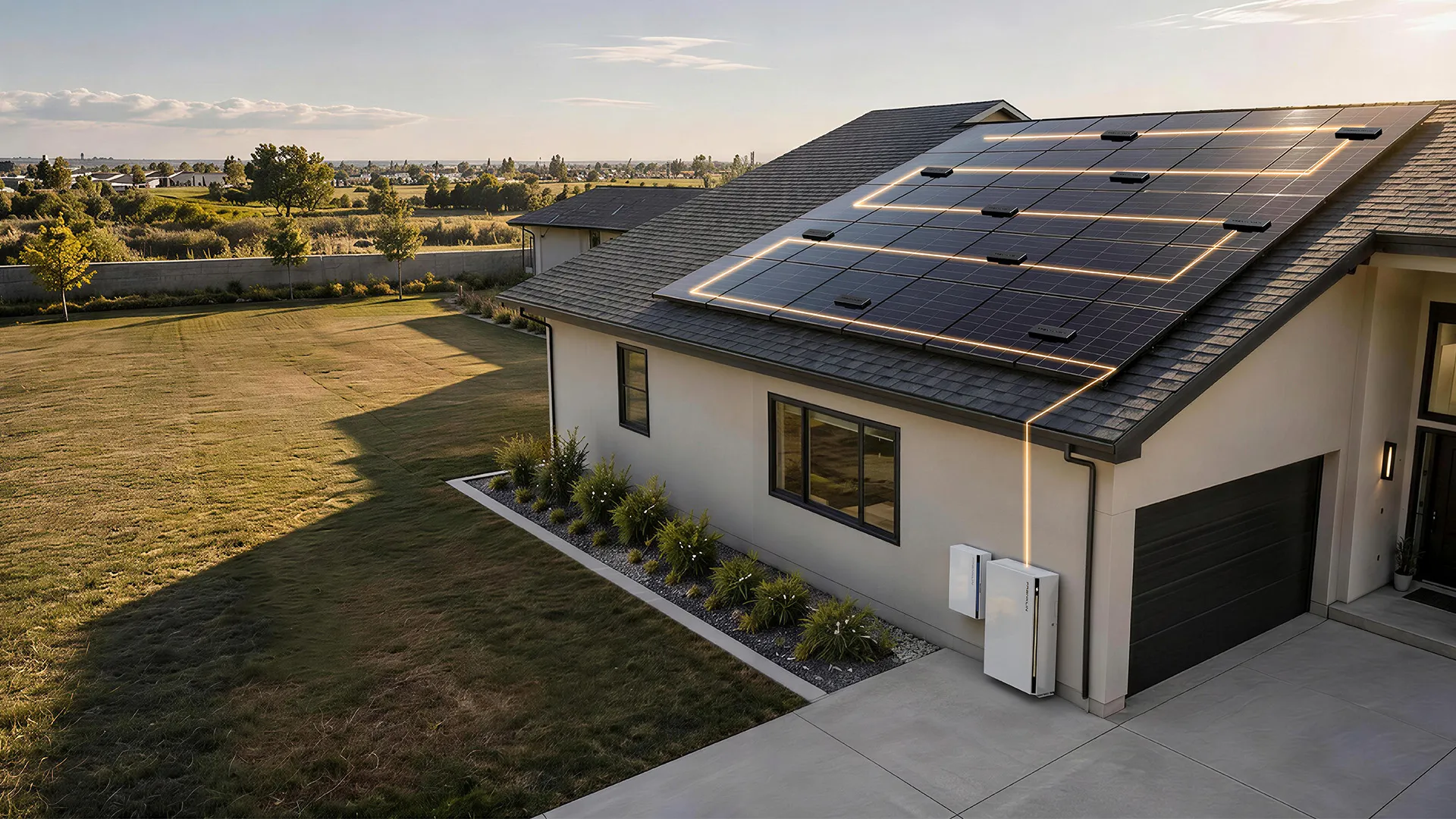
The RSD Duo simplifies this arrangement with a 1-to-3 installation design, where one RSD unit connects in series across three solar modules.
- Two-thirds Component Reduction: On a 12-panel residential array, installers only need to mount four RSD Duo devices (or as few as two units in specialized UL 3741-compliant string-level configurations with insulated mounting brackets).
- Flexible Mounting Options: Unlike competing devices that rely on flimsy plastic zip-ties or rigid proprietary tracks, the RSD Duo features an ultra-slim profile supporting both side-frame clamping and rail-mount setups.
- Stress-Relieved Wiring: A built-in connection cable extending up to 5.9 inches provides additional flexibility during installation, helping reduce wiring strain and simplify cable management.
For installation teams, fewer components mean faster roof times, fewer wire management points, and significantly lower labor overhead per job site.
Seamless Architecture: Integration with the FranklinWH System with aPower S
Where the RSD Duo also stands apart from generic third-party RSDs is its integration with the FranklinWH aPower S, a battery unit in the FranklinWH System.
Traditional RSD configurations require installing an external signal transmitter, requiring additional wall drilling, dedicated auxiliary power supplies, and extra signal wiring. These components add installation steps and can increase system complexity.
The RSD Duo bypasses this extra work:
- Built-in Transmitter: The rapid shutdown transmitter is natively integrated into the aPower S unit, eliminating the need to install a separate external transmitter and saving roughly 20 minutes per system installation.
- Power Line Excitation (PLE) Architecture: Rather than relying on separate wiring that can suffer from signal attenuation, the system leverages Power Line Excitation (PLE) using existing power lines without a separate dedicated cable. This robust signal architecture supports up to a 984 ft signal transmission distance across the DC circuit (PV+ to PV-), enabling reliable rapid shutdown communication across rooftop solar installations.
- Reverse Polarity Protection: If an installer accidentally swaps wiring polarities during setup, the FranklinWH System detects the solar reverse polarity automatically and actively disconnects the RSD Duo, protecting internal electronics from permanent damage and avoiding immediate repair costs.
Environmental Resilience and Lifetime Quality
Beyond thermal and electrical stress, rooftop equipment must withstand years of exposure to moisture, dust, humidity, and corrosive environments. Effective environmental protection is therefore critical to long-term RSD reliability.
The FranklinWH RSD Duo features an injection-molded enclosure with ultrasonic welding and an internal multi-mesh structure designed to resist mechanical stress, deformation, and moisture intrusion.
It also offers an IP67 rating for water and dust ingress, alongside a C5-H corrosion resistance rating, the superior standard for extreme environments, making it suitable for high-humidity coastal deployments where saltwater air may rapidly destroy electronics with inadequate environmental protection. Boasting a 25-year warranty, FranklinWH is clearly committed to setting a benchmark for long-term field durability.
Conclusion
The residential solar market has long suffered from the hidden costs of field maintenance. While rapid shutdown devices are essential for emergency response compliance, their historically high failure rates have burdened installers with non-billable service calls and reduced energy yields for homeowners.
The FranklinWH RSD Duo sets itself apart with a thoughtful, engineering-driven design to address these long-standing challenges. By combining dual-circuit redundancy, lower thermal stress, 600 V voltage tolerance, and a 1-to-3 configuration, FranklinWH drastically reduces both the physical hardware on the roof and the likelihood of unit failure. When paired with the built-in transmitter architecture of the aPower S, it offers installers a streamlined, highly reliable rapid shutdown solution designed to truly last the full 25-year lifespan of the solar array.
