


A solar inverter is the engine of any residential solar energy system. It takes the direct current (DC) power generated by rooftop solar panels and converts it into alternating current (AC) electricity, which is the standard electricity format powering home appliances and feeding energy back into the grid.
Today, solar technology has evolved beyond a one-size-fits-all approach, resulting in distinct inverter forms, such as string inverters, microinverters, and hybrid inverters, designed to meet varied energy demands. Due to the wide diversity of solar inverters, homeowners looking to install solar panels alongside energy storage, or keep the door open for future battery additions, oftentimes encounter frustrating hardware and software compatibility issues.
This article breaks down the key differences between the three types of inverters mentioned above, and offering guidance on how to protect your solar investment against battery integration challenges.
String Inverters: The Traditional Choice
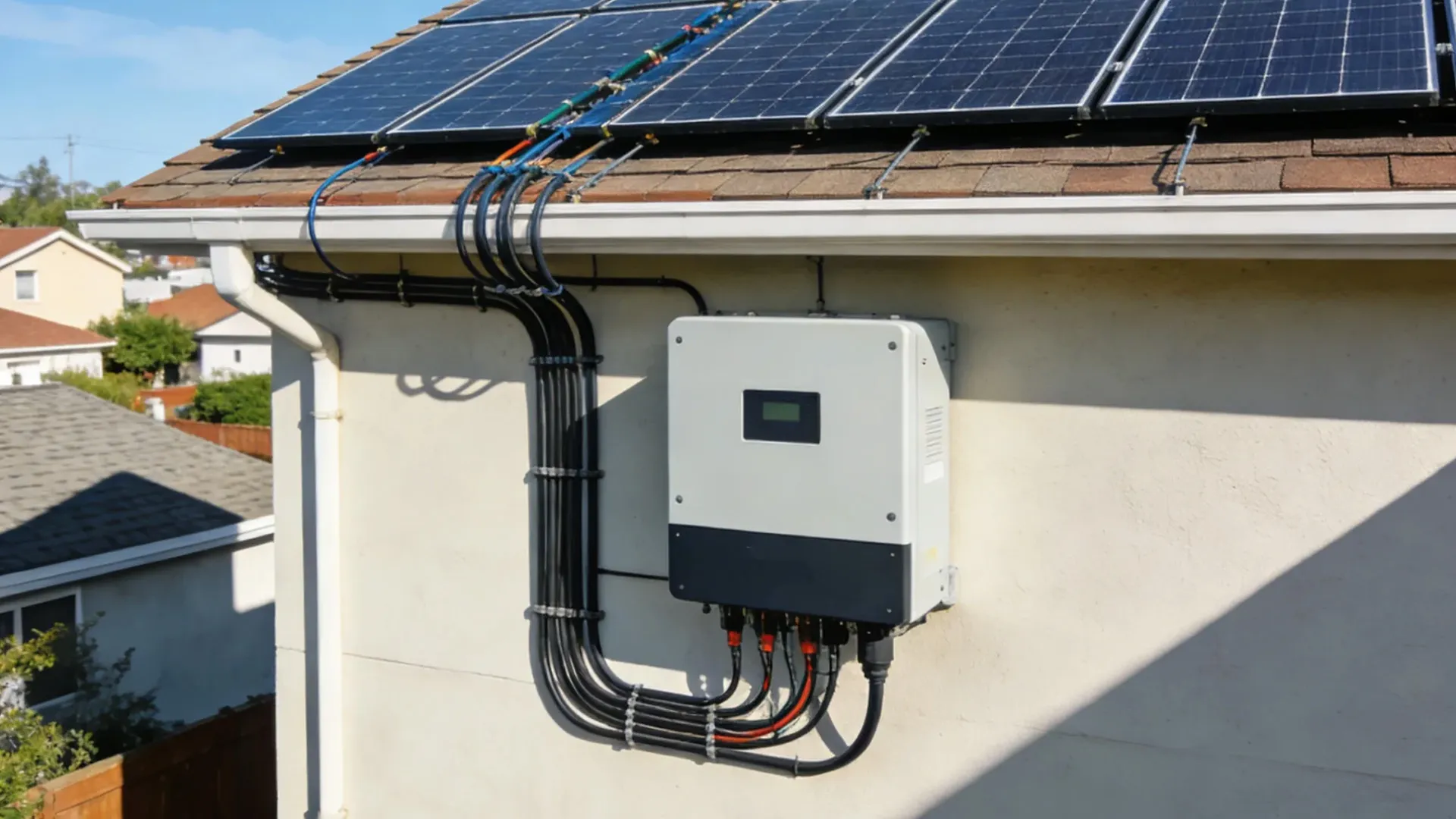
String inverters are the most established inverter technologies on the market, offering a simple, centralized, and cost-effective approach to home solar.
String inverters operate by connecting multiple solar panels in series to create a single chain, known as a string. The collective DC power generated by every panel in that chain flows directly to a single central inverter unit mounted on an exterior wall or in a garage.
Key Advantages
- Lowest Upfront Cost: Fewer electronic components and simpler installation keep initial equipment and labor expenses low.
- Easy Ground-Level Maintenance: Mounted on a garage or exterior wall, the inverter is easy for technicians to service without roof access.
- Proven Reliability: Decades of widespread market use mean generally high reliability, simple designs, and peak efficiencies up to 98%.
String inverters are ideal for budget-focused homeowners with simple, unshaded roofs where all panels are installed at similar orientations and tilt angles.
Microinverters: The High-Performance Option
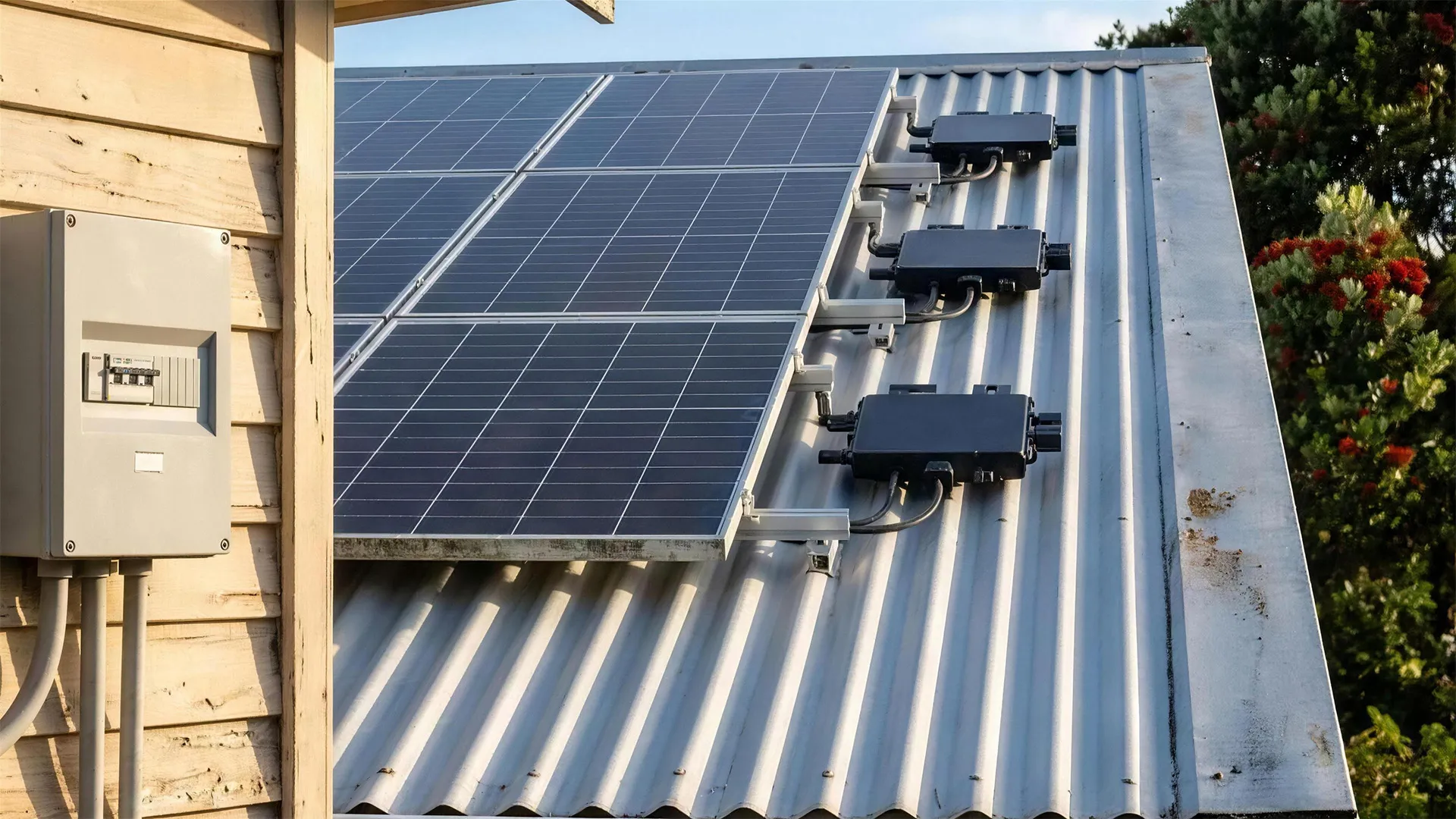
Microinverters are smaller individual inverters mounted directly underneath or alongside each solar panel on your roof. Instead of sending high-voltage DC power down to a central converter, each microinverter performs DC-to-AC conversion right at the module level. The resulting AC power from every panel is combined on the roof and sent straight to your home and the surplus is stored as DC power in the battery through its own internal dedicated inverter.
Key Advantages:
- Shade & Dirt Immunity: Panels operate independently, so shading, debris, or a fallen leaf on one panel will not drag down the performance of the rest of the array.
- No Single Point of Failure: If one microinverter fails, only that single panel goes offline while the remaining array continues generating electricity.
- Seamless Scalability: Adding solar panels is as simple as mounting a new panel alongside its dedicated microinverter, with no concern for central capacity limits.
Microinverters are ideal for homes with complex or partially shaded roofs, multi-angled roof surfaces, or setups where panels face different directions. They are also perfect for homeowners who plan to expand their system incrementally.
Hybrid Inverters: Direct Solar Input
A hybrid inverter combines the functions of a solar inverter and a battery inverter into a single unit, allowing it to manage electricity from both solar panels and battery storage.
Unlike traditional solar inverters, hybrid inverters allows direct DC connections between solar panels and compatible batteries. Solar-generated electricity can power household appliances after conversion to AC while charging the battery without first being converted to AC.
In practice, hybrid inverters come in two forms:
- Standalone Hybrid Inverters: These are central inverter units installed separately from your battery bank.
- Built-In All-In-One Hybrid Systems: These setups feature the hybrid inverter and battery modules housed together within the same physical cabinet or modular tower.
Key Advantages:
- Higher Solar-Capture Efficiency: Direct DC charging skips extra conversion steps, maximizing total round-trip energy efficiency.
- Simplified system integration: Combining solar and battery inverter functions can reduce the number of separate components, potentially lowering installation complexity and costs.
FranklinWH System: Compatible With All Solar Inverters
The FranklinWH System is a premium home energy management and battery storage solution engineered to solve common inverter compatibility challenges. By providing flexible architectures, it ensures seamless integration regardless of your solar equipment or installation timeline.
For existing solar installations, the FranklinWH System with aPower 2 is compatible with all third-party string inverters and microinverters. It allows homeowners to retrofit battery storage onto their current solar array without changing their original setup or rewiring existing panels.
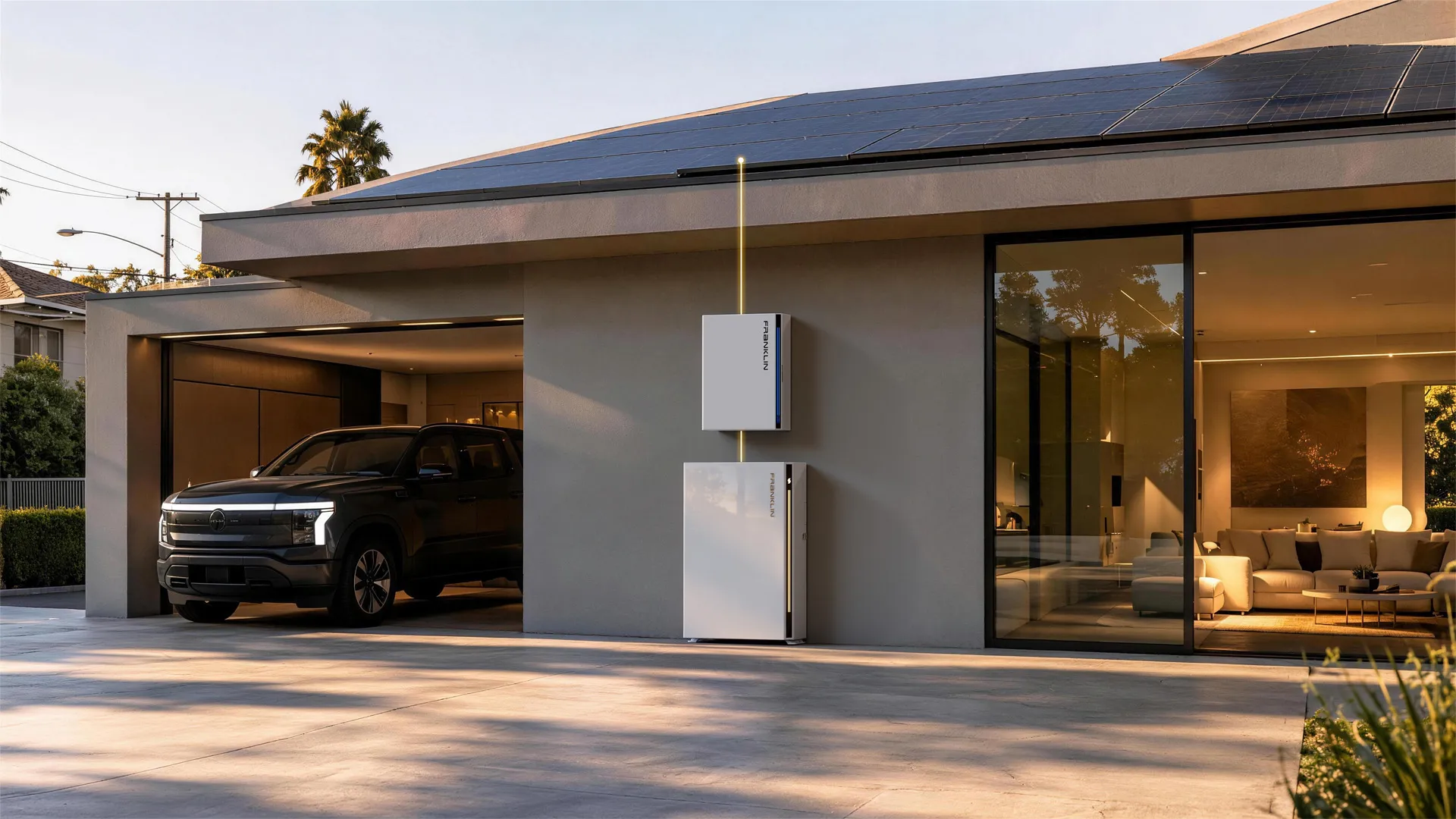
For new builds, the FranklinWH System with the aPower S delivers an all-in-one hybrid home energy solution. The aPower S incorporates a built-in hybrid inverter directly inside the battery enclosure, allowing rooftop solar panels to connect straight into the battery without requiring separate exterior inverter equipment, streamlining the overall installation process.
By establishing an intelligent home energy ecosystem, the FranklinWH System empowers homeowners to optimize daily power usage, maximize solar savings, lower utility bills, and ensure reliable backup power during grid blackouts.
Conclusion
The diversity of solar inverter technologies can create compatibility challenges when integrating battery storage. When choosing a home energy management and battery storage solution, homeowners are advised to prioritize systems that are inverter-agnostic or feature a built-in hybrid inverter. FranklinWH System is a prime example of such solutions. These solutions can simplify installation, minimize modifications to existing electrical configurations, reduce compatibility-related quality and warranty disputes, and help keep installation costs down.
