


Power outages are becoming more frequent across North America as aging grid infrastructure and extreme weather place increasing pressure on the power system. In response, more homeowners are installing solar and battery storage systems to keep their homes running during blackouts.
However, backup power is about more than simply keeping the lights on. The quality of electricity delivered during an outage matters just as much as the electricity itself. Unstable power can cause flickering lights, Wifi interruptions, appliance malfunctions, and smart home devices going offline.
This article explores why power quality matters in home energy systems, the common challenges many systems face, and how advanced solutions are delivering cleaner, more reliable power for modern homes.
What Is Power Quality
Power quality describes how clean and stable electricity is when it reaches your home.
Think of electricity as water flowing through pipes. It’s not just about having water. What matters is that the pressure is steady and the flow is clean.
Good power quality means the electricity supplied to your home has:
- Stable voltage so appliances receive the right amount of power.
- Steady frequency so motor-driven appliances such as A/C and refrigerators run at the correct speed without overheating or malfunctioning.
- Low harmonic distortion, meaning the electrical waveform stays clean instead of becoming noisy or distorted.
- Compatibility with different household appliances, from large HVAC systems to sensitive electronics.
If these conditions are not met, even a functioning home energy system may struggle to properly power modern homes.
Why Power Quality Matters More in Modern Homes
Today’s homes are more dependent on electronics than ever before. Common examples include:
- Smart home hubs
- Wifi routers and mesh networks
- Security cameras and alarm systems
- EV chargers
- Laptops and home office equipment
These devices are far more sensitive than traditional household appliances. Small fluctuations in voltage or distorted power signals can cause routers to reset, smart home systems to disconnect, or electronics to behave unpredictably. Over time, unstable power can also stress components and shorten the lifespan of appliances.
Common Power Quality Problems in Home Energy Systems
While many home energy management and battery storage systems can provide electricity during an outage, not all deliver stable, high-quality power. In real-world conditions, some systems struggle when large appliances start or when multiple devices run simultaneously.
Common power quality issues include:
- Overload shutdowns: Large appliances push a system beyond its limits, causing it to shut down.
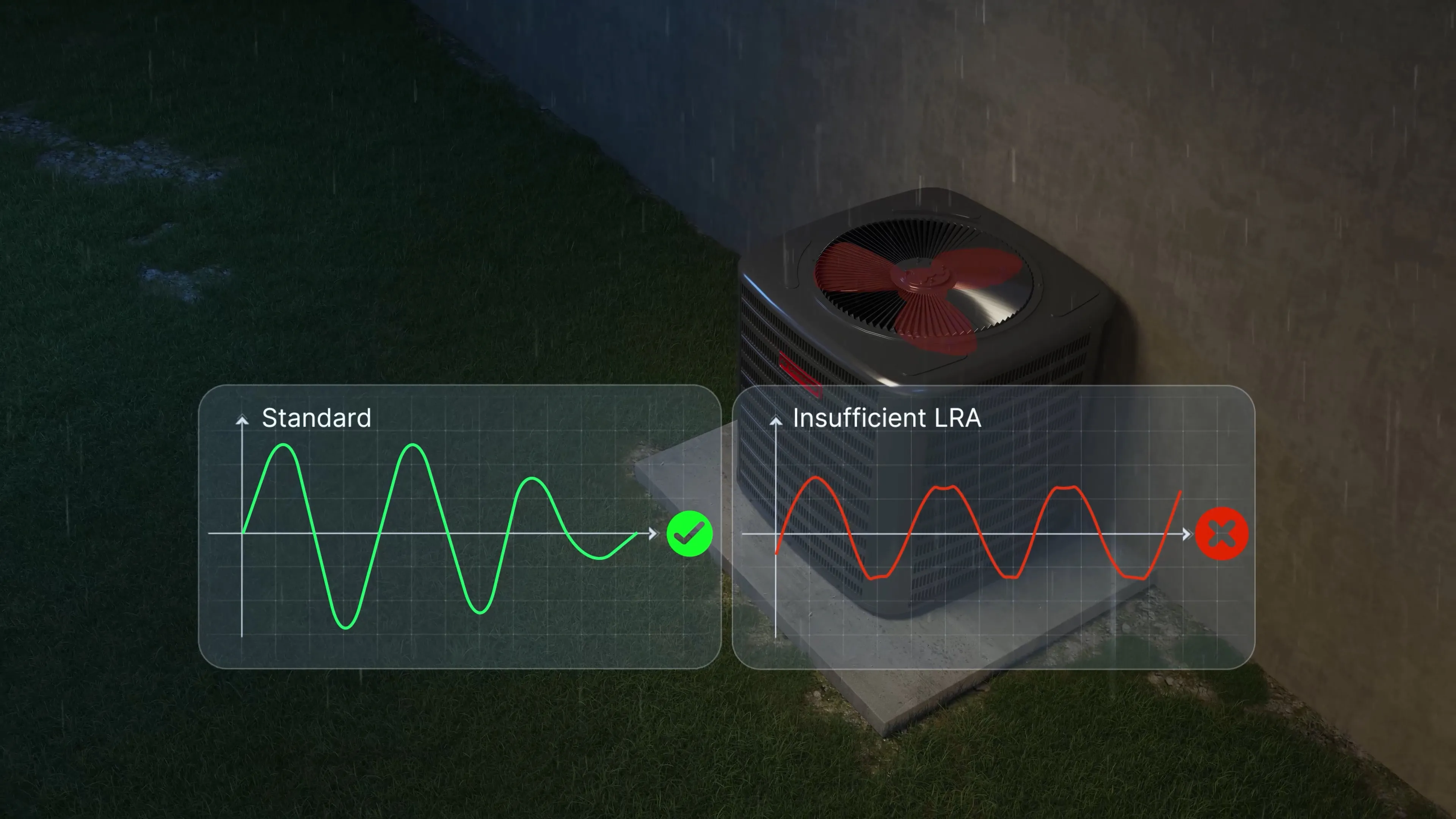
- Startup failures: Devices such as pumps or HVAC compressors require a brief surge of power to start. If the system cannot support it, the appliance may fail to start.
- Voltage fluctuations: Poor inverter control can cause voltage drops or distortion, leading to flickering lights or unstable electronics.
The Industry Challenge: Lack of Power Quality Standards
One major challenge in the residential energy storage industry is the lack of clear standards for off-grid power quality. Many systems focus on battery capacity and power output, but fewer address whether the electricity delivered during outages is clean and stable enough for modern homes.
In contrast, industries such as data centers and critical infrastructure operate under extremely strict power quality requirements. Even small voltage fluctuations or waveform distortions can interrupt servers or damage sensitive equipment. To prevent this, data centers rely on high-performance Uninterruptible Power Supply (UPS) systems that follow rigorous standards such as IEC 62040.
These standards define strict benchmarks for electricity quality, including:
- Precise voltage regulation
- Stable frequency control
- Extremely low harmonic distortion
- Strong compatibility with different load types
How FranklinWH System Sets New Benchmark in Power Quality
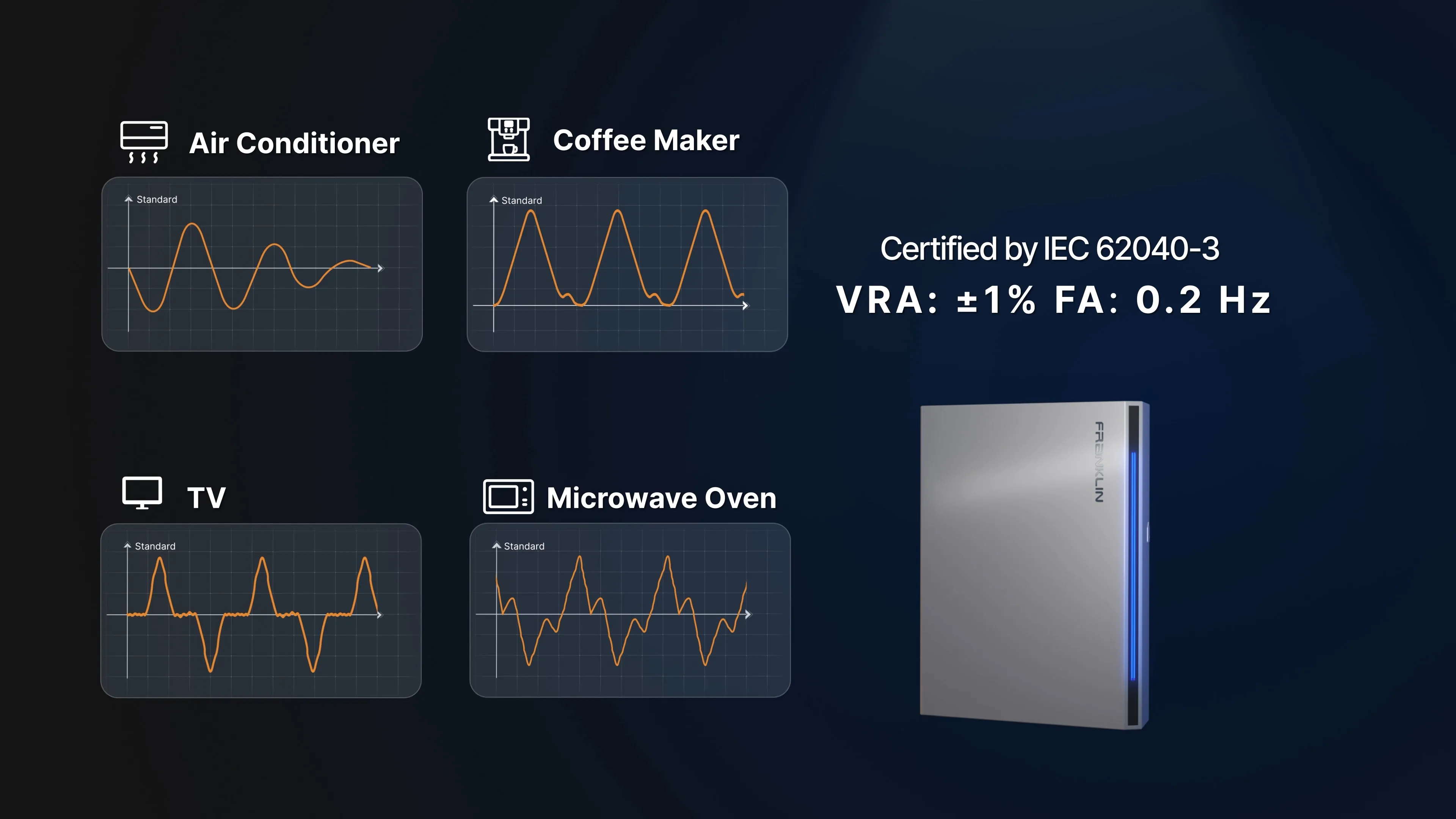
Inspired by the stringent principles used in data center and mission-critical infrastructure, the FranklinWH System brings data-center power design concepts into residential energy storage. The system now is IEC 62040-certified, setting a new benchmark for home backup power quality.
IEC 62040 is a globally recognized standard for verifying power performance and reliability in UPS systems. By meeting this standard, the FranklinWH System brings data-center-grade power stability and reliability for homeowners for the first time.
Intelligent Control for Clean Power
The FranklinWH System continuously monitors and adjusts power output to keep electricity stable and clean. This helps prevent disruptions and keeps sensitive devices running smoothly.
Smooth Startup for Large Appliances
Many large appliances, such as A/C, pumps, and compressors, need a quick burst of power when starting. The FranklinWH System is built to handle these surges, allowing heavy appliances, such as a 5-ton A/C, to start smoothly without causing load trips.
Compatible with a Wide Range of Household Devices
Modern homes use many different types of appliances. The FranklinWH System is designed to work reliably with that diversity. Whether it’s a motor-driven appliance, kitchen equipment, or smart home devices, the system delivers stable power so everything can operate as expected.
Scalable without Compromising Performance
As your energy needs grow, the FranklinWH System can expand with you. Multiple battery units can be paralleled together to increase storage capacity, while the system keeps power delivery balanced and consistent. This means homeowners can scale their energy storage over time without sacrificing performance or power quality.

Power Quality Checklist When Purchasing a Home Energy System
If you're seeking a home energy system, look beyond battery size or power rating. An important question is how well the system delivers electricity when your home actually needs it.
Here is a practical checklist for homeowners:
- Transfer Time: Lightning-fast grid-to-battery switching.
- Surge Capacity: Can the system handle 5x rated power for motor starts?
- Load Compatibility: Can the system power a mix of devices simultaneously without causing problems?
- Harmonic Specs: Ask about the system’s harmonic distortion (THDU) levels. Lower numbers mean cleaner electricity and better protection for sensitive electronics.
- Scalability: Does the system maintain power quality as you add capacity?
Conclusion
As home energy systems become more advanced, the goal is no longer just backup power, but power that behaves like the grid, or even better. For homeowners, understanding this difference is key to building a truly resilient home.
Solutions such as the FranklinWH System are helping set a new benchmark by focusing not only on power availability during outages, but also on delivering the stable, high-quality electricity modern homes require.
