


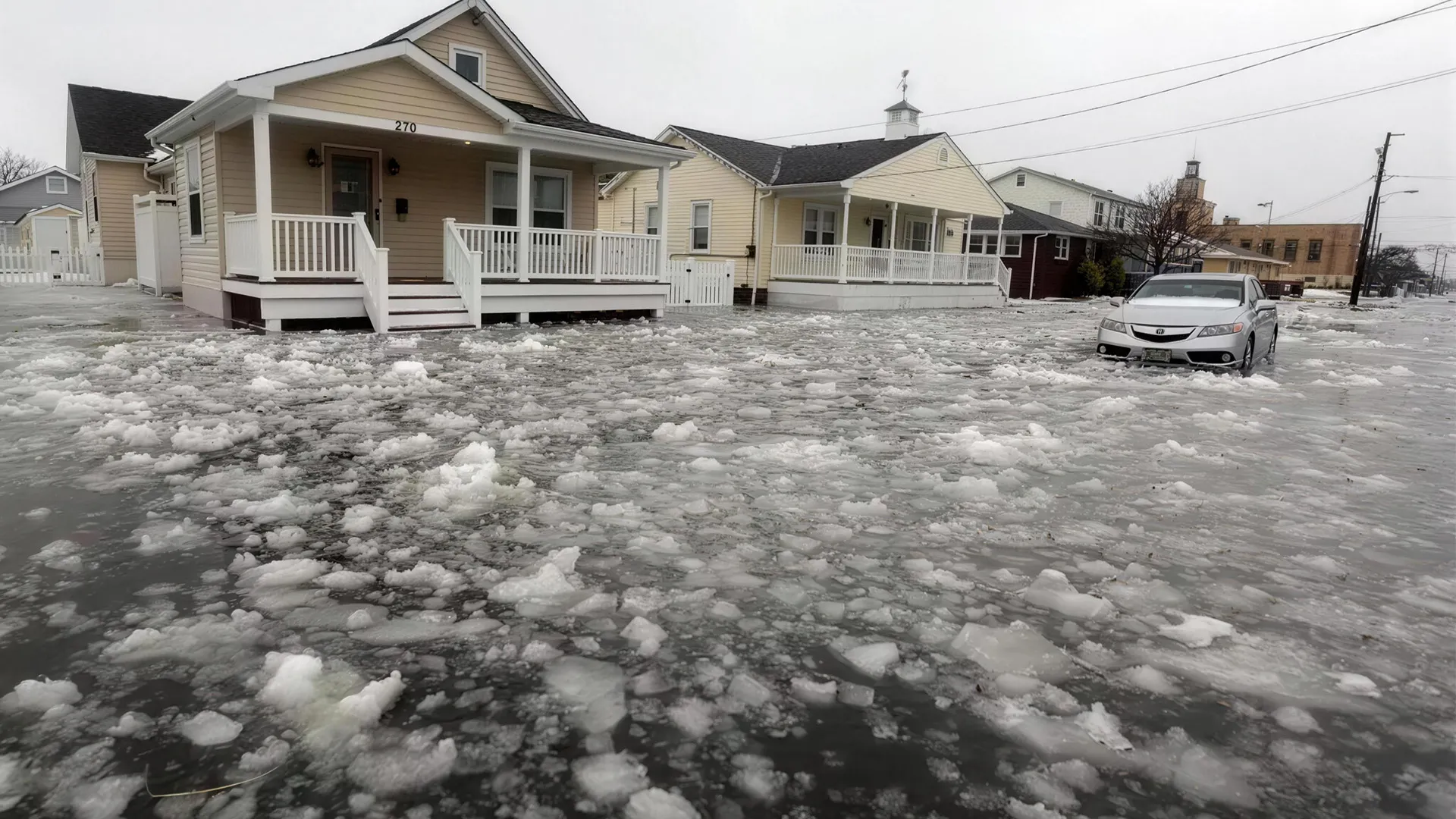
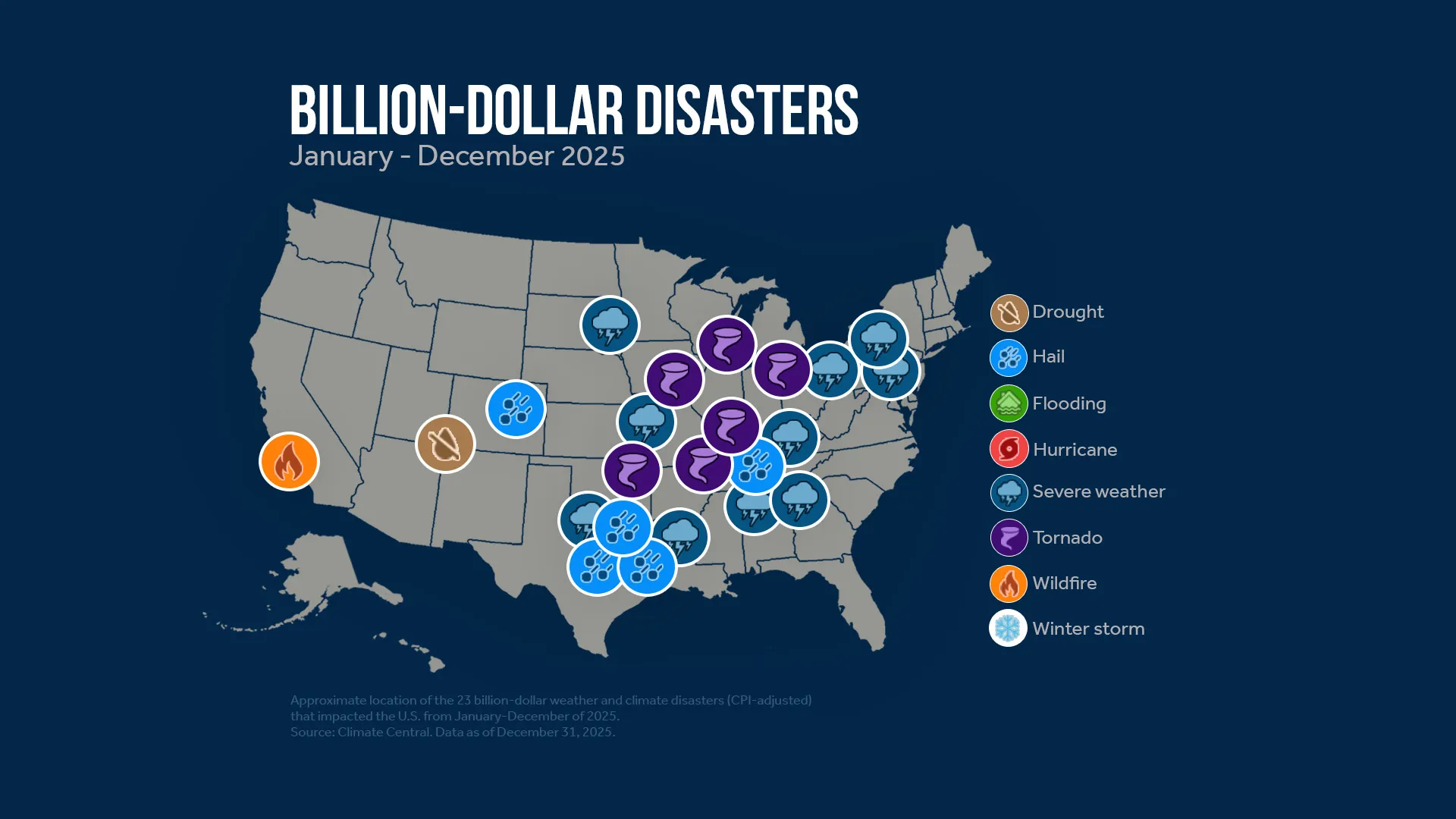
According to Climate Central, the U.S. experienced 23 separate billion-dollar weather and climate disasters in 2025 alone, causing an estimated $115 billion in total damages. Hailstorms, as one the most destructive forms of severe weather in the United States, were a significant contributor to these losses. For instance, in May 2025, severe thunderstorms struck parts of Texas, producing destructive hail large enough to damage homes, vehicles, and infrastructure, leaving 200,000 utility customers without electricity.
This article explains how hail forms and practical safety tips homeowners can use to better protect their families and property against a hailstorm.
How Does Hail Form?
Hail forms inside strong thunderstorms when powerful updrafts carry raindrops high into extremely cold parts of the atmosphere, where they freeze into ice particles. These ice particles continue circulating within the storm, collecting additional layers of supercooled water that freeze onto the surface. As the hailstone grows heavier and the updraft can no longer support it, the hail falls to the ground.
The Role of Supercells
Many of the most destructive hailstorms are produced by supercell thunderstorms. A supercell contains a rotating updraft called a mesocyclone, which allows hailstones to repeatedly cycle through freezing layers of the storm and accumulate more ice. Hail Alley in the Great Plains is particularly vulnerable to supercell thunderstorms and damaging hail events.
Hail and Climate Change
Average global temperatures are continuing to rise. Warmer temperatures can increase atmospheric moisture and thunderstorm intensity, potentially creating conditions favorable for severe hail in some regions. However, the relationship between climate change and hailstorms remains highly uncertain, and current climate models still struggle to accurately project future hail activity.

Hailstorm Preparedness and Safety Measures
Hailstorms can be devastating to both human life and property, and they are often difficult to predict. According to the National Weather Service, the most important hail safety rule is to put “as many walls as possible” between yourself and the outside during severe storms.
Recommended hailstorm safety measures:
- Confirm your homeowner’s insurance adequately covers hail and severe storm damage.
- Immediately seek shelter inside a sturdy building during severe thunderstorms.
- Stay away from windows, skylights, and glass doors.
- Keep an emergency supplies kit with water, food, flashlights, medications, and backup batteries.
- Stay informed through weather alerts and NOAA Weather Radio.
- If driving, pull over safely away from trees and power lines.
- Never attempt to outrun hailstorms on foot or in a vehicle.
- If caught outdoors, protect your head and neck with your arms or any available object.
- Carefully document any property damage for insurance claims after the storm.
- Beware of roofing and insurance scams following major hail events.
Invest in a Home Energy Management System
Hailstorms frequently damage power infrastructure and can leave hundreds of thousands of utility customers without electricity for extended periods. For much greater resiliency and peace of mind, many homeowners are considering an advanced home energy management system with battery storage.
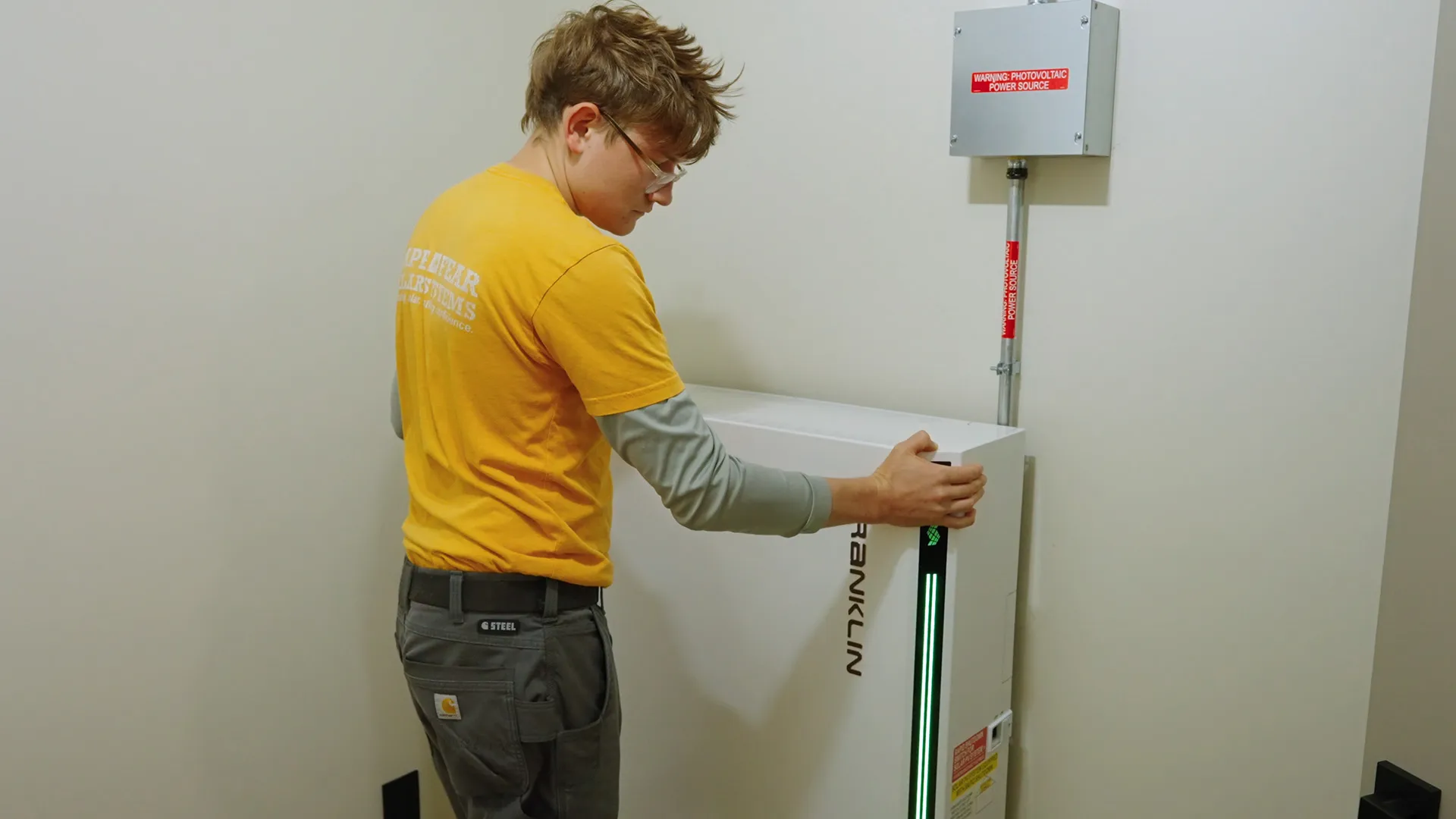
One premium solution is the FranklinWH System, designed with comprehensive intelligent energy protection features.
- Whole-Home Backup: Delivers backup power for your entire home during grid outages.
- Seamless Switch: Fast automatic outage detection and transition to backup power, ensuring uninterrupted power during grid failures.
- Black Start Capability: Automatically restarts solar charging after battery depletion when sunlight returns and the grid is still down.
- Smart Circuits: Intelligently manages household loads and prioritizes essential appliances to extend backup duration.
- Generator and Vehicle-to-Load (V2L) Integration: Enables generator and V2L compatibility for additional backup protection during prolonged outages.
- Real-Time Monitoring & Control: Enables homeowners to monitor backup status, energy usage, and system performance, and adjust power use dynamically through a mobile app.
- High Surge Power: Designed to support large startup loads such as central air conditioning systems during outages.
- Data-Center-Grade Power Quality: Delivers clean, stable, and high-quality backup power designed to support sensitive household electronics and critical appliances during outages.
- Withstand Harsh Environments: With batteries featuring IP67 weatherproof rating and a wide operating temperature range, from -4° F to 131° F, the system ensures reliable backup performance in extreme environments.
- Premium After-Sale Service: FranklinWH provides real-time monitoring, consistent maintenance, and fast, accurate remote diagnostics to every connected system, enabling enduring reliability even during extreme weather events.
Conclusion
Extreme weather events such as hailstorms can develop rapidly, causing widespread property damage and leaving hundreds of thousands of utility customers without power. As severe weather becomes increasingly disruptive, emergency preparedness is more important than ever.
Beyond basic safety measures, many homeowners are investing in home energy management systems with battery storage to improve energy resiliency during outages. Advanced solutions such as the FranklinWH System can help provide reliable backup power and greater peace of mind when unexpected storms strike.
