


Most modern home solar batteries are designed to provide roughly 10–15 years of useful service life, but actual lifespan varies depending on factors such as battery chemistry, charge and discharge cycles, depth of discharge (DoD), operating temperature, and battery design.
Rather than having a sudden failure at the end of a defined period, batteries typically lose storage capacity gradually over time. Both calendar aging and repeated cycling contribute to this degradation, which means a battery may continue operating for years while storing progressively less energy than when it was new.
What Does Solar Battery Lifespan Actually Mean?
A solar battery’s lifespan is usually described using three related metrics: calendar life, cycle life, and capacity retention.
- Calendar life: This refers to irreversible aging that occurs with the passage of time, even when the battery is not being cycled. For lithium-ion batteries, calendar degradation is influenced by factors such as time, ambient temperature, and state of charge (SOC). A battery can degrade while sitting idle.
- Cycle life: This describes how many charge-and-discharge cycles a battery can complete before its performance declines to a specified level. Repeated cycling contributes to degradation, while factors such as DoD, temperature, and charge/discharge rate can affect how quickly capacity is lost.
- Capacity retention/state of health (SOH): This indicates how much of the battery’s original storage capacity remains as it ages. There is no universal capacity threshold that marks the end of battery life. NREL notes that a stationary battery may continue operating down to around 60% of its original capacity, or potentially longer, provided the reduced capacity remains acceptable and the battery can still operate safely.
How Many Years Do Different Solar Batteries Last?
Solar battery lifespan varies by chemistry, with lithium-ion batteries generally lasting longer than lead-acid options.
- Lithium iron phosphate (LFP): Commonly used in residential battery storage, LFP batteries are known for long cycle life and thermal stability and can often last around 15 years or more.
- Nickel manganese cobalt (NMC) and other lithium-ion chemistries: NMC batteries are also found in home energy storage and typically last around 10–15 years, depending on usage and operating conditions. Compared with LFP batteries, NMC batteries generally have lower thermal stability and a shorter cycle life, although they offer higher energy density.
- Lead-acid: Lead-acid batteries are an old technology, generally having a shorter lifespan of about 3–5 years and are more affected by deep discharging and maintenance requirements.
How Do Battery Cycles Translate Into Years?
An equivalent full cycle occurs when charging and discharging add up to 100% of a battery’s usable capacity. For example, two 50% cycles equal one full cycle.
At about one full cycle per day:
6,000 cycles ÷ 365 ≈ 16.4 years
This conversion is just to help show how long it would take to reach the battery’s rated cycle limit at a given cycling frequency. However, remember that this does not guarantee 16.4 years of service life, because batteries also experience calendar aging, even when they are not heavily cycled.
Solar Battery Warranty vs. Actual Battery Lifespan
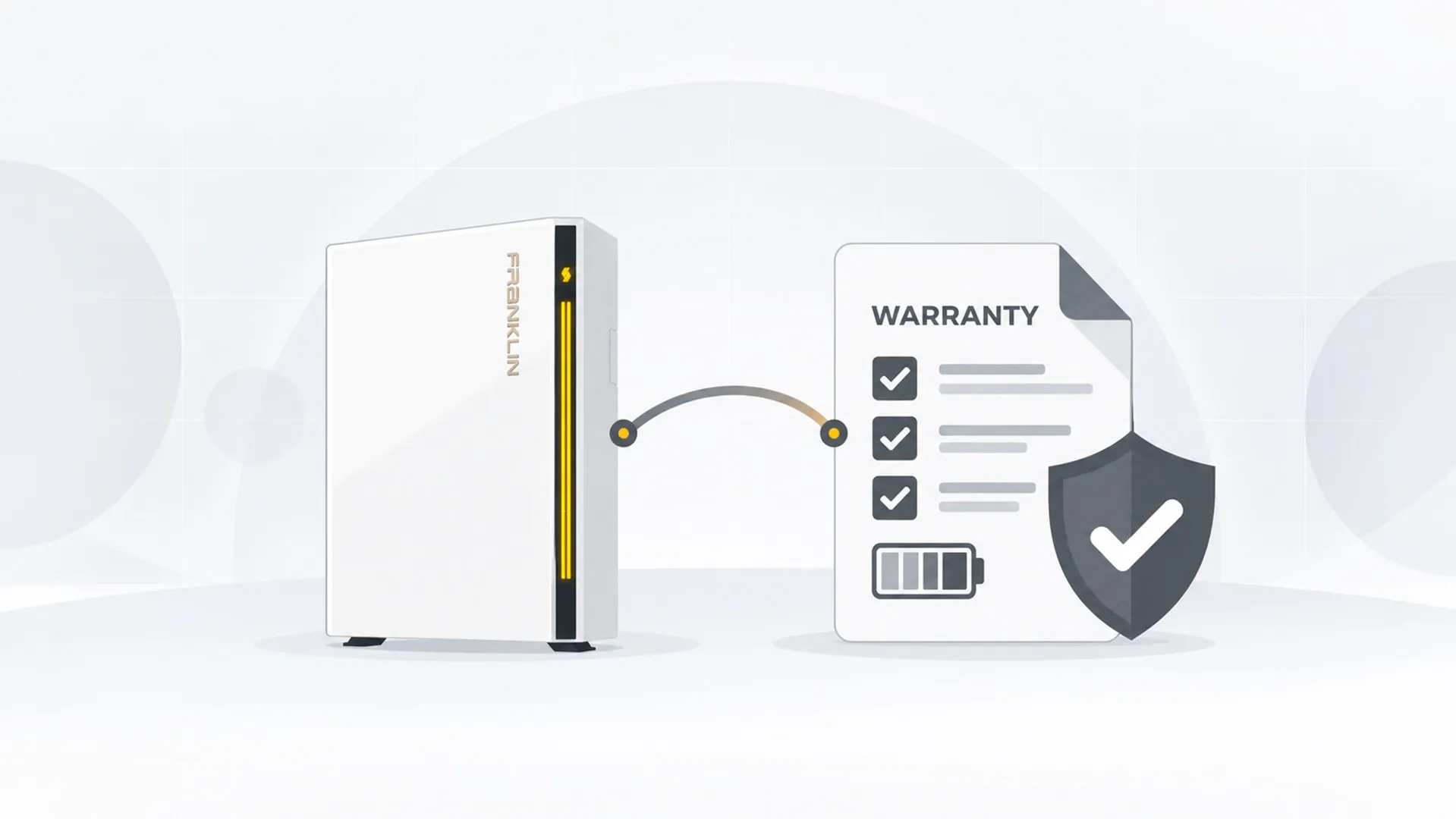
A battery’s warranty is not the same as its lifespan. Lifespan refers to how long the battery remains useful, while the warranty defines how long and under what conditions the manufacturer guarantees its performance.
When comparing warranties, homeowners should check:
- Warranty years
- Warranted cycles
- Energy-throughput limit
- Guaranteed remaining capacity (SOH)
Where a warranty includes limits on years, cycles, and throughput, whichever reaches the applicable limit first can end the warranty term. Many residential batteries offer around 10-12 years of warranty coverage with roughly 60% retained capacity at the end of the term.
By comparison, the FranklinWH aPower offers a 15-year or 60 MWh throughput warranty, with 70% capacity retention and no cycle limit, providing a longer performance guarantee than many conventional home batteries.
How the FranklinWH aPower Provides Its Longevity
The FranklinWH aPower combines structural reinforcement, cell-level management, thermal control, and continuous health monitoring to help improve the battery’s lifespan.
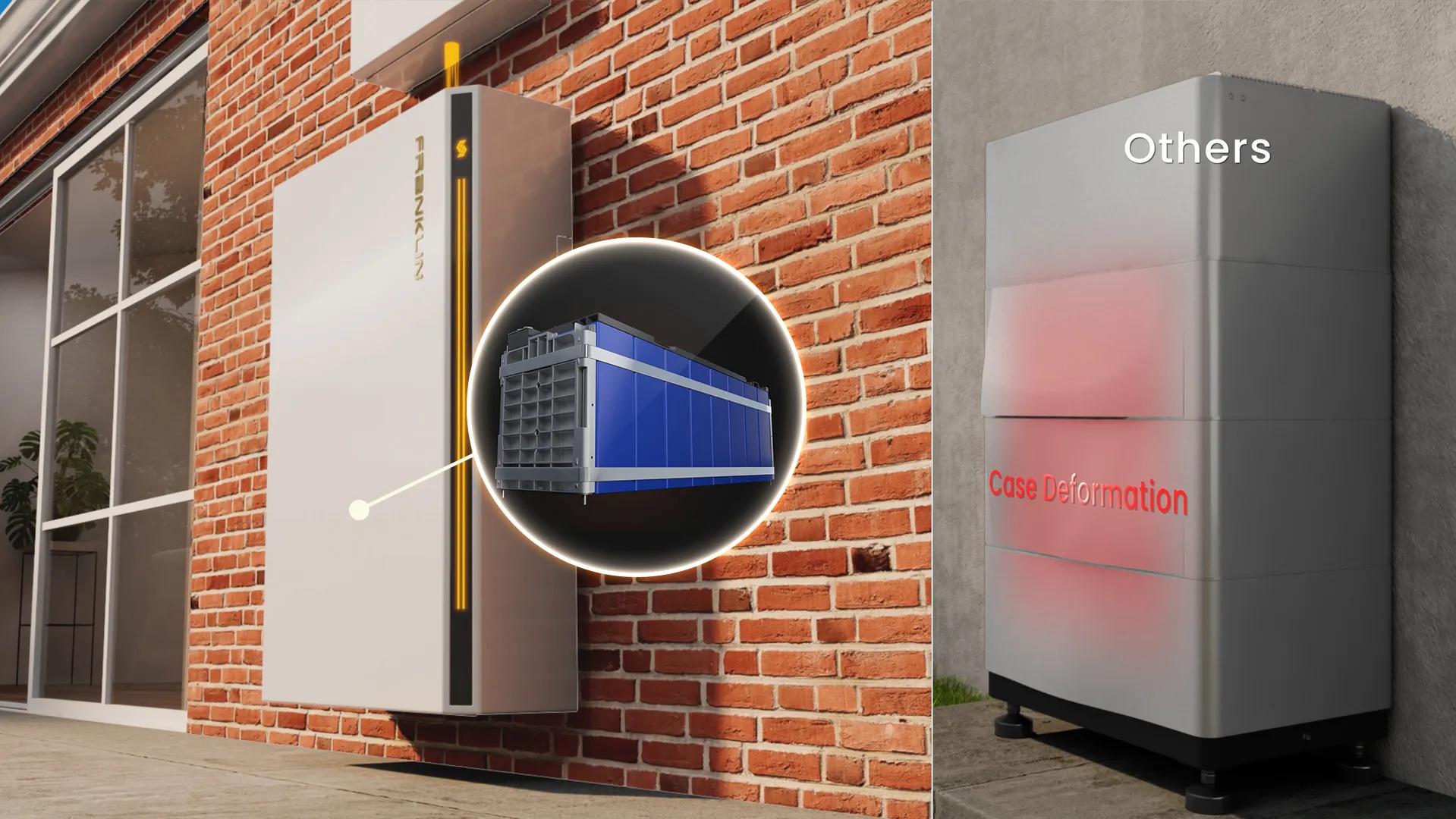
- Steel-band reinforcement: Steel bands help control cell expansion during cycling, supporting pack stability and reducing mechanical stress over time.
- Active cell balancing: Active balancing minimizes differences in cell state of charge, helping prevent weaker cells from limiting the usable performance of the overall battery pack.
- Per-cell monitoring and dual heating blankets: Individual cell-level temperature monitoring and integrated heating blankets help maintain favorable operating conditions and ensure optimal charging and discharging performance even in cold climates.
- Separate internal compartments: Battery cells, the power conversion system, and the control system are physically separated to reduce thermal interaction and help isolate faults between major components.
- Comprehensive health evaluation: The aPower continuously tracks battery health conditions and aging indicators to assess state of health and implement appropriate battery management by adjusting behaviors accordingly to ensure optimal operating conditions throughout its service life.
How to Help Your Solar Battery Last Longer
Homeowners can also take proactive steps to help extend their solar battery’s useful life by ensuring it is installed, operated, and maintained according to the manufacturer’s requirements.
- Follow manufacturer operating limits: Use the battery within its specified charging, discharging, and operating conditions rather than overriding built-in protections.
- Install it in an approved environment: Keep the battery within its specified temperature range and installation requirements, since operating outside these limits can accelerate degradation or cause damage.
- Let the Battery Management System (BMS) control the battery: The BMS automatically keeps the battery within safe operating limits. Don't force the battery to charge or discharge beyond them.
- Keep your system properly maintained: Regular inspections and professional maintenance can help identify potential issues early and ensure your system continues operating safely and reliably throughout its service life. FranklinWH installers provide ongoing system support to help keep the FranklinWH System operating properly over its service life.
How to Deal with a Solar Battery at the End of Its Life?
When a solar battery reaches the end of its useful life, it should not be placed in household trash or standard recycling bins. The U.S. EPA recommends that larger lithium-ion batteries be handled through specialized recycling or take-back channels because improper disposal can create fire, toxic, and safety risks. Homeowners should contact the battery manufacturer, installer, or an approved recycling provider for proper removal and end-of-life handling.
