



Modern homes often depend on a diverse range of energy demands, such as lights, refrigerators, HVAC units, networking equipment, EV chargers, etc. That is why a strong battery warranty matters for a home energy management system. It helps homeowners understand whether their system can continue delivering dependable runtime years after installation, what service support is available if something fails, and whether the warranty terms fit their expected usage, cycling habits, and local operating conditions.
This guide is written for U.S homeowners considering or using a home energy management system. It explains how to read a battery warranty and how to maintain coverage through practical ownership habits, and gives you a useful benchmark for warranty comparison without overwhelming the decision-making process.
Battery Warranty Metrics for Home Energy Systems
A battery warranty should align with how a home actually uses energy. The following three metrics help to ensure late-life battery performance stays reliable and service remains practical.
- Years and capacity retention: Capacity retention shows how much usable energy the battery is expected to store after years of operation. It is usually measured as state of health (SOH). For example, if your home needs at least 10 kWh overnight during an outage near the end of the warranty period, the remaining capacity of the battery should be able to cover that amount.
- Throughput: Throughput limits show how much use the warranty supports. Estimate how much energy the battery moves each year through outage backup, self-consumption, time-of-use (TOU) shifting, or VPP participation. Choose a battery with high throughput or if your home is likely to heavily use the battery.
- Cycles: Cycle limit means the warranty allows a certain number of full charge-and-discharge cycles. If a warranty says 6,000 cycles, it means the battery is covered until it has completed 6,000 equivalent full cycles. Similar to the throughput limit, the metric is closely associated with your usage frequency.
- Service and proof: Warranty value also depends on how easy it is to get support. Check the warranty start date, installer requirements, registration rules, monitoring requirements, and what costs are covered, such as labor, shipping, diagnostics, or reinstallation, etc. A clear claims process can matter as much as the number of warranty years.
Rule of thumb: remaining capacity equals nameplate usable kWh multiplied by the end-of-warranty capacity percentage. For example, a 15 kWh battery with a 70% capacity promise should retain about 10.5 kWh near the end of the warranty. With a 60% promise, it would retain about 9 kWh. If your home is expected to need around 10 kWh for essential overnight loads near the end of the warranty, that difference could decide whether the battery can still cover the full night as it ages.
How Long Are Battery Warranties for Home Energy Storage
A typical home battery warranty baseline is around 10 years with 60% SOH at the end of the term. However, do not read years and SOH alone. Check the use caps, such as throughput or cycle limits, to predict late-life runtime and bill impact, and make sure the warranty matches your usage habits.
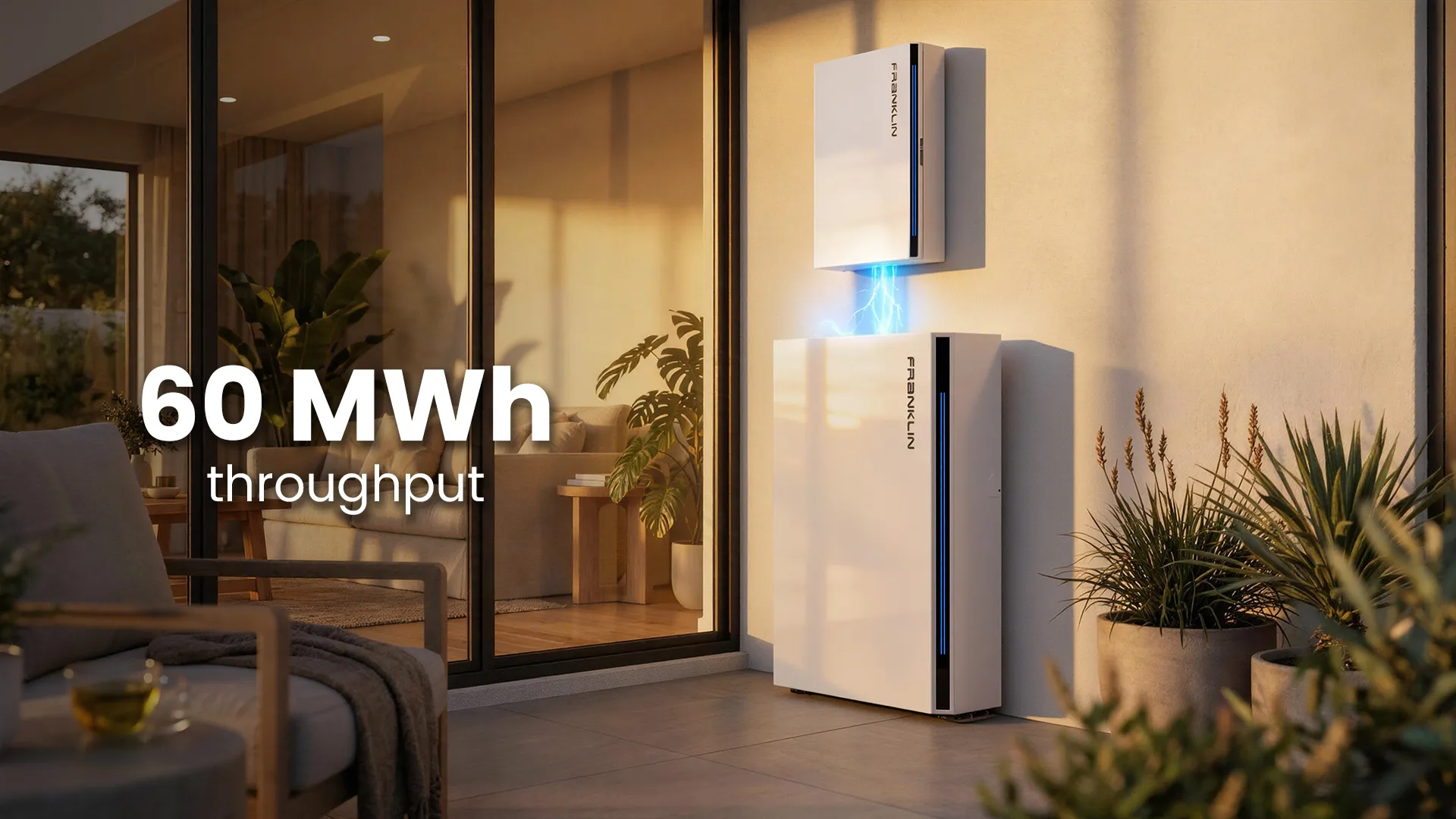
For example, the FranklinWH aPower battery offers a stronger benchmark, with a warranty of 15 years or 60 MWh throughput at 70% SOH, meeting your advanced energy needs while generating significant long-term value.
How to Quickly Compare Battery Warranties
Turn warranty policy text into a simple three-line worksheet. Write the answer beside each warranty quote, and then compare the options side by side.
Line 1: Years and performance
Note the warranty term and end-of-warranty capacity percentage. Convert that percentage into final-year usable kWh to check whether the battery can still meet your backup needs as it ages.
Line 2: Usage support
Write down the throughput or cycle cap and compare it with your expected annual battery use. Many warranties end by years or usage limit, whichever comes first. That means even a 15-year warranty could effectively end earlier if heavy daily cycling causes the battery to reach its throughput or cycle cap first.
Line 3: Service reality
Check what is covered for labor, shipping, replacement, start trigger, the registration window, monitoring, and claim path, etc. Also, confirm whether the warranty transfers if you sell the home.
Remember: If you mainly use the battery for backup, pay closer attention to warranty length and capacity retention. If you use it heavily for TOU shifting, solar self-consumption, or VPP participation, prioritize higher throughput or cycle limits. The best warranty meets your final-year energy needs, lines up with your cycling habits, and provides a clear service path when help is needed. This tip helps you turn the fine print of the warranty into practical value.
Two illustrative warranty examples with the three-line worksheet:
| Line | Quote A | Quote B |
| Years + End SOH | 15 years @ 70% SOH | 10 years @ 60% SOH |
| Usage Support | 60 MWh | 40 MWh |
| Service | Extensive coverage, including labor, starts at commissioning, and is transferable. | Partial coverage without labor; start at delivery, and is non-transferable |
How to Keep Your Battery Warranty Valid
A battery warranty stays valid only when the system is installed, used, and documented according to the manufacturer’s rules.
- Use certified installers and authorized channels: Many warranties require purchase from an authorized seller and installation by certified personnel. For example, FranklinWH requires products to be bought from an Authorized Partner and installed by a FranklinWH Certified Installer.
- Register the system on time: Registration may be required for full coverage. FranklinWH notes that unregistered systems may receive only a four-year limited warranty instead of the full 15-year term.
- Keep the system connected and monitored: Internet connectivity may support monitoring, diagnostics, and software updates. FranklinWH states that loss of connectivity may reduce the full warranty period.
- Operate within approved conditions: Follow the installation manual, user manual, temperature limits, electrical limits, and maintenance guidance. Misuse, improper storage, unauthorized repairs, relocation, or extreme environmental exposure may be excluded.
- Keep proof for claims: Save purchase records, installation details, serial numbers, installer documents, monitoring data, and service history. FranklinWH’s claims process asks for proof of purchase, product details, installation date, issue description, and supporting photos or data. You are also advised to put the materials required in one cloud folder because fast access shortens any future claim under your battery warranty.

Conclusion
A home energy management system is a long-term investment, and the battery warranty should be interpreted through the lens of your home's real needs. Start by checking whether the battery can still meet your late-life overnight energy needs. Then, align the throughput or cycle limit with your expected usage habits, and finally, verify the service terms are clear enough before support is ever needed.
Use a simple worksheet to compare warranties. Register on time, and keep your evidence folder updated. With these steps, you can protect long-term runtime and enable high bill-saving potential while ensuring a smoother service process under your battery warranty.
