


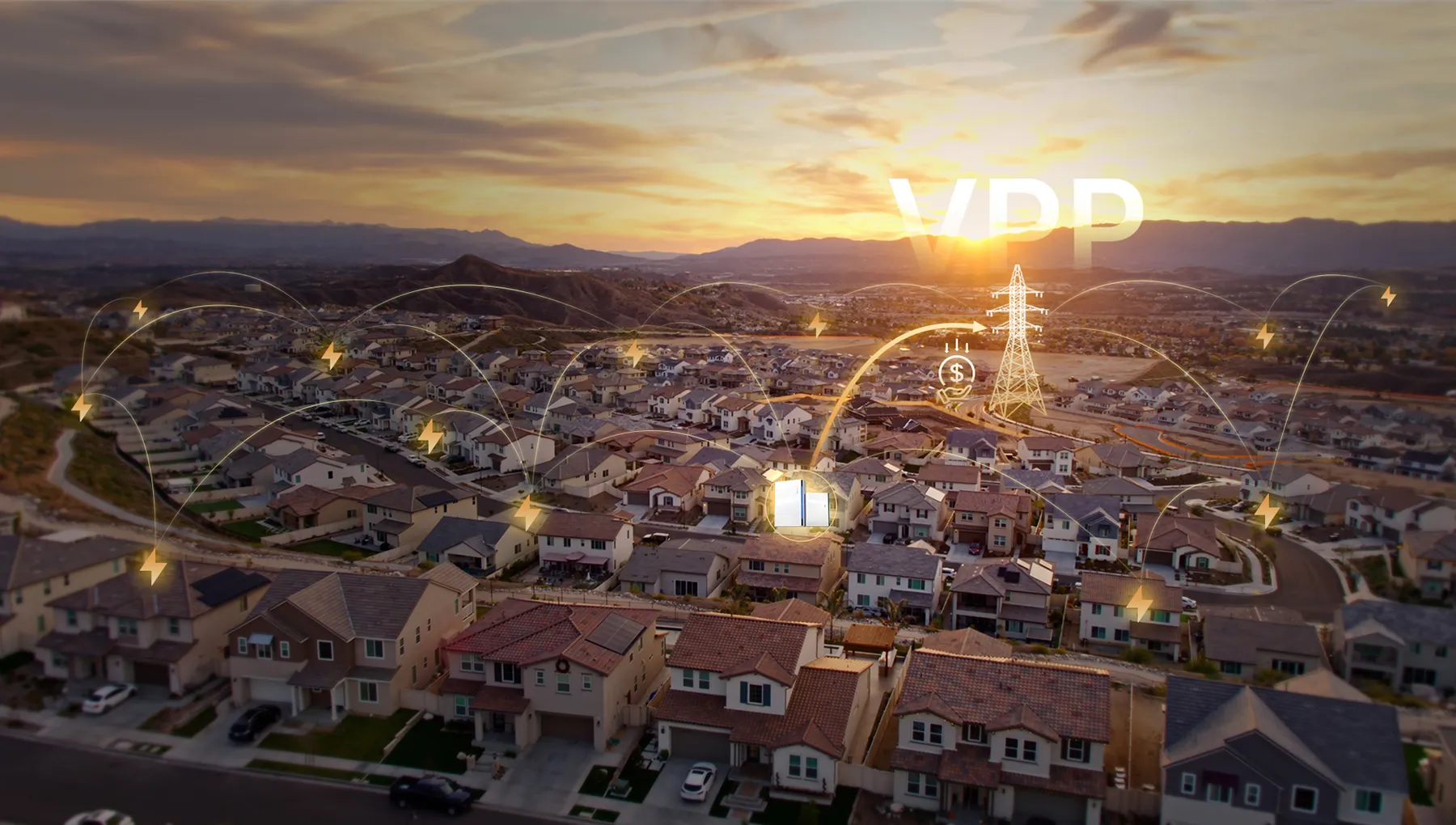
On sweltering summer evenings, with millions of A/C running simultaneously, grid stress rises fast, heightening the risk of outages. Increasingly, the solution to those rolling blackouts is not bigger power plants. It’s the humble home battery in your home.
A Virtual Power Plant (VPP) aggregates home energy assets such as storage, solar, and EV chargers, into a single controllable resource that delivers grid services such as peak reduction, resiliency, and cost-effective capacity. It enables homeowner participation, ensures reliable VPP program performance, and rewards customers for sharing their energy assets with the grid. Across neighborhoods, home batteries can be connected to the utilities through sophisticated software to form a VPP. That network of energy storage can discharge stored electricity that instantly eases grid stress when demand spikes. This marks a meaningful transformation beyond home resiliency and savings. Home batteries are now becoming flexible with grid resources, capable of generating new value for both the households that own them and the grid.
VPP Payment Models
While VPP programs are rapidly being rolled out across the country, homeowners who enroll their home batteries in a VPP don’t get paid the same way in every program. The payouts can come in either bill credits or real cash, depending on the program.
- Upfront incentive (or rebate): A one-time payment when the battery is installed or committed to the VPP. This helps offset the cost of the battery and lowers the entry barrier for households. A 10 kWh eligible home battery can earn up to $3,000 upfront in National Grid New York’s ConnectedSolutions program offering a rebate of $300 per kWh.
- Capacity-based payment: Homeowners receive a recurring payment (monthly, seasonal, or annual) simply for making a certain amount of battery capacity (often measured in kW) available to the grid, even if the battery isn’t regularly discharged.
- Performance-based payment: Performance-based payments are an increasingly common form of compensation, with homeowner earnings linked to verified battery performance during grid events. Payouts may be based on the actual power a battery delivers or reduces (measured in kW) or the actual energy it contributes over time (measured in kWh). In Massachusetts’ ConnectedSolutions program, a home battery can earn up to about $275 per kW per season based on its average load reduction performance during summer peak events.
Today, VPPs are increasingly offering a layered compensation structure that combines different payment types, making economics much more robust for homeowners.
VPP Participation Models
The way homeowners participate in VPP programs varies. In most programs, homeowners enroll on the VPP program through an OEM app, but in some cases, enrollment may also be completed through an external link by a third party.
In utility-owned models, the utility itself provides (or subsidizes) the battery (so the battery is utility-owned) and controls it during grid events. Customers then get predictable bill credits in return, while the utility gains a dispatchable resource it can call on during peaks. The Green Mountain Power’s Energy Storage Lease program is a good example for a utility-owned VPP program.
Bring-Your-Own-Device (BYOD) programs allow customers to enroll batteries they already own or buy a battery (so the battery is customer-owned) and opt into a program in exchange for upfront incentives, monthly capacity payments, or event-based performance payouts. BYOD scales quickly because it leverages existing customer assets rather than requiring utilities to install hardware. Majority of the VPP programs in the country today are BYOD model.
Aggregator-led VPPs are run by third-party companies often referred to as Distributed Energy Resource Management Systems (DERMS) that pool thousands of customer-owned batteries and offer their combined resources or grid-stabilizing services to utilities, retailers, and grid operators. The aggregators capture revenues and share a portion with homeowners as seasonal or per-event payments.
Types of Grid Support the Home Battery Provides
When a home battery joins a VPP, it can play very different roles depending on what the grid needs. Some of the most common use cases today are described as follows.
Capacity provision
In this mode, the battery is essentially put on standby for seasonal or peak-demand periods. When the grid anticipates a spike, the battery remains charged and ready. If called upon, it discharges to relieve pressure on the grid. Homeowners get compensated for simply being available.
Frequency Regulation
The electric grid must keep its alternating-current frequency within tight limits (in North America, around 60 Hz). If demand suddenly rises or a generator trips, frequency may drop. A battery participating in frequency regulation can respond within milliseconds or seconds, charging or discharging quickly to restore balance. Frequency regulation often commands relatively high compensation per unit of energy or service provided.
Demand Response (DR) via Storage
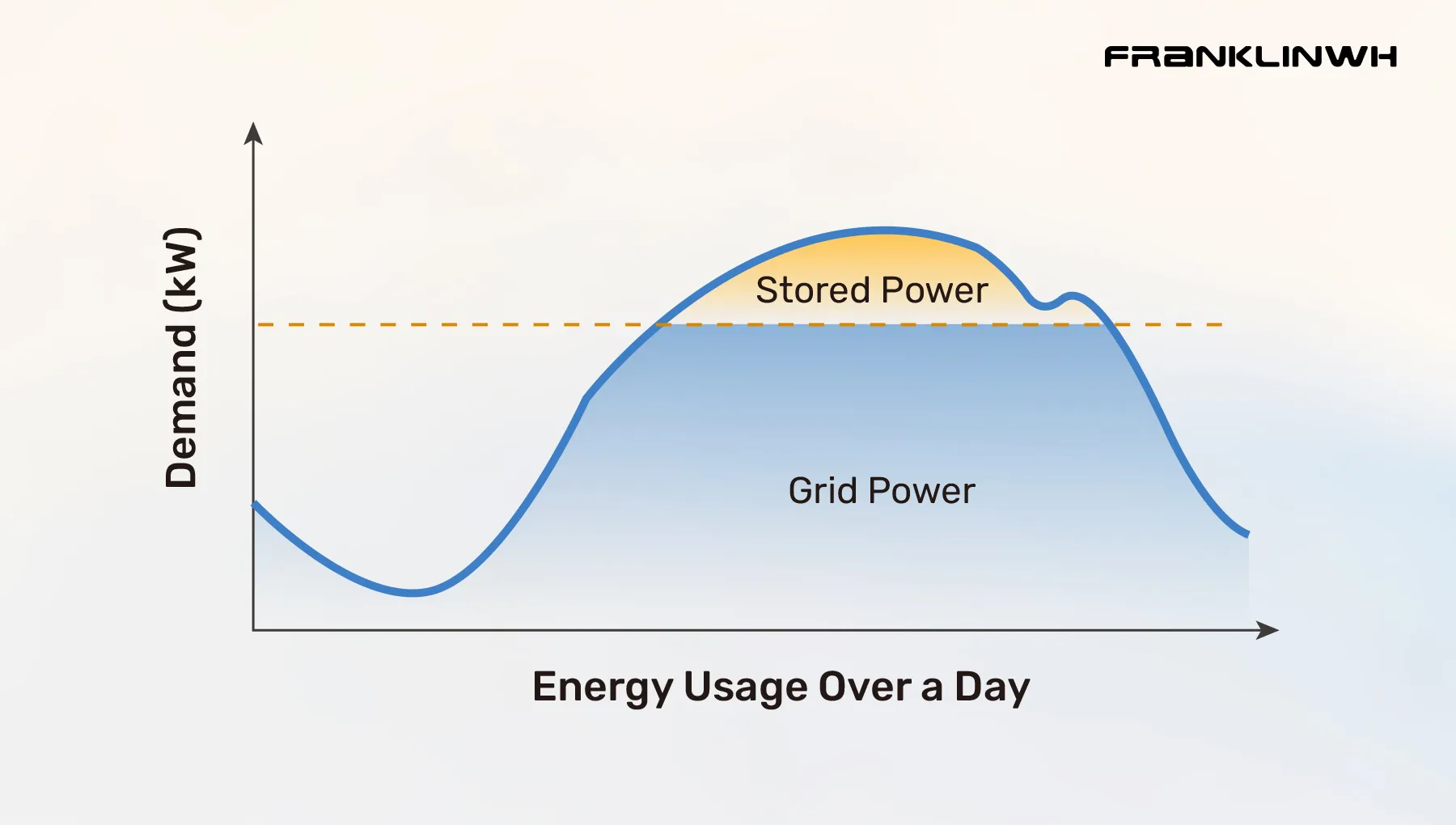
When the grid is stressed, during peak demand hours as an example, the battery shifts a household’s load away from grid power. Instead of drawing electricity from the grid, the home runs on the battery. That reduces the net demand on the grid. Payment to homeowners in DR-type programs is typically linked to how much energy is saved or how much load power is shifted.
Final thoughts
Residential VPPs are poised to be a game-changer for clean energy and grid stability. For homeowners, the shift allows them to receive real value in return for delivering stored energy or flexible capacity, creating a new source of income by supporting the grid.
However, this opportunity comes with real challenges. VPPs rely on complex software, communications protocols, and coordination. Scaling VPPs also requires alignment across many stakeholders. Therefore, standardized interoperability protocols, transparent compensation mechanisms, consumer protections, and robust regulatory frameworks are critical to building trust.
Residential VPPs are changing home battery use and emerging as a foundational pillar for the clean-energy transition. For homeowners and regulators alike, the promise is real, as long as we don’t ignore the challenges.
