


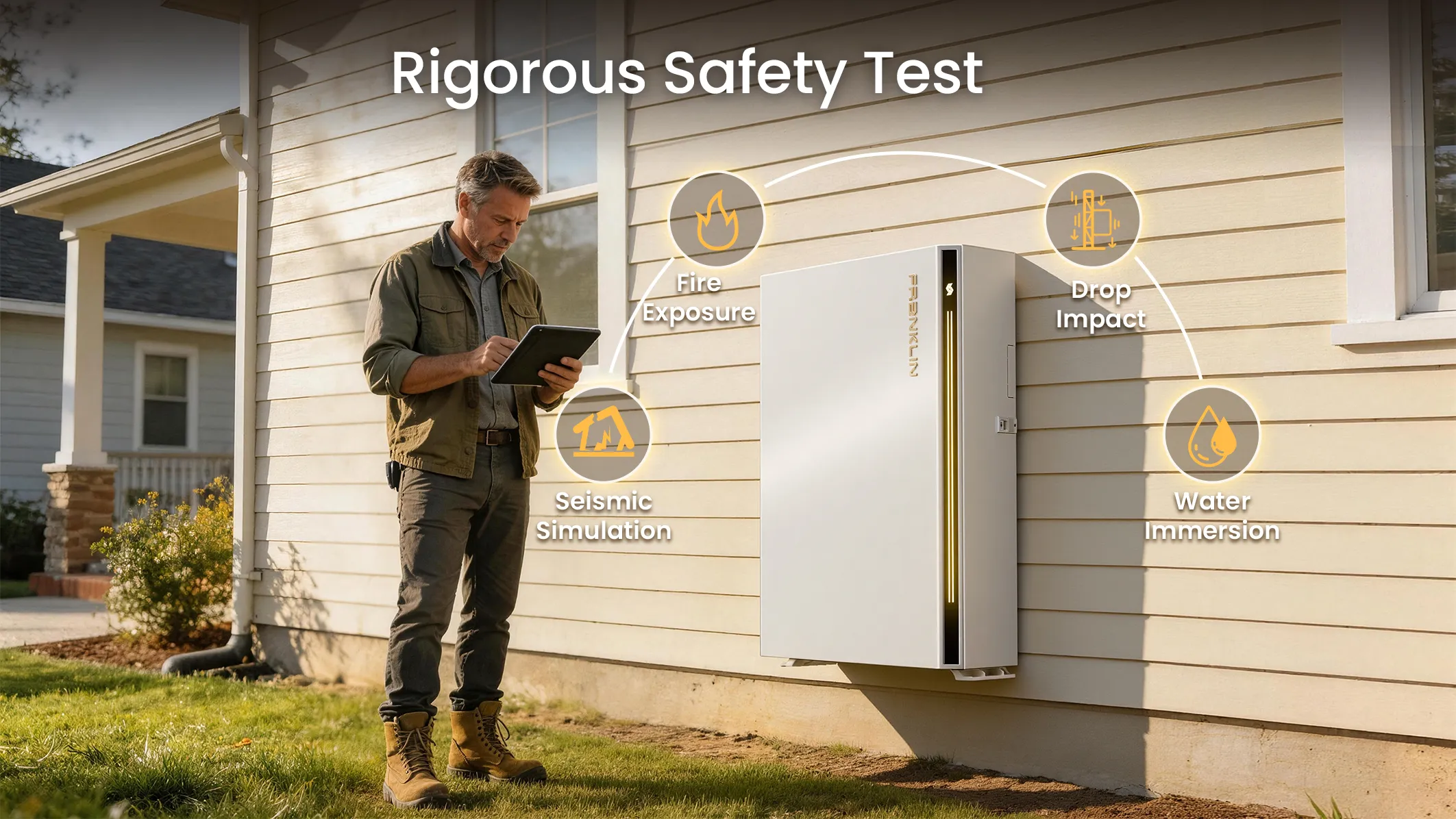
To many homeowners, residential batteries often look similar from the outside. However, premium home batteries and lower-quality alternatives can differ significantly in safety.
The Battery Management System (BMS) plays a critical role in ensuring safety by monitoring and controlling cell voltage, temperature, current, and system status. However, the ultimate safety depends on more than the BMS alone. It’s also closely associated with how the entire battery is designed and validated to handle extreme conditions.
This is exactly what sets the FranklinWH aPower batteries apart. Alongside the advanced BMS-based monitoring and control, thoughtful safety-focused architecture, direct physical isolation, and demanding real-world validation tests are also prioritized to enable unrivaled multi-layered battery protection.
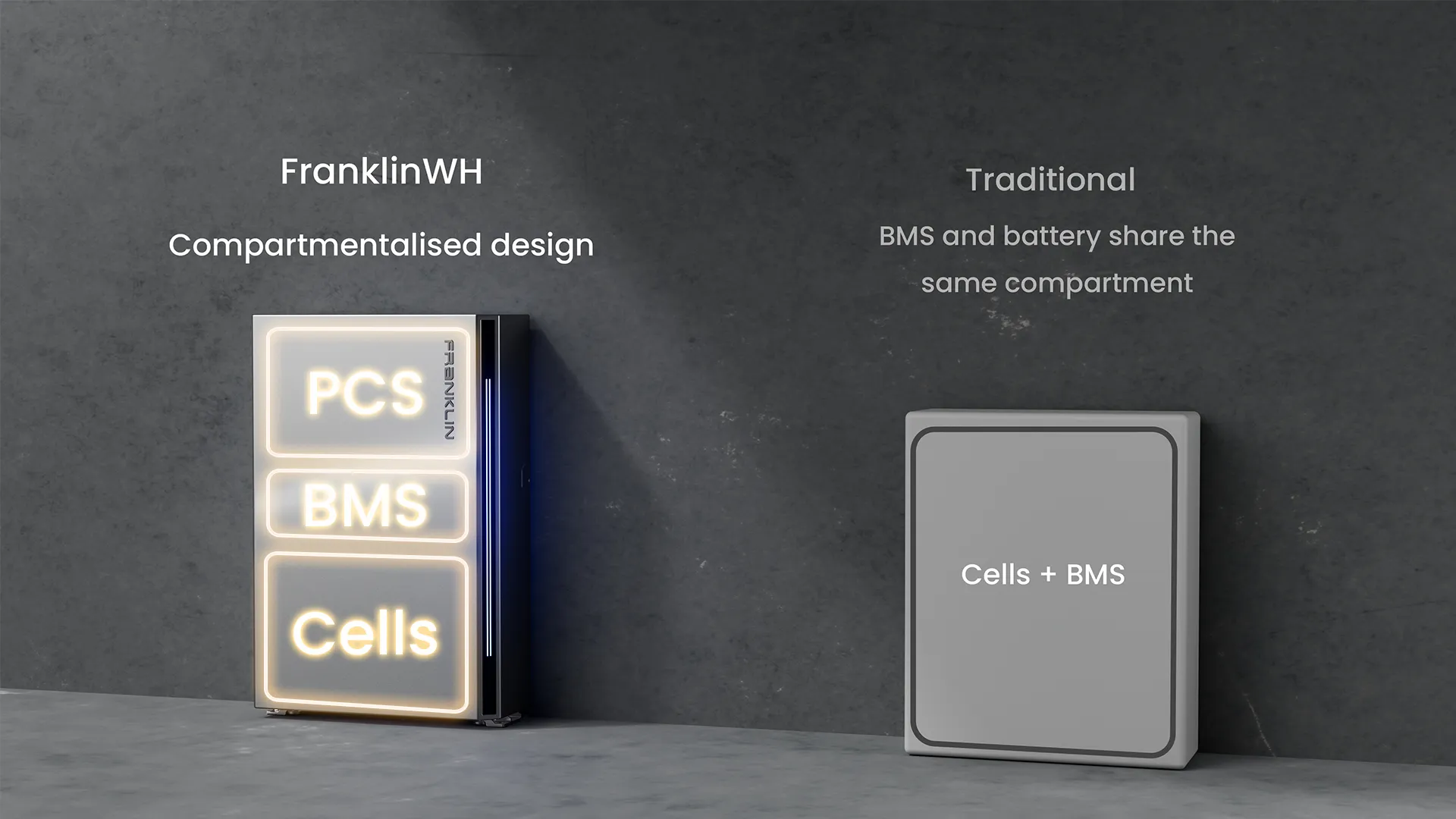
Separate Compartments for Cells and Control Systems
In many traditional residential battery designs, the BMS, acting as the battery’s “brain,” is often housed close to the battery cells. This layout introduces a critical vulnerability. When a cell overheats or releases heat, gas, or electrolyte during a fault, the nearby control electronics could be easily affected. Once the BMS is compromised, the battery may lose part of its ability to monitor, respond, and shut down safely.
FranklinWH addresses this risk through a compartmentalized architecture. In the aPower, the battery cells, BMS, and the power conversion system (PCS) are isolated in separate compartments to minimize the chance that a fault in one area spreads to another. This structural approach ensures the aPower’s control system remains capable even during abnormal conditions.
Two Independent BMS-Controlled Switches
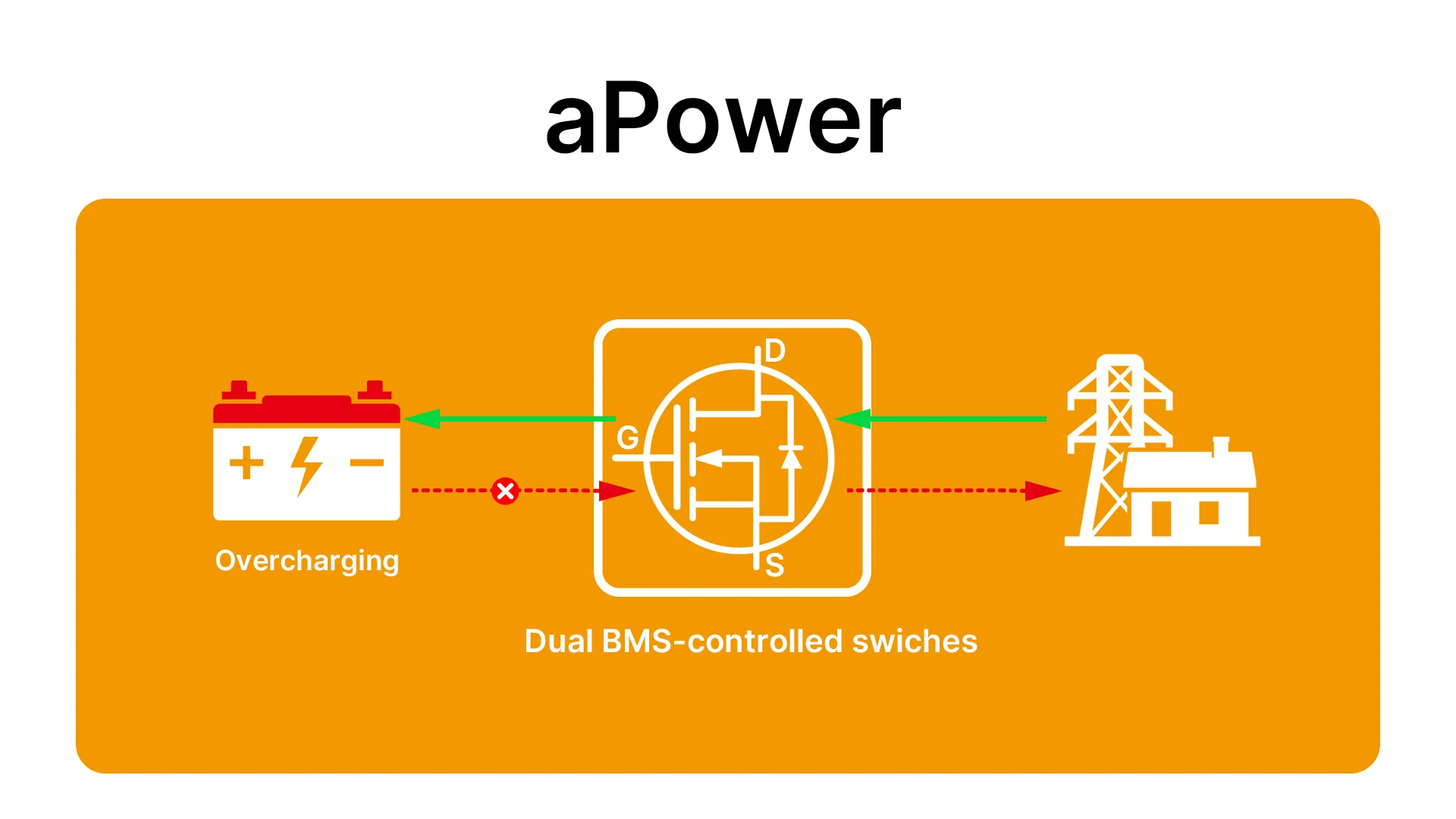
A residential battery needs to control energy flow in two directions. During charging, the battery must stop accepting energy once it reaches its safe upper limit. During discharging, it must stop supplying power before it drops below its safe lower limit.
The FranklinWH aPower uses separate control paths for charging and discharging, each with a BMS-managed electronic switch. By monitoring voltage, temperature, current, and state of charge (SOC) in real time, the BMS can decide whether the battery should continue charging, discharging, or stop. If an abnormal condition occurs, such as overcharging, the BMS will disconnect the relevant path through the switch for immediate protection.
Hardware Protection as the Last Resort
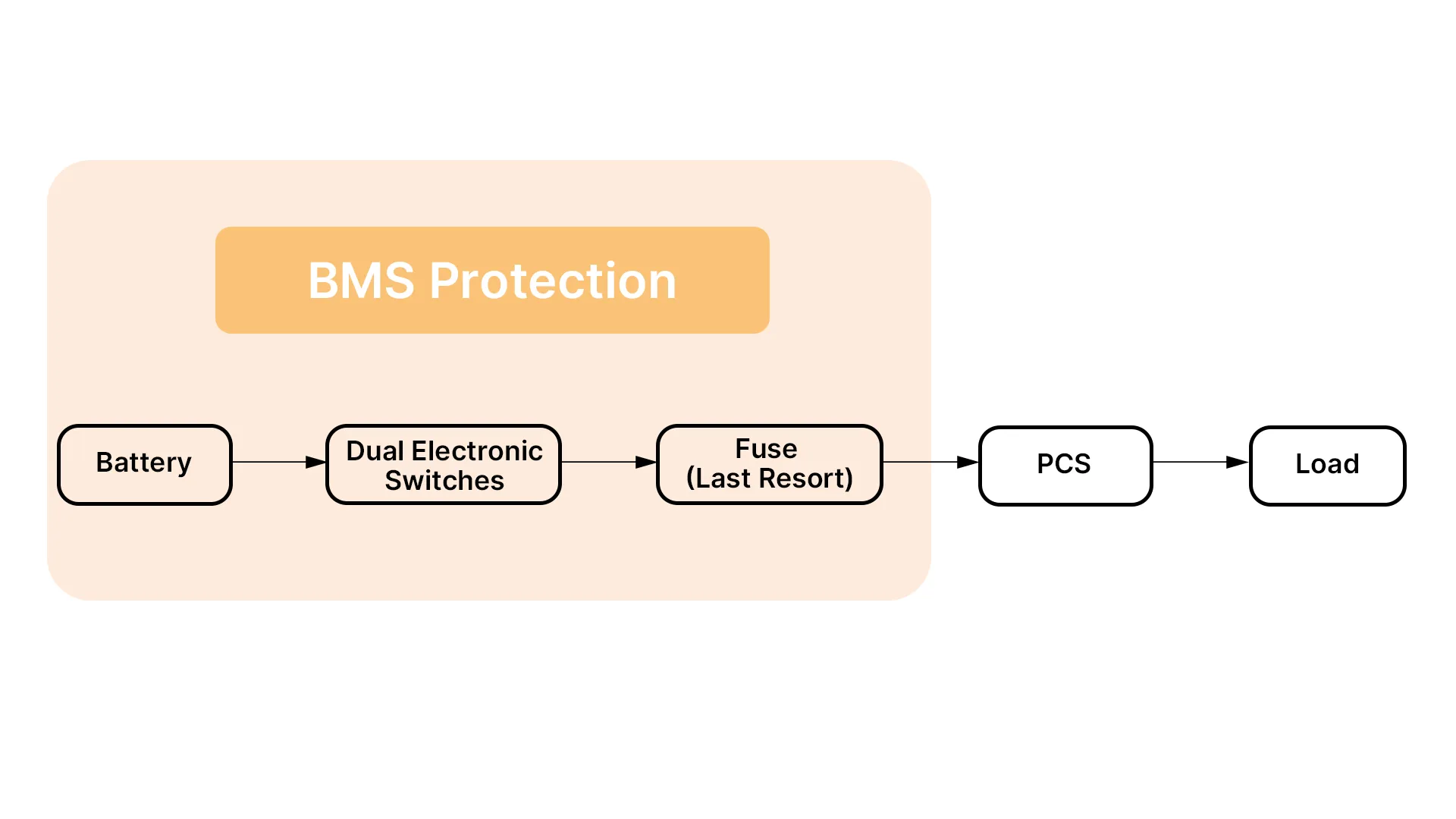
Beyond the BMS-managed protections, the aPower also includes hardware-level safeguards as a final line of defense. Physical protection components, such as fuses, MOSFET cut-offs, and dedicated short-circuit protection circuits, can respond to serious issues, including overcurrent, short circuits, or voltage anomalies, even when software control or communications is disrupted.
The hardware protection adds an independent backup layer when more direct physical isolation is needed.
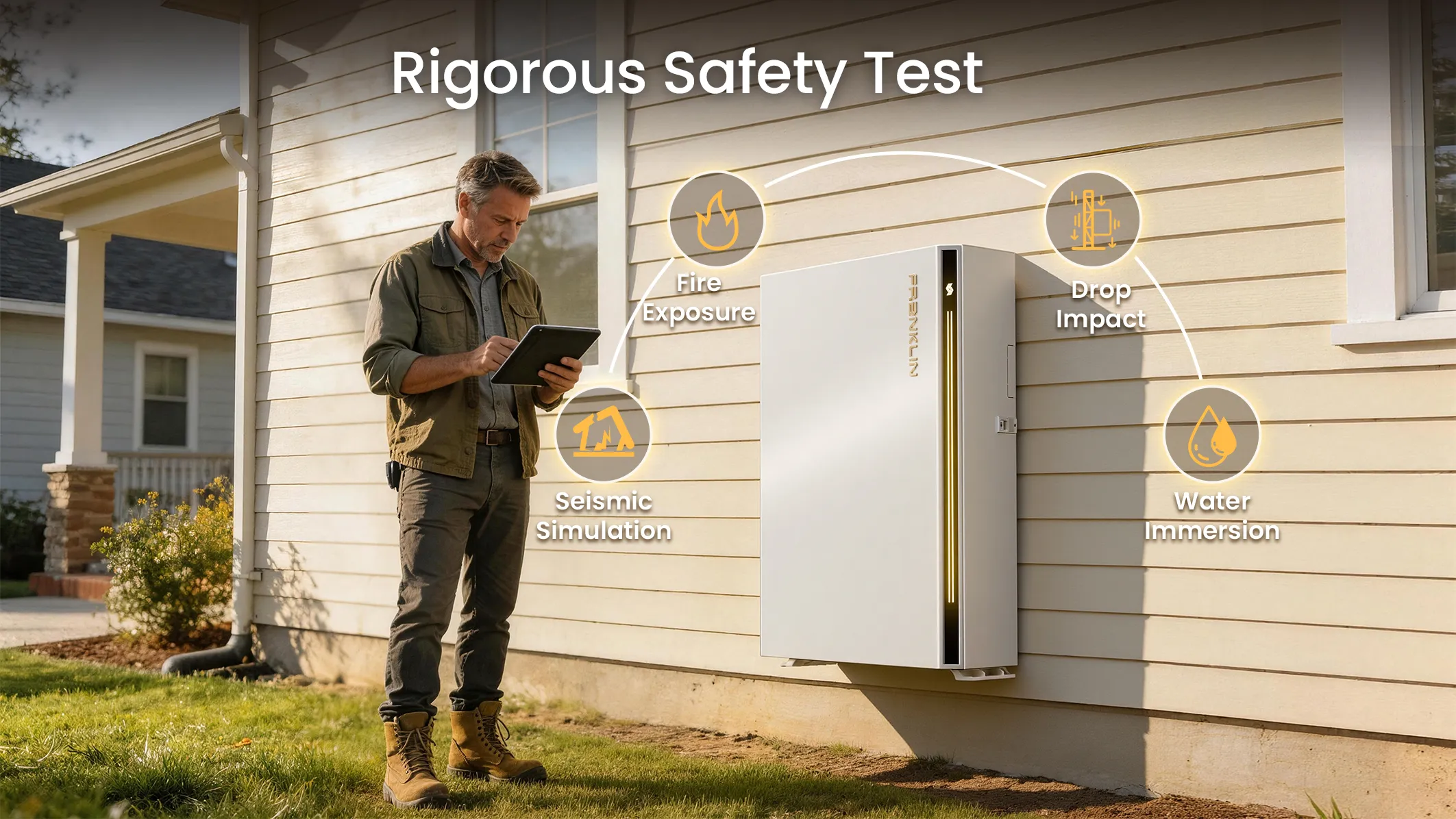
Validate Safety through Rigorous Real-World Tests
Strong safety design must be proven under extreme conditions. That is why FranklinWH validates the aPower through demanding tests that simulate major battery fault scenarios.
Thermal Runaway Tests: Evaluating a Major Internal Safety Risk
Thermal runaway occurs when heat inside a battery cell spirals out of control and may spread to nearby cells or battery modules. It can be attributed to various factors such as short circuits, overcharge, excessive external heat, or mechanical damage, etc. To test the aPower’s ability to contain this risk, FranklinWH heated one cell until it entered thermal runaway, and then observed whether the failure spread.
The results showed that:
- Only the two neighboring cells were slightly affected.
- A parallel battery system placed 10 cm away remained undamaged.
- The fault stayed largely local instead of triggering a wider chain reaction.
This containment is enabled by high-temperature insulation materials between cells and an integrated die-cast aluminum-alloy housing that helps isolate battery units.
FranklinWH also conducted repeated internal ignition simulations. During thermal runaway, a cell can release flammable gases. To test whether these gases could ignite, engineers used an aPower battery pack that had already entered thermal runaway and performed ten deliberate ignition attempts inside the pack, spaced ten minutes apart.
The results showed:
- No fire
- No explosion
- Controlled internal pressure
This outcome is enabled by the aPower’s advanced anti-explosion valve, which releases gas when pressure rises and closes again when pressure drops, helping manage pressure while limiting oxygen entry.
External Fire Exposure Test: Evaluating Resistance to Outside Flames
Battery safety is not only about preventing internal faults. A home battery must also withstand fire risks from its surrounding environment.
To evaluate this, FranklinWH placed the aPower directly into a controlled flame for 30 minutes, simulating an extreme external fire scenario. The test examined whether the battery would explode, enter uncontrolled thermal failure, or intensify the fire.
The results showed:
- The battery did not explode or enter aggressively uncontrolled failure.
- After removal from the flame, it self-extinguished within five minutes.
- Although the cells expanded and some internal protective structures shifted slightly, the battery remained intact.
This result shows that even under severe flame exposure, the aPower is designed to maintain structural integrity and controlled behavior rather than becoming an additional fire source.
Several structural design features enabled this exceptional performance:
- An integrated die-cast aluminum-alloy structure helps manage stress caused by cell swelling.
- Flame-retardant casing materials help protect the battery from external fire sources.
- Reserved internal expansion space allows cells to swell under extreme heat without crushing critical electronics.
Final Thoughts
Premium battery safety is rarely the outcome of one single feature. True protection requires a combination of an advanced BMS, a thoughtful architecture, direct physical protection, and rigorous real-world testing.
The FranklinWH aPower brings these elements together to detect early risks, isolate localized faults, manage extreme conditions, and remain controlled under stress. Tested against demanding scenarios such as thermal runaway and external fire exposure, the aPower is designed to deliver safe, stable, and reliable performance over time.
For homeowners, the various safety elements of aPower translate into lasting confidence and peace of mind by building a battery storage solution that not only powers their home, but also proactively protects it.
