


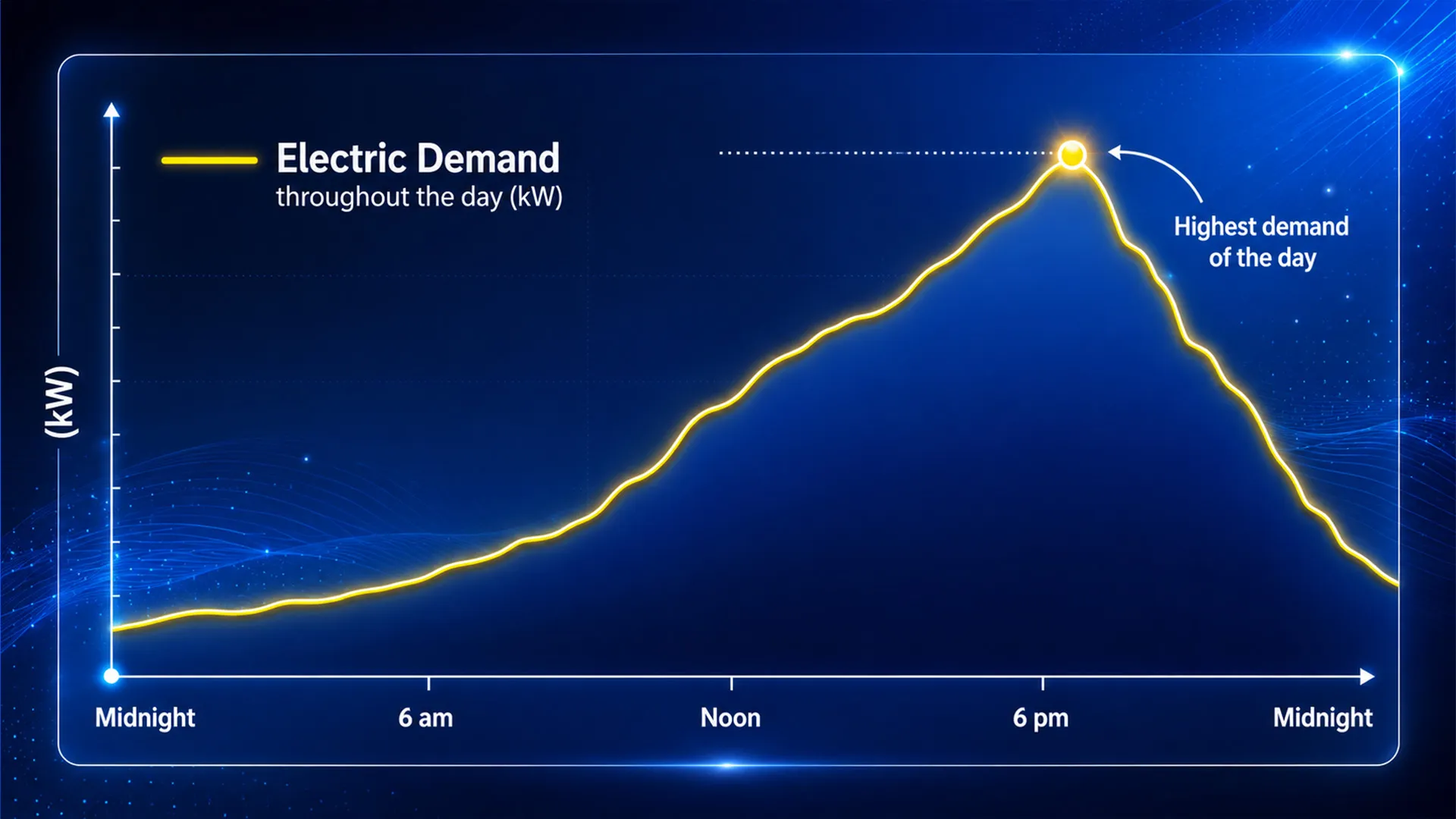
For most households, electricity billing has long followed a simple formula: the more kilowatt-hours you consume, the more you pay. This standard volumetric billing model, however, is increasingly being joined by an alternative rate structure known as the demand charge.
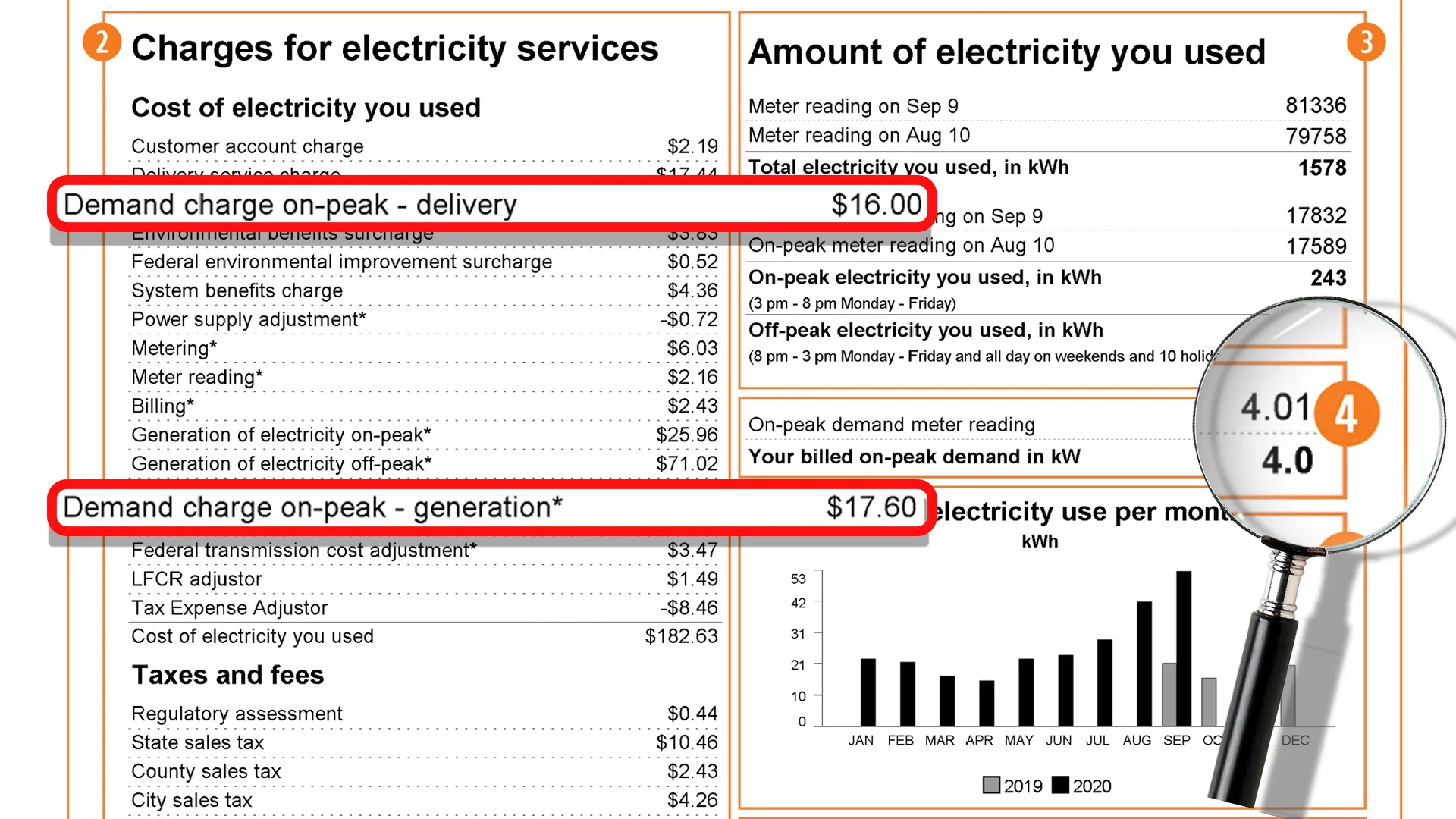
Unlike volumetric charges, which are based on total cumulative consumption over a billing cycle, demand charges are calculated from the highest average power drawn during any short interval, typically 15 or 30 minutes, within a billing period. This peak demand, measured in kilowatts (kW), is then multiplied by a per-kW rate and added to the monthly bill. This means that even a single brief spike in simultaneous appliance use can carry significant cost implications for the entire month.
While demand charges have long been a standard feature of commercial and industrial electricity tariffs, they have recently begun appearing in optional residential rate plans offered by a growing number of utilities. Current examples include Arizona Public Service's Time-of-Use (TOU) plan with a demand charge, Georgia Power's Smart Usage plan, and Salt River Project's Average Demand plan for solar customers.
This shift reflects a deliberate utility strategy to encourage customers to think not just about how much electricity they consume over a month, but when and how intensively they use it at any given moment. For homeowners considering these plans, understanding how demand charges work is therefore the essential first step toward optimizing energy use and maximizing potential savings.
How Demand Charges Work
Think of electricity use as driving a car. A standard energy charge is similar to the distance shown on the odometer. It reflects the total amount of electricity used, measured in kWh. A demand charge, by contrast, is more like the highest average speed recorded during part of the journey. It reflects how intensively electricity is drawn from the grid, measured in kW.
Demand-based plans generally offer lower per-kWh prices but add a monthly charge based on the home’s highest average power demand during a defined period.
Under Arizona Public Service’s summer residential demand charge plan, electricity costs $0.14227 per kWh during on-peak hours and $0.05943 per kWh during off-peak hours. The plan also imposes a demand charge of $19.585/kW, calculated from the household’s highest average power demand in one hour during on-peak periods (between 4 p.m. and 7 p.m.) on weekdays.
By contrast, APS’s standard TOU plan charges $0.34396/kWh on-peak and $0.12345/kWh off-peak, without a demand charge. The demand plan is therefore financially beneficial only when the savings from its lower energy rates exceed the added demand charge.
Example: When a Demand Charge Plan Saves Money
Assume a household uses 1,200 kWh during a summer billing month:
- 120 kWh during on-peak hours
- 1,080 kWh during off-peak hours
- 4 kW as its highest on-peak hourly demand
- A 30-day billing cycle
Standard TOU Plan
- On-peak energy: 120 kWh × $0.34396 = $41.28
- Off-peak energy: 1,080 kWh × $0.12345 = $133.33
- Basic service charge: 30 days × $0.458 = $13.74
- Monthly total: $41.28 + $133.33 + $13.74 = $188.35
TOU Plan with a Demand Charge
- On-peak energy: 120 kWh × $0.14227 = $17.07
- Off-peak energy: 1,080 kWh × $0.05943 = $64.18
- Demand charge: 4 kW × $19.585 = $78.34
- Basic service charge: 30 days × $0.458 = $13.74
- Monthly total: $173.34
In this example, the demand-based plan saves the homeowner approximately $15 for the month*. Its lower energy rates yield savings of about $93.35, exceeding the $78.34 demand charge. However, a higher demand peak could erase those savings, which is why strategic energy and load management is critical on this type of plan.
*The saving is only for illustrative purpose. The actual number varies by rate plan and household usage profile.
How to Reduce Demand Charges in Electricity Bill
A demand-based plan delivers the greatest savings when a household keeps its highest measured grid demand low. That can be challenging in a modern home, where air conditioning, cooking, laundry, water heating, and EV charging may overlap during the peak evening hours and create a costly demand spike.
Behavioral Strategies
One solution is to stagger major appliance use or move flexible loads outside the utility’s demand window. For example, homeowners can run the oven and dryer at different times or delay EV charging until late night. This approach works, but it requires careful planning and may force households to change their daily routines, which may not be easy for many homeowners.
Limitations of Solar Alone
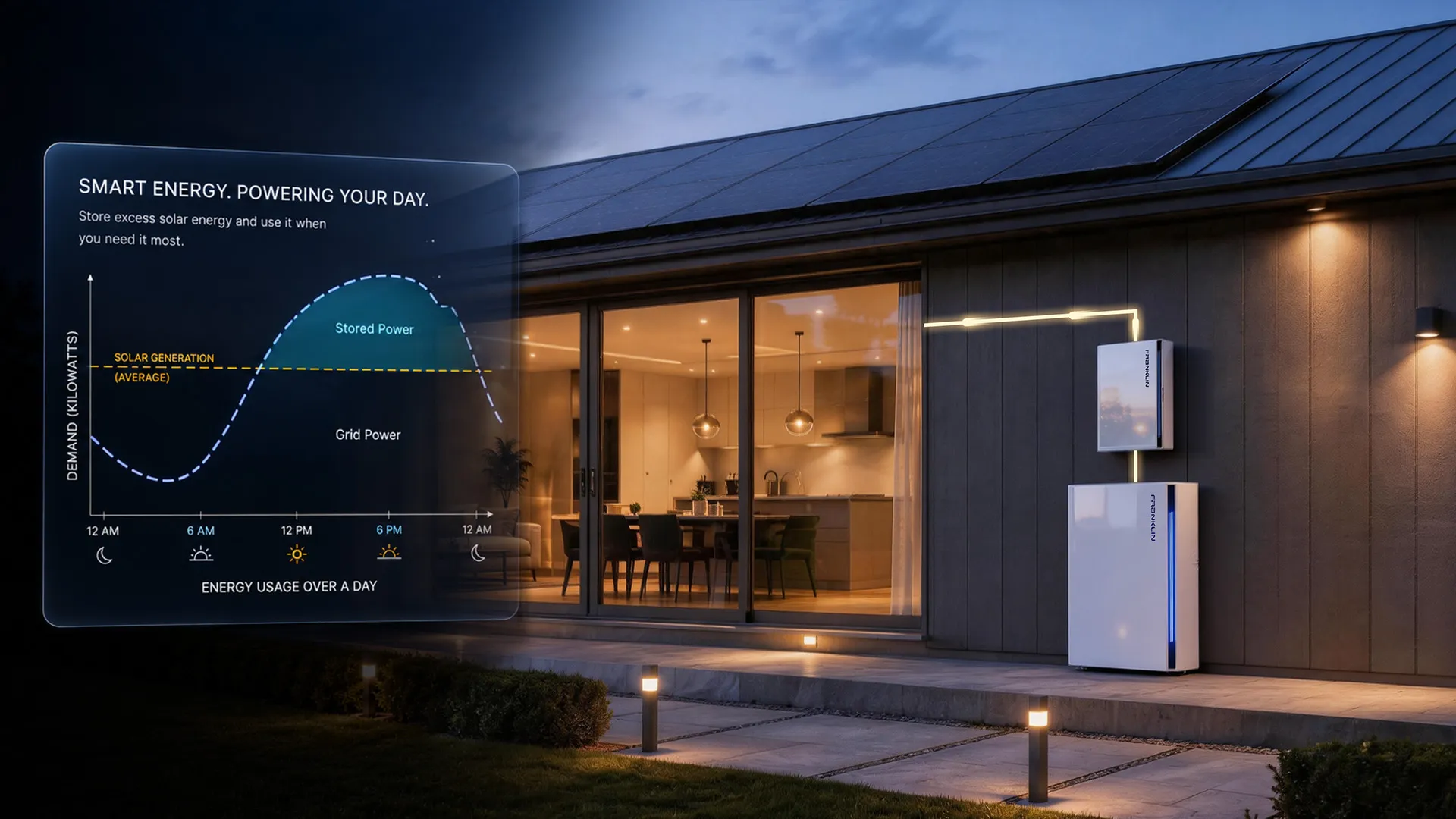
Solar alone may offer limited protection against demand charges. This is because residential demand often peaks in the late afternoon or evening, when peak solar generation is declining or no longer available.
Home Energy Management System as a Game Changer
This is where a home energy management system with battery storage can make a substantial difference. By monitoring household demand and discharging the battery as grid draw rises in the evening, the system can enable peak shaving, supplying part or all of the home’s loads to prevent a high monthly demand peak.
The FranklinWH System represents the pinnacle of this solution. The FranklinWH aPower battery delivers 10 kW of continuous output, allowing stored energy to support substantial household loads during peak evening hours. Multiple units can be added to ramp up available power and capacity as household energy needs grow. The FranklinWH System can also flexibly schedule individual loads, such as EV charging, to operate during lower-cost off-peak hours.
Combining a well-suited demand-based plan with a home energy management system can capture the plan’s lower energy rates while limiting the added demand charge. This creates greater savings potential than relying on a standard TOU plan alone, without compromising homeowner’s energy experience.
Understand the Key Components of Your Electricity Bill
A demand charge is only one part of an electricity bill. Before choosing a demand-based plan, review the full rate structure.
- Energy charge: Based on total electricity use. Under a TOU plan, rates vary by time of day.
- Demand charge: Based on the home’s highest average grid demand during the utility’s specified measurement period.
- Supply charge: Covers the cost of generating or purchasing electricity.
- Transmission and distribution charges: Cover the cost of transporting electricity through the grid and delivering it to the home.
- Basic service charge: A fixed fee for metering, billing, and account services.
- Adjustments, taxes, and fees: May include fuel adjustments, program surcharges, regulatory charges, and taxes.
While not all of these components will necessarily appear on every electricity bill, understanding them is essential when comparing rate plans. Consider all applicable charges, not just the advertised energy and demand rates, since other bill components may also affect your overall savings.
Conclusion
Demand charges are still new to many residential customers, but understanding how they work is key to managing electricity costs. A demand-based plan can offer attractive savings, provided the household can keep its peak grid demand low. By pairing the right plan with a home energy management system and battery storage, homeowners can reduce costly demand spikes, take advantage of lower energy rates, and unleash greater savings potential.
