


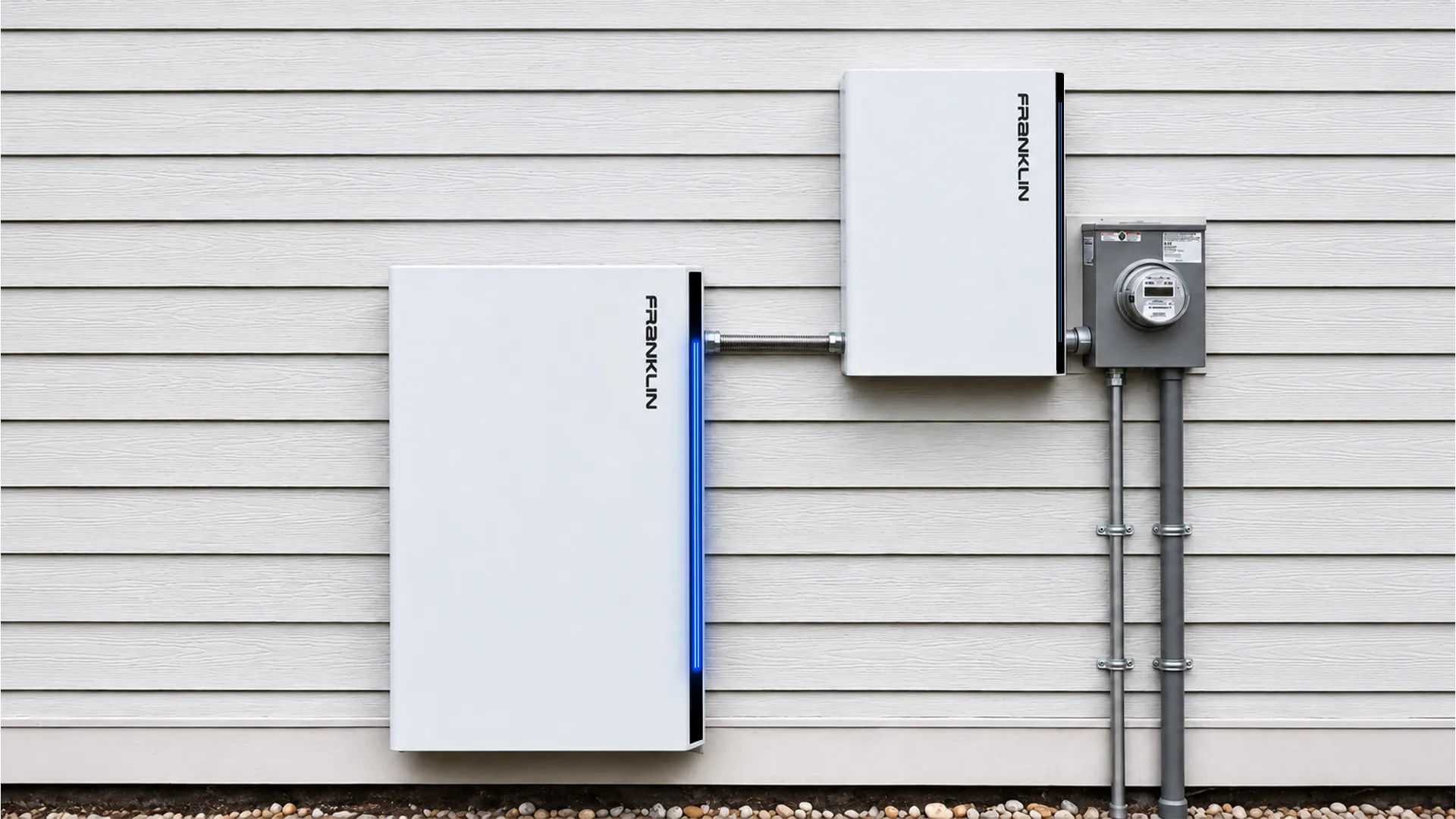
As more homeowners adopt solar panels, battery storage, and intelligent energy management technologies, behind the meter (BTM) energy systems are becoming increasingly relevant to residential energy use. These systems operate on the customer’s side of the electric utility meter, allowing homeowners to generate, store, and manage electricity locally.
Understanding the differences between behind the meter (BTM) and front of the meter (FTM) systems helps homeowners better understand how home energy is generated, stored, consumed, and exchanged with the utility grid. This guide explains what BTM means, how it works, and how it differs from FTM systems.
What Is BTM
The utility meter serves as the boundary between the customer's electrical system and the broader utility grid. In a grid-connected system with bidirectional metering, it measures electricity imported from and exported to the grid.
BTM refers to electricity generation, storage, and other energy resources connected on the customer's side of the utility electricity meter. It’s a local, customer-sited energy system. That said, BTM is not limited to residential applications. It also applies to commercial and industrial energy systems.
For example, a typical home solar-plus-storage system generates electricity through rooftop solar panels to power household appliances, while the excess solar energy can be stored in a battery for later use. While solar and battery production can meet household needs, all energy is BTM. The meter isn’t recording any input from the utility. When solar generation and battery output combined cannot meet household demand, the system seamlessly supplements power from the grid, and the meter records that for billing.
With an appropriately sized system, homeowners can have a self-sufficient energy life and even break free from the grid. This is also the primary purpose of many advanced BTM systems
Common BTM Energy Technologies
BTM systems encompass a wide range of technologies that help customers improve energy efficiency, reduce grid dependence, and gain greater control over their electricity use. Common BTM technologies include:
- Rooftop Solar Panels: Generate on-site electricity during daylight to offset household electricity consumption, with surplus electricity potentially exported to the utility grid.
- Battery Energy Storage Systems (BESS): Store electricity sourced from excess solar generation or off-peak grid power for later use, such as during peak-rate periods or power outages.
- Home Energy Management Systems (HEMS): Intelligently coordinate solar generation, battery storage, electricity tariffs, and household energy consumption to optimize energy use and reduce grid electricity expenses.
- Other Distributed Energy Resources (DERs): Include backup generators, vehicle-to-load (V2L), controllable EV chargers, and flexible electrical loads that provide additional energy flexibility and resiliency.
BTM vs. FTM: Key Differences
In contrast to BTM systems, FTM systems are directly connected to the utility grid, typically to generate, store, or deliver bulk electricity for the broader grid power network. Common examples include utility-scale solar farms, wind farms, and grid-scale battery storage facilities. However, one important note is that if your home needs to draw power from the grid to supplement your local energy system, it needs to come across the meter rather than simply stay behind it.
The following table compares the key characteristics of BTM and FTM systems.
| Feature | Behind the Meter (BTM) | Front of the Meter (FTM) |
| Grid Connection | Customer's side of the utility meter | Utility/grid side of the customer meter |
| Primary Purpose | Meet home energy needs and reduce electricity expenses | Supply electricity and services to the wider grid |
| Common Technologies | Rooftop solar, home batteries, HEMS | Utility-scale solar/wind farms, grid-scale batteries, fossil fuel-fired power plants |
| Grid Interaction | Consume locally generated electricity and potentially export surplus power | Deliver electricity and grid services directly to the grid network |
| Typical Ownership | Homeowners, businesses, or third-party providers | Utilities, independent power producers, or other investors |
| Typical System Size | Often smaller, ranging from residential to commercial and industrial installations | Often larger, including utility-scale installations |
In simple terms, BTM systems primarily serve customer-side energy needs, while FTM systems primarily serve the wider grid electricity network. The defining distinction is their electrical connection point relative to the customer’s utility meter, rather than system ownership or size.
What Are the Benefits of BTM Systems?
BTM systems offer homeowners greater energy independence, improved energy security, and more control over electricity costs.
- Reduce Grid Electricity Consumption with Solar: Standalone rooftop solar systems generate electricity to power household appliances and export surplus energy to earn revenue, reducing retail electricity imports.
- Advanced Long-Term Energy Savings with Self-Reliant Energy: A premium HEMS, such as the FranklinWH System, can dynamically optimize when the battery charges, discharges, or holds energy based on solar generation, home energy use, and electricity rates. This helps maximize self-generated solar energy use and enable multi-tier energy arbitrage, producing the highest potential energy savings.
- Provide Backup Power During Outages: Advanced BTM battery systems with whole-home backup capabilities can keep all household appliances running during grid outages.
- Manage Peak Electricity Demand: BTM systems can reduce peak grid demand through battery discharge and smart load management, lowering demand charges where applicable.
What Should Homeowners Consider Before Installing a BTM System?
Before installing a BTM system, homeowners should evaluate several factors to ensure optimal performance, cost savings, and long-term value.
- Electricity Rate Structure: Understand local electricity rates, time-of-use (TOU) pricing, and demand charges to identify potential savings opportunities by configuring your HEMS to achieve energy arbitrage.
- Solar and Storage Capacity: Size solar panels and batteries according to household electricity consumption, peak power demand, and backup needs. It’s always advisable to look beyond your current needs. Plan for near-future expected consumption to future-proof your energy growth.
- Grid Interconnection and Export Rules: Check utility interconnection requirements, export restrictions, and compensation policies for surplus electricity.
- System Compatibility and Energy Management: Ensure compatibility between system components such as the solar inverter, batteries, and other energy resources, with intelligent controllers and software to optimize energy use.
- Installation Costs and Long-Term Value: Consider installation expenses, available local incentives, maintenance support, warranties, expected electricity savings, and system reliability over its lifespan.
As a premium HEMS with battery storage, the FranklinWH System represents the gold standard in integrated BTM energy solutions. It intelligently coordinates solar, battery storage, grid electricity, and household loads, helping homeowners optimize energy costs and unlock massive long-term value. Engineered for enterprise-level power reliability, the system prioritizes robust design at every level, from advanced battery cell management to resilient pack-level architecture, delivering ultimate reliable power over its 15-year battery warranty period.
Schedule a free consultation with FranklinWH to start your energy freedom journey!
