


As more homeowners look for reliable solutions for power backup, two options gain attention: the portable power station and the home battery storage system. While both can keep the lights on during an outage, they differ significantly in functionality. This guide explores how each system works, what each is best suited for, and how home battery systems are advancing the way homeowners manage energy.
Portable Power Station: A Convenient Power Backup Solution
In today's world where electricity is as essential as water and air, power outages remain a significant challenge. This is where the portable power station kicks in as a fundamental solution for backup power. Designed to store energy and deliver electricity during outages, portable power stations are useful devices for scenarios where grid power is unavailable.
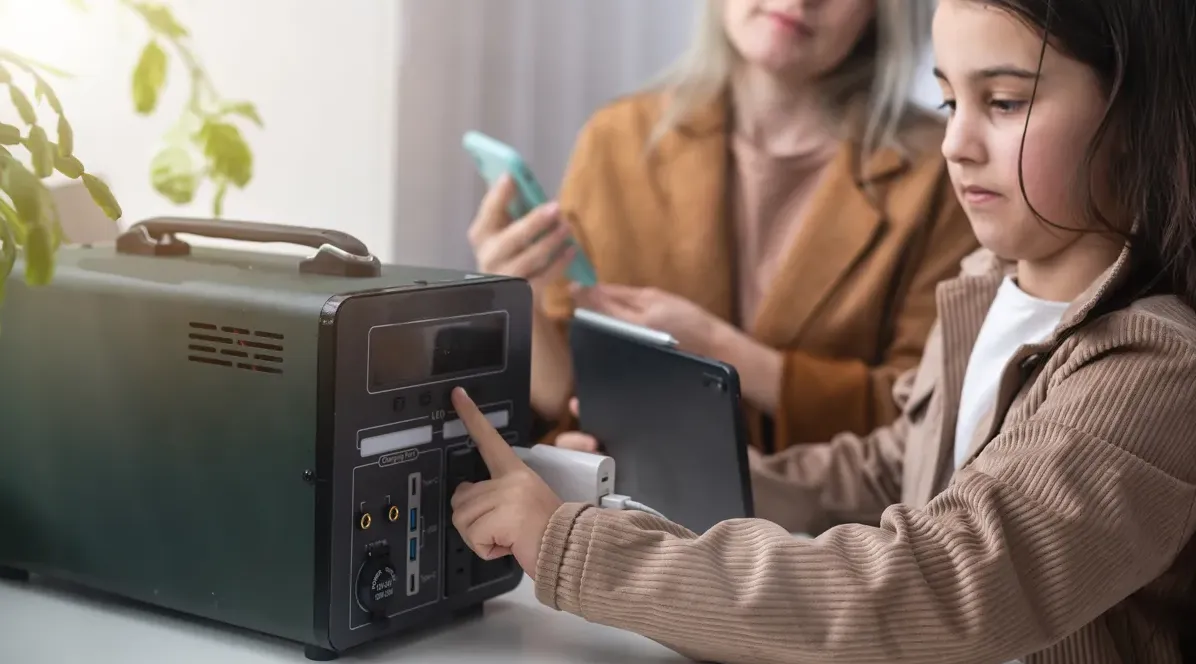
What Is a Portable Power Station?
A portable power station has a built-in battery inverter, converting stored direct current (DC) into alternating current (AC) to power household appliances during outages.
Primary Applications
Portable power stations serve three key roles. First, they act as immediate backup power sources during grid failures, keeping lights and essential appliances running.
Second, they are commonly used in off-grid settings such as recreational vehicles, boats, and remote expeditions.
Third, they can charge from both the grid and solar systems, storing electricity for outages.
How Do Portable Power Stations Work?
The operation of portable power stations revolves around three phases: charging, storage, and discharging.
For grid charging, grid power is converted from AC to DC by the built-in inverter. For solar charging, a portable power station usually leverages a DC solar setup, where a built-in charge controller is usually used to regulate charging and optimize efficiency.
Energy is then stored as DC within the battery. When outages occur, the inverter reverses the process, transforming stored DC back into AC to power connected devices.
Pros and Cons of Portable Power Stations
Portable power stations offer notable benefits, such as cost-effectiveness and easy integration with basic solar systems.
However, the storage capacity of portable power stations is typically sized for partial backup, supporting only essential loads such as lights, fans, and small appliances, rather than providing whole-home backup. Furthermore, they are not integrated into an intelligent home energy management system that automatically provides whole-home backup when outages occur, manages loads, and saves electric bills by optimizing energy consumption based on time-of-use (TOU) electricity rates.
Home Battery Storage: Enabling Intelligent Whole-Home Energy Backup and Optimization
A home battery marks a breakthrough in residential energy solutions. Unlike basic backup devices such as a portable power station, it’s integrated into an intelligent home energy management system that coordinates multiple energy sources such as solar, grid, backup generators, and even EVs, along with home battery storage to provide continuous, optimized power for your entire home.

Multiple Energy Source Coordination
At the heart of a home energy management and battery storage system is an energy management controller that coordinates various available power sources, establishing a robust home energy ecosystem. Solar energy is prioritized for immediate use, with excess production stored in the home battery. If solar and battery cannot meet demand, the system intelligently taps into grid power, generator backup, or even the stored energy in EVs.
Intelligent Energy Usage and Cost Optimization
A home energy management and battery storage system does more than just store power. It proactively help homeowners reduce energy costs. By leveraging time-of-use (TOU) electricity rates, they can pre-charge batteries during low-rate periods and supply home loads during expensive peak times. This automated management translates directly into lower energy bills. Additionally, with their ability to interact with the grid, homeowners can also sell their power to utilities through energy-trade programs to generate extra income.
Enhanced Backup and Load Management
In the event of a power outage, a home energy management and battery storage system automatically prioritizes essential loads. Through smart load-shedding technology, non-critical appliances such as pool pumps or A/C units are temporarily disconnected, preserving battery power for critical needs. This extends the available backup time and ensures energy is directed to the most important needs.
Expanded Capabilities with Vehicle-to-Home (V2H) Integration
Some home energy management and battery storage systems enable EVs to function as backup power sources, discharging their battery to support home loads during outages, turning the vehicle into an additional energy reserve.
FranklinWH System: An Epitome of Home Energy Management and Battery Storage
The FranklinWH System illustrates what a top-tier home energy management and battery storage system looks like. The aGate controller intelligently manages solar, battery, grid, generator, and EV inputs, ensuring your home is powered by the cleanest and most cost-effective source available. The aPower 2 home battery delivers robust energy storage, featuring 10 kW continuous power and 15 kWh capacity, with scalability up to 225 kWh per aGate by linking multiple units, as well as an industry-leading 15-year warranty. Controlled by the aGate, the system automatically keeps your entire home powered without homeowners needing to lift a finger and enables long-lasting backup when outages occur.
Features such as TOU optimization, Smart Circuits for intelligent load control, and Virtual Power Plant (VPP) participation create substantial value, helping homeowners both save money and even earn revenue from excess energy sold. Designed for flexibility and dynamic future growth of energy demands, the FranklinWH System sets a new benchmark for modern home energy management and battery storage solutions, empowering homeowners with lucrative long-term financial benefits and true energy freedom.
Conclusion
You now understand the key differences between a portable power station and a home energy management system with battery storage. If you are looking for a solution simply for basic backup needs at a low upfront cost, a portable power station is the practical choice. However, if you are seeking an advanced solution with rich, advanced energy features such as automating whole-home power backup, smart load management, and generating ongoing savings and earnings, invest in a home energy management and battery storage system that delivers significant long-term value.
