


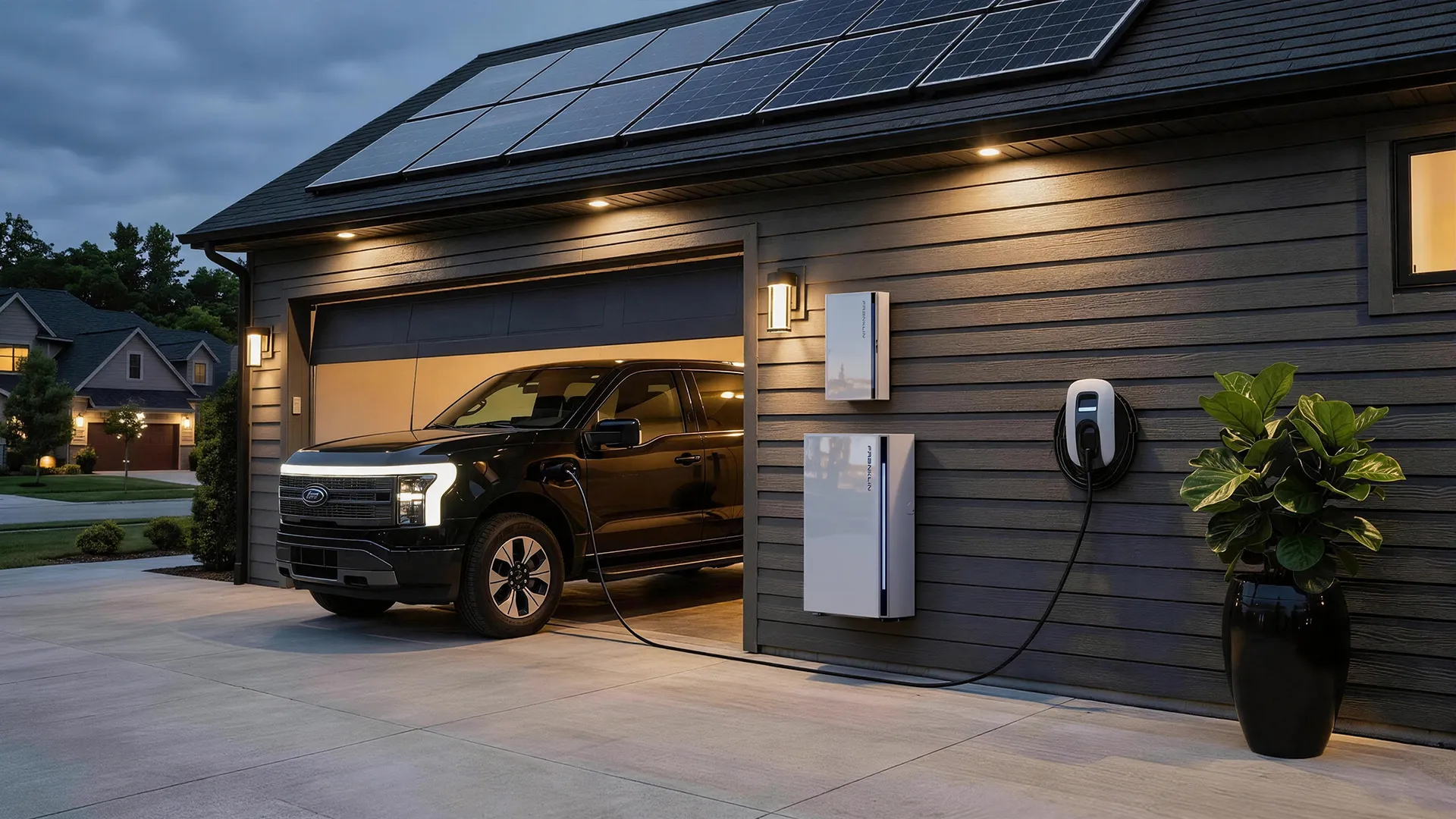
Electric vehicles (EVs) are rapidly shifting from a niche technology to a mainstream household asset, reshaping home energy consumption. Unlike traditional appliances, EV chargers are a high-power, long-duration load, often drawing several kilowatts for hours at a time. This can significantly ramp up household electricity demand and overall energy costs if charging is unmanaged.
In response to rising electricity prices and growing EV adoption, solar powered EV charging has emerged as a popular solution. By pairing rooftop solar with home charging systems, homeowners aim to offset charging demand with self-generated electricity and reduce grid reliance.
However, solar generation and EV charging demand are often misaligned. Solar is produced during the day, while charging frequently happens in the evening. As a result, simply combining solar panels with a charger does not automatically produce optimal savings. Real efficiency comes from system-level intelligent energy management, which coordinates solar production, stored energy, household loads, tariffs, and EV charging behavior to ensure the EV becomes a flexible, grid-friendly, and cost-efficient part of the home energy ecosystem.
What Solar Powered EV Charging Is and Why It Matters
A solar powered EV charging system is an integration of photovoltaic (PV) solar panels with an electric vehicle charging station. The basic principle is straightforward: sunlight hits the solar panels, which generate direct current (DC) electricity; an inverter converts this to alternating current (AC); and the electricity is then delivered to the EV charger to power the vehicle.
The growing importance of solar powered EV charging is driven by four key imperatives:
- Lower charging costs: Using on-site solar generation helps lower the overall cost of charging an EV at home. Research shows that solar powered charging can decrease charging costs by nearly 27% compared to grid-only charging.
- Better use of solar energy: Instead of exporting excess solar power for limited financial compensation, homeowners can directly consume more of the energy they produce.
- Mitigate grid strain: Solar powered EV charging reduces net demand on the grid during peak hours, helping prevent transformer overloading and extending infrastructure lifespan.
- More sustainable mobility: Charging with solar energy reduces reliance on fossil-fuel-based electricity. Studies indicate that solar powered charging can cut CO₂ emissions by 18% to 50% or more compared to grid-dependent charging, depending on regional grid mix.
Instead of leveraging a standard EV charger, homeowners are advised to invest in a solar optimized EV charger, which helps maximize solar self-consumption by continuously monitoring real-time solar output and adjusting charging power to match available surplus energy. This dynamic response allows the EV to absorb as much on-site solar energy as possible and minimizes the need for battery or grid support when solar is available.
What a Home Energy Management System Does
A Home Energy Management System (HEMS) serves as the central intelligence layer of a residential energy ecosystem, coordinating energy flows between solar generation, battery storage, the grid, and household loads. It continuously monitors real-time energy production, consumption, and electricity pricing signals, and then optimizes how energy is sourced and used to boost overall efficiency and cost savings. Beyond cost optimization, a HEMS also plays a critical role in enhancing energy resiliency by ensuring continuous power when outages occur.
A HEMS manages energy flows in the following ways:
- It prioritizes solar energy when generation is available, directing it to household loads or EV charging first.
- It intelligently manages battery storage by storing excess solar and discharging during peak pricing periods to reduce electricity costs.
- It strategically draws from the grid, typically during low-cost periods or when renewable sources are insufficient.
- It flexibly coordinates home loads, shifting energy-intensive activities such as EV charging or water heating to more cost-effective times.
- It can automatically isolate from the grid and continue supplying power from solar and battery storage during blackouts.
Why Pair a Solar Powered EV Charger with a HEMS
While a solar optimized EV charger alone can improve solar self-consumption by matching charging rate to real-time solar output, its optimization is limited to what solar is producing at that moment. Once solar output drops, such as in the evening or during cloudy periods, the charger typically relies on fixed charging behavior, which can lead to increased grid imports or suboptimal use of stored energy.
This is where a HEMS changes the game. It enables stored solar energy to be shifted into peak evening hours to avoid high electricity prices, and can also schedule EV charging to off-peak periods when rates are low. By integrating a solar powered EV charger into a HEMS, you can still charge your EV most cost-effectively even after sunset.
How Solar Powered EV Charger Works with a HEMS
Daytime Direct Solar Charging
During sunny daytime periods, excess solar energy can be used to directly charge the EV. The HEMS continuously monitors solar production, household loads, battery charging, and EV demand, directing available surplus energy to the charger. For example, if the solar system produces 15 kW, while the home consumes 2 kW and the battery charges at 8 kW, the remaining 5 kW can be sent directly to the EV. If solar is not available, your charger pulls power from the battery or grid, but only as needed.
However, if the EV is a commute vehicle, it most likely isn’t at home during peak solar production. The HEMS works to provide solar or less expensive grid power when the vehicle is home.
Battery Charging for Peak Evening Hours
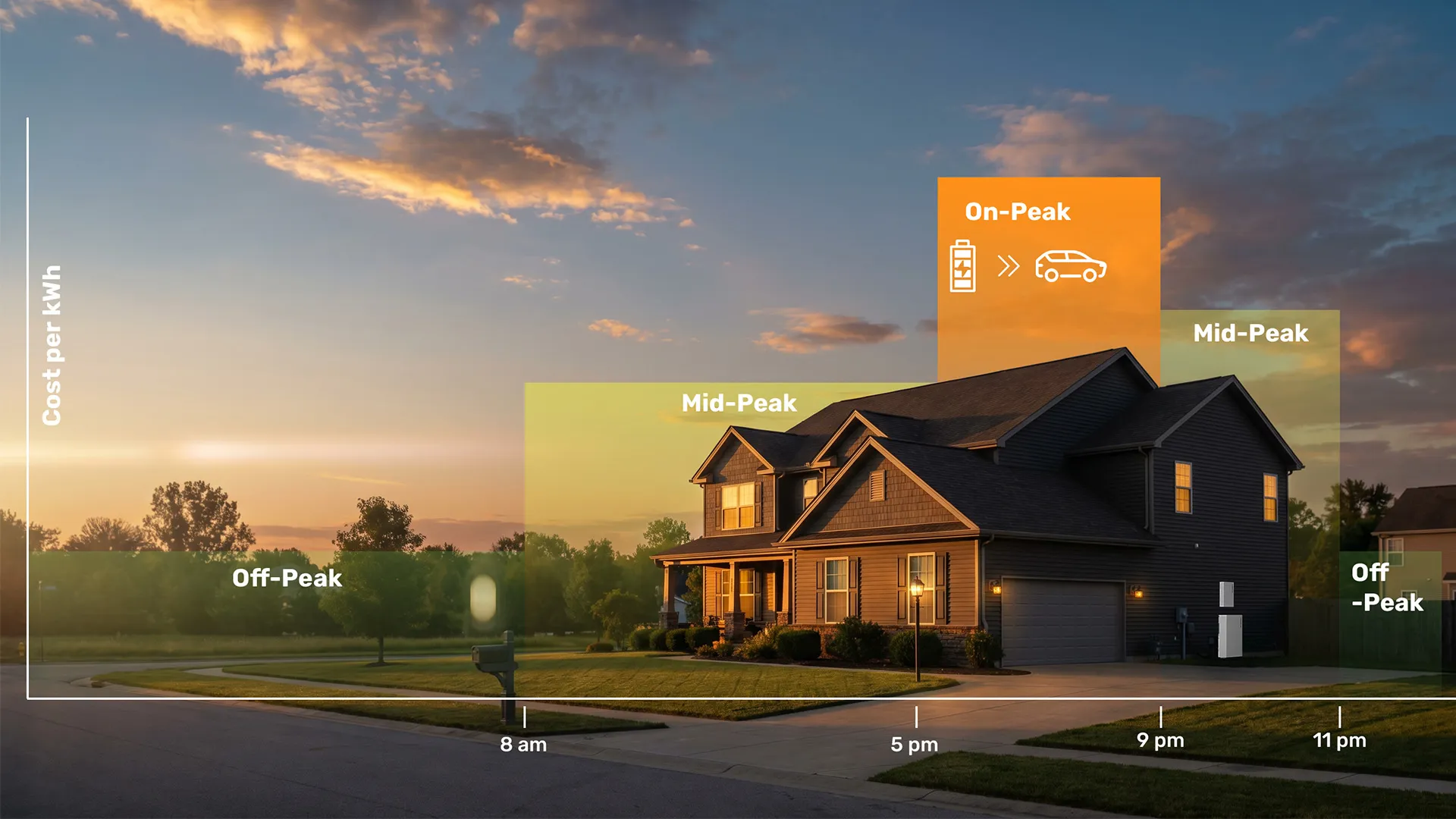
Solar panels stop generating electricity after sunset, but EV charging can continue using solar energy stored in a home battery during the day. Excess solar production is captured and reserved for future use, enabling the EV to be charged with stored solar energy during peak evening hours. If there is not sufficient stored solar energy, the system can even schedule grid charging late at night, when grid costs as low.
The aPower battery in the FranklinWH System provides 15 kWh of storage per unit and can be expanded up to 225 kWh per aGate (15 units). The stored energy can support EV charging equivalent to hundreds of miles of driving range, depending on system size, state of charge, and vehicle efficiency.
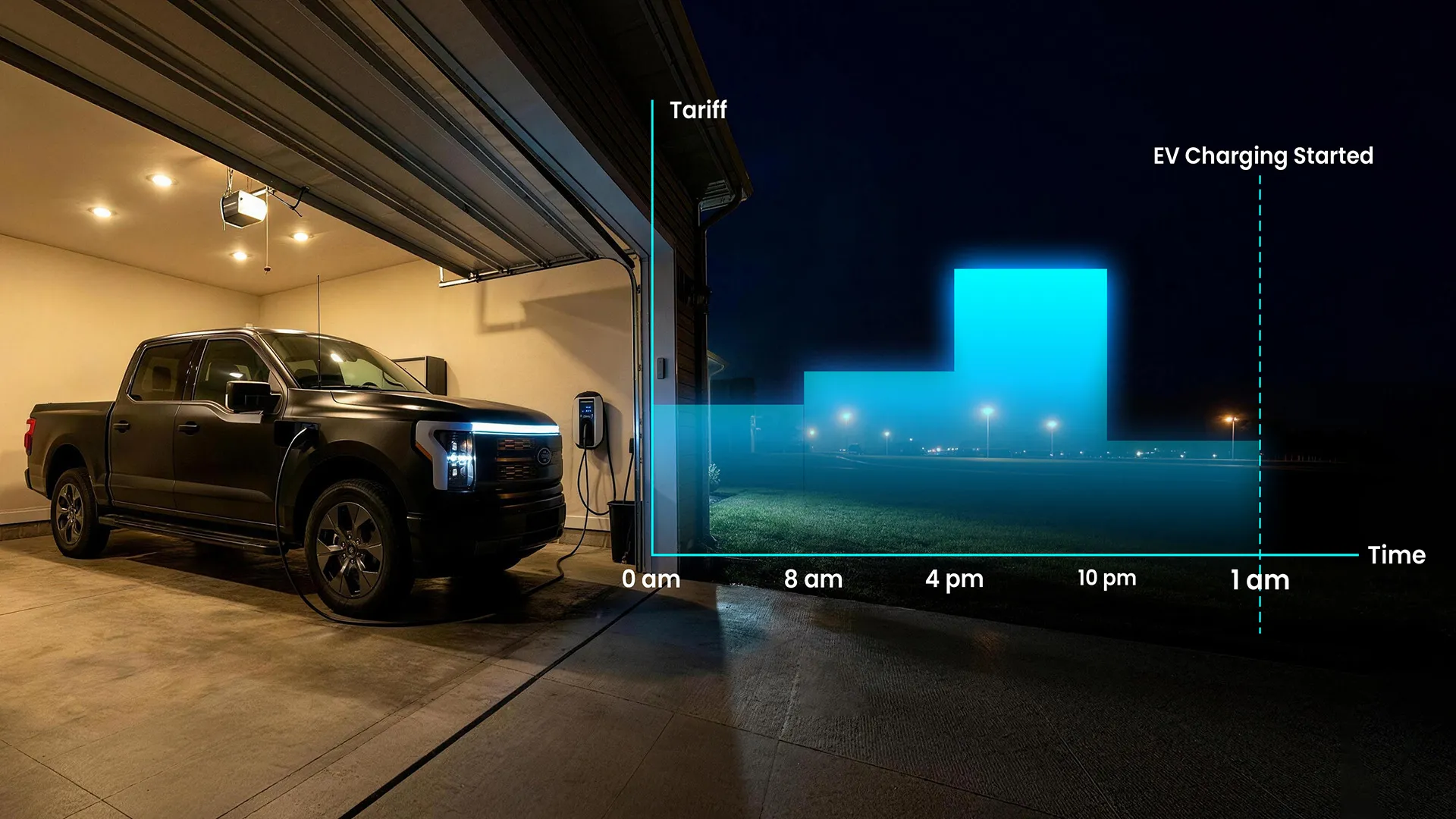
Schedule Charging During Late-Night Off-Peak Hours
If homeowners prefer to reserve stored solar energy completely for essential household loads or other high-demand appliances in the evening, EV charging can still be optimized by shifting it to late-night off-peak hours. In many utility rate structures, electricity prices drop significantly after peak demand periods, often reaching their lowest levels around midnight to early morning (e.g., 1:00 a.m.).
By scheduling EV charging during these off-peak windows, homeowners can reduce reliance on expensive peak-hour electricity while still ensuring the vehicle is fully charged by morning.
Conclusion
EV charging places a significant load on household energy use, but its cost impact can be greatly reduced when managed intelligently. By adding a solar powered EV charger to a HEMS, energy is continuously optimized across different time periods. This ensures excess solar is effectively used during the day and stored energy or low-cost grid electricity is leveraged at night, allowing EV charging to remain economical around the clock.
