


Solar adoption is booming, but the rules of the game are changing. With electricity rates climbing nearly 30% over the last decade and traditional net metering policies fading away, simply having solar panels isn't enough anymore. You need battery storage to truly save. However, if you’re looking to add a solar battery, you’ll quickly run into a critical fork in the road: AC coupling vs. DC coupling. While neither system is inherently better, the right choice depends entirely on your setup.
In this article, we’ll break down the two terms and help you decide which architecture fits your home, budget, and energy goals.
Understanding the Flow of Energy
Before we dive into the differences between AC and DC coupling, it helps to understand the basic language of electricity.
DC vs. AC
Solar panels generate direct current (DC). Your home and the grid run on alternating current (AC). An inverter converts DC into AC so your panels can power your lights and appliances.
What is Coupling?
Batteries store energy as DC. Coupling simply defines how the battery connects to this flow. Do we connect it to directly accept DC power or AC power converted through the solar inverter? This single decision defines the difference between AC and DC-coupled systems.
What Is an AC-Coupled System?
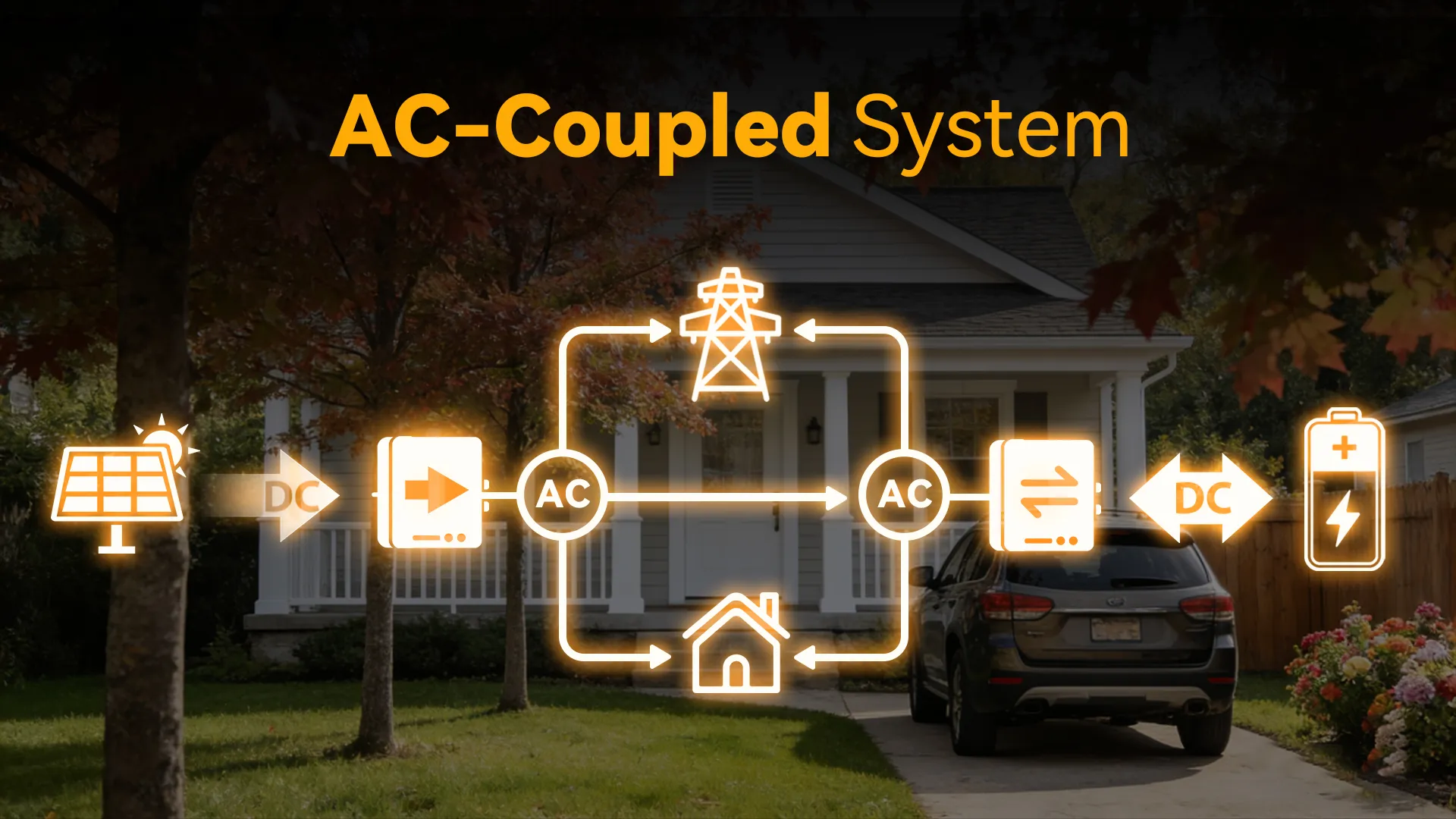
An AC-coupled system is often called a multi-box solution. In this setup, your solar panels connect to a standard solar inverter, while the battery comes with its own separate battery inverter. They operate independently but work together. The typical solar-only solution is AC-coupled so that it can directly connect to the main panel to power the home, which is AC.
How the Energy Flows
- Normal Solar Use: Sunlight hits the panels (DC), flows to the solar inverter, converts to AC, and powers your home.
- Charging the Battery: To save energy for later, that AC power must flow to the battery inverter, which converts it back to DC to store in the battery.
The Pros
- Retrofit Friendly: This is the key advantage. If you already have solar with an inverter, adding an AC-coupled battery system is usually simple and requires no major changes to your existing setup.
- Flexible: Your energy management and storage system can match different inverter brands, and the battery doesn't have to be installed right next to your solar panels.
- Redundancy: If the battery inverter fails, your solar panels can keep generating power for your home.
The Cons
- Efficiency Loss: The energy must be converted multiple times (from DC to AC to DC). This "round trip" loses power compared to a direct DC connection.
- Slightly Higher Cost: You are essentially buying two separate inverters instead of one, which increases the overall hardware cost.
What Is a DC-Coupled System?
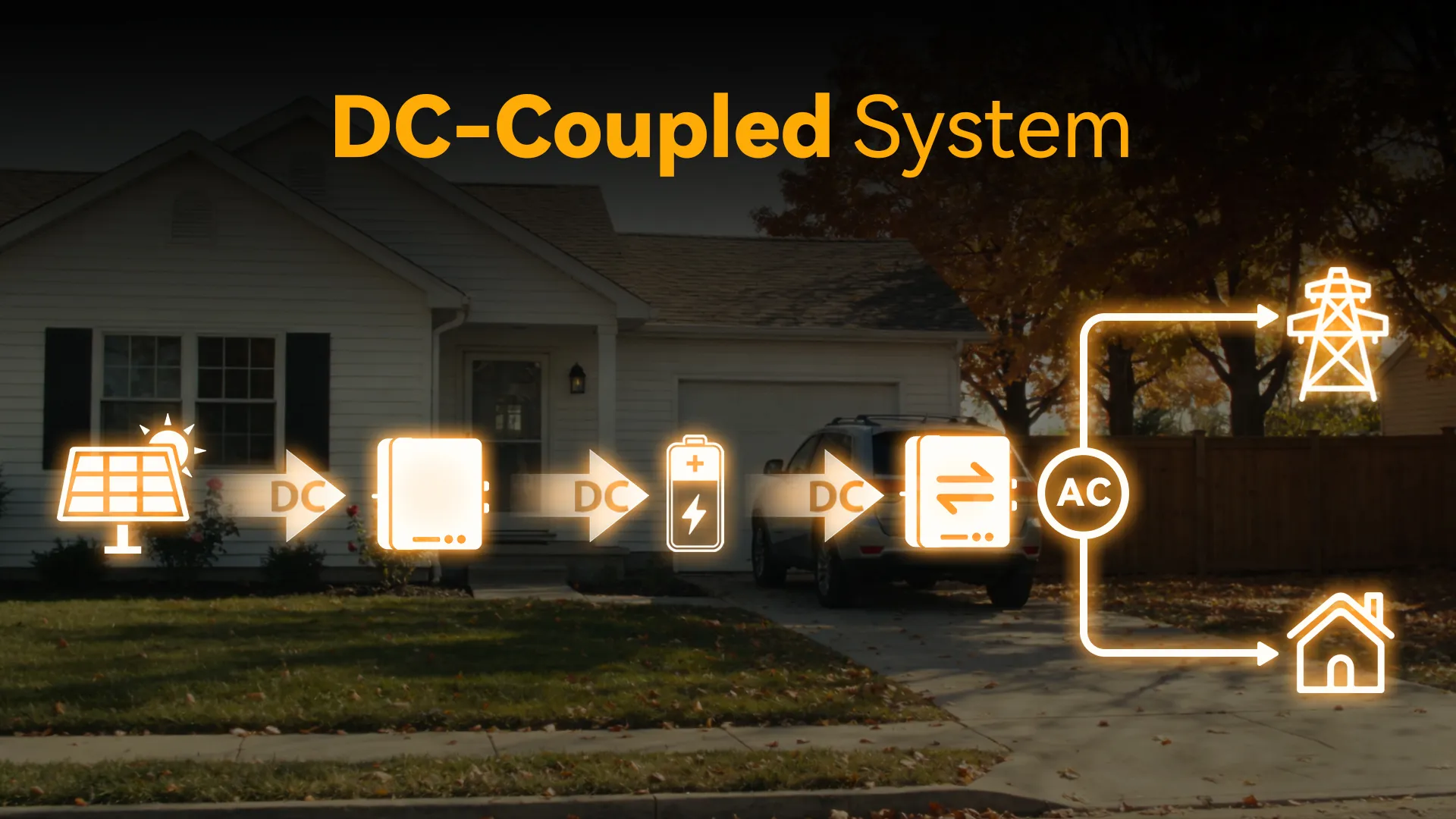
A DC-coupled system is often called a single-box solution. Instead of having two separate devices, it uses one hybrid inverter to manage both the solar panels and the battery simultaneously.
How the Energy Flows
- Charging the Battery: Sunlight hits the panels (DC) and flows directly to the battery for storage. No conversion is needed.
- Powering the Home: When you need electricity, the stored energy (DC) flows from the battery to the hybrid inverter, converts to AC, and powers your home.
The Pros
- Higher Efficiency: DC-coupled systems can route solar power directly to the battery without converting it to AC first. This results in higher efficiency.
- Lower Cost for New Builds: If you are building a home energy management system with solar and storage from scratch, you only buy one integrated inverter, saving on hardware costs.
The Cons
- Difficult Retrofits: If you already have solar, switching to DC coupling is hard. It often requires removing your existing inverter and starting over, which is expensive.
- Single Point of Failure: Because everything runs through one box, if the hybrid inverter breaks, you lose both solar production and battery backup until it is fixed.
- Brand Lock-In: The battery and inverter usually need to be from the same manufacturer to work together, limiting your choices.
- Power supply is constrained by the rating of the hybrid inverter, whereas AC-coupled system can supply combined power from solar and the battery.
How to Choose The Right System
Follow this simple decision tree to determine which option best fits your situation.
Scenario A: You Already Have Solar Panels Installed
Choose AC-coupled, such as the FranklinWH System with aPower 2 storage units. This is the easiest and most cost-effective solution. Since your solar system is already running on AC power, adding an AC battery requires no major modifications. You simply connect the new battery to your existing solar panel. This is why AC coupling dominates the retrofit market.
Scenario B: You Are Building a Brand-New Solar + Storage System from Scratch
This is where you have a true choice between the two architectures.
Choose DC-coupled, such as the FranklinWH System with aPower S storage units if:
- Your main goal is maximum efficiency and getting the most out of every ray of sunshine.
- You want the lowest possible upfront equipment cost.
Choose AC-coupled if:
- You value flexibility and want the option to add more batteries from different brands later.
- You have site constraints that require placing the battery far away from the solar panels (eg., a garage or basement).
Scenario C: You Need Power for an Off-Grid Cabin
Choose DC-coupled. When you are off-grid, efficiency is everything. DC-coupled systems excel here because they can charge batteries directly from the panels with minimum conversion loss.
Conclusion
AC and DC coupling aren't going anywhere. They simply serve different purposes. AC-coupled systems win on flexibility and are the clear choice for retrofitting existing solar homes. DC-coupled systems offer superior efficiency and lower costs for brand-new, integrated installations.
The right choice ultimately depends on your current setup, your budget, and whether your goal is maximizing solar harvest or allowing utmost flexibility.
