


Challenge
- David’s growing household energy use drove up energy bills and increased the risk of depleting stored power during extended outages.
- David needed to expand solar and battery capacity without replacing his existing home energy system.
Solution
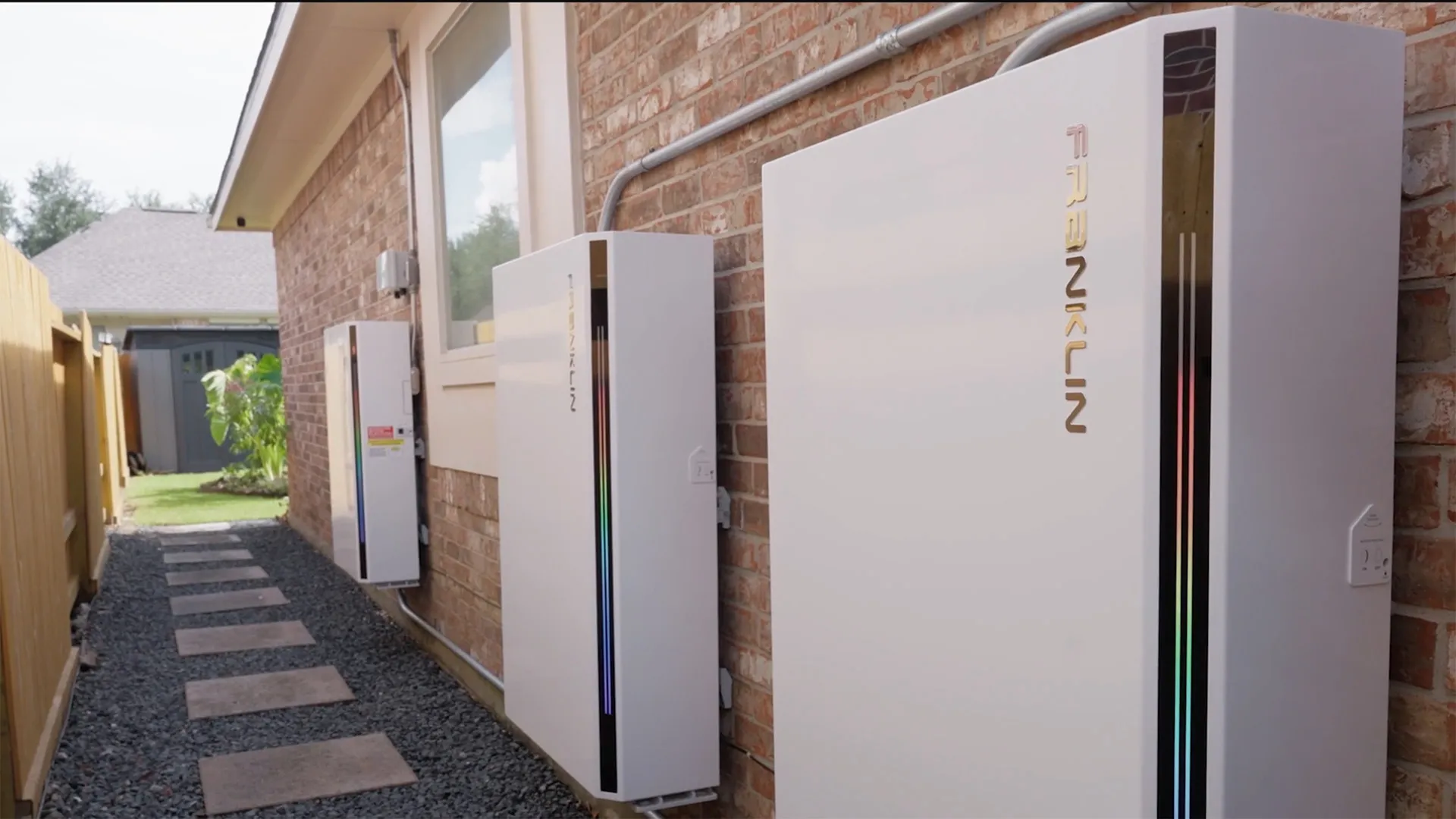
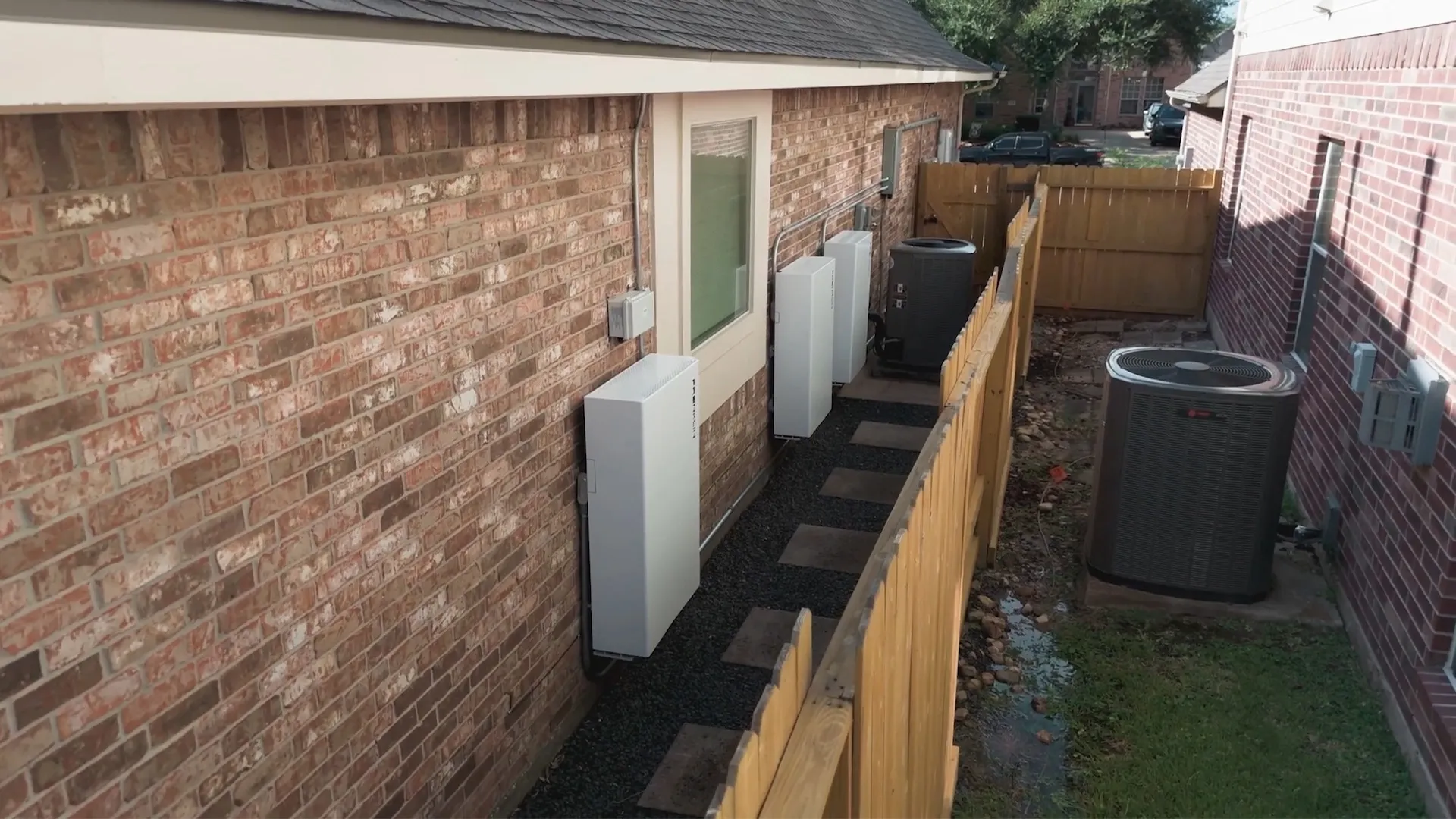
- Added an aPower S and more solar panels to the existing FranklinWH System with aPower 2 batteries.
- Integrated a backup generator for greater backup flexibility and resiliency.
Result
- Reduced the monthly summer electricity bill from about $350 to approximately $55.
- Extended whole-home backup for demanding home loads, from essentials to energy-hungry ones, including A/C and EV charging.
For homeowners in Texas, scorching summer heat can drive substantial electricity consumption, while hurricanes and other severe weather can cause outages lasting several days. David, a homeowner in the Houston area, wanted an energy solution that could tackle both concerns.
David had already installed a FranklinWH System with two aPower 2 batteries. As his household energy needs increased, however, he wanted to add more solar generation and storage without extensively reconfiguring his existing system.
Rising Energy Use and Prolonged Outage Risks
Texas summer temperatures regularly hover between 90° F and 105° F, requiring David to run energy-intensive appliances such as A/C for long periods. Before installing the FranklinWH System, his monthly summer electricity bill reached approximately $350.
The region’s exposure to hurricanes created another concern. A major storm could leave his home without grid power for days. While David’s existing home energy system provided substantial backup capacity, his household energy consumption significantly grows, oftentimes leading to the exhaustion of the stored energy during prolonged outages.
David therefore wanted to expand his solar array and storage capacity so that the system could generate more renewable energy, store sufficient reserve for emergencies, and reduce the amount of electricity purchased from the grid.
Expanding with aPower S and Additional Solar
David expanded his existing FranklinWH System by adding an aPower S and more solar panels. Because the aPower S features a built-in hybrid inverter, the new panels could connect directly to the battery without requiring a separate external inverter.
The integrated design simplified the expansion. The installer needed only the additional panels, aPower S battery, and associated wiring, while the original solar and aPower 2 batteries remained in place. Thanks to the FranklinWH System’s universal compatibility across its battery lineup, the new equipment was then incorporated into the already installed FranklinWH System.
Mike, the lead electrician at Energy Renovation Center, said the built-in inverter makes aPower S installations simpler and more efficient, helping reduce installation complexity and ultimately making the solution more affordable for homeowners.
Greater Energy Resiliency During Extended Outages
The additional solar and storage help extend the available backup duration. David can also connect a backup generator through the FranklinWH generator module and a 50-amp inlet. When a lasting outage drains the battery and solar generation is not available, the generator provides additional energy to support the system.
David also values the added system flexibility that includes multiple solar panel technologies, with microinverters connecting to the aGate and direct solar to the aPower S. “My original FranklinWH System was perfect for retrofitting the existing solar,” said David. “I was easily able to add new solar panels and integrate them into the system with the aPower S.”
The expanded system is designed to support a wide range of household loads, including A/C and EV charging. This allows David to maintain more of his normal household activities instead of limiting backup power to only a few essential devices.
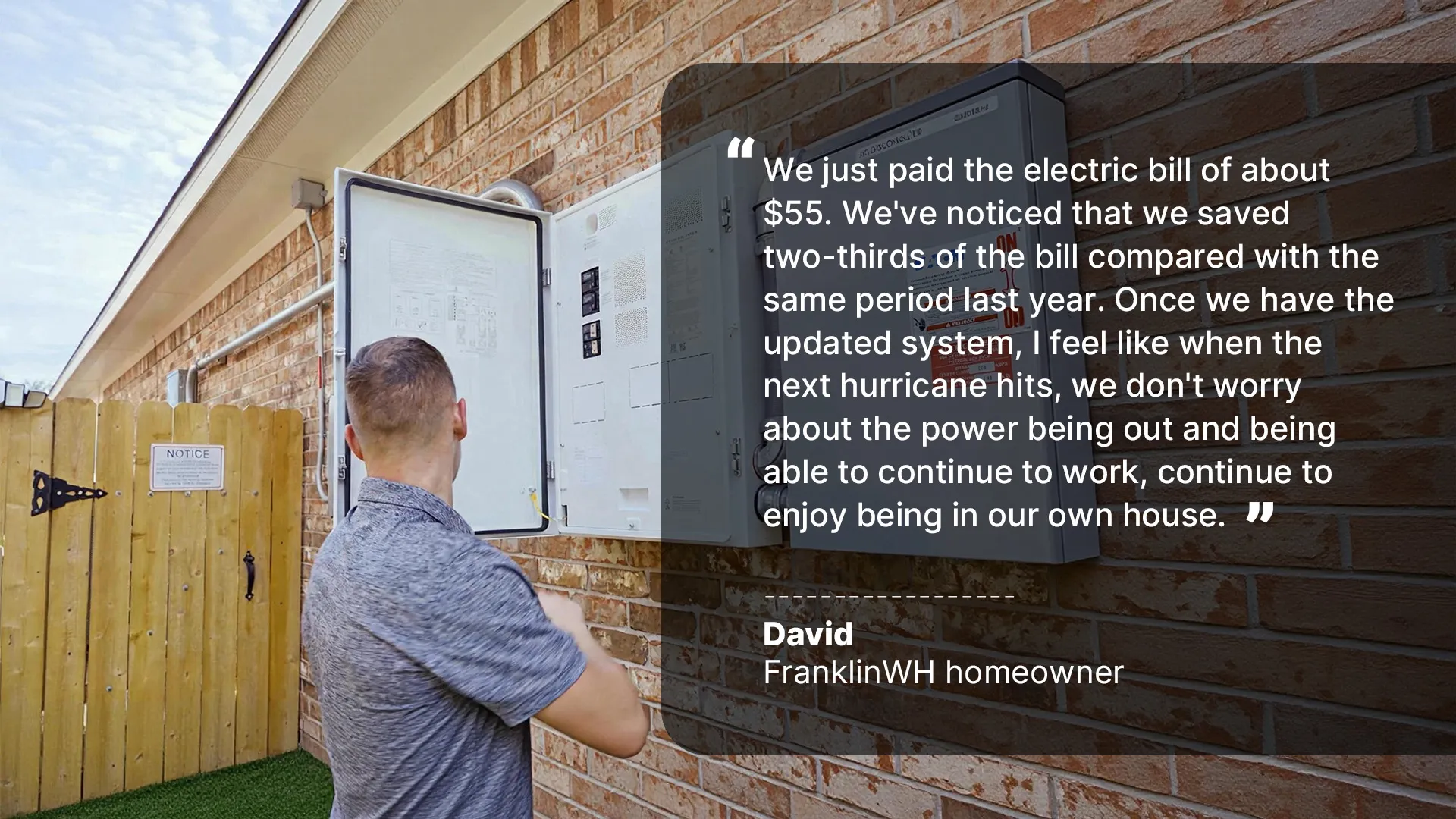
“The newly upgraded FranklinWH System now powers my entire home, and I feel like when the next hurricane hits, we don’t worry about the power being out,” David said. “We can continue to work and continue to enjoy being in our own house despite the advanced energy demand.”
A Summer Electricity Bill Reduced to Only $55
David had already witnessed major savings with his original aPower 2-based system, which reduced his monthly electricity bill from approximately $350 to about $150.
After adding the aPower S and expanding his solar array, the financial results improved further. During a summer billing period with temperatures similar to the previous year, his electricity bill fell to approximately $55, around one-third of the previous year’s bill.
The larger solar array generates more electricity for immediate household use and battery charging. With the battery capacity scaled up, David can consume more of the self-generated renewable energy produced on his property and minimize grid reliance.
The long-term warranties also strengthen his confidence in the investment. His FranklinWH aPower batteries offer a 15-year warranty, while his solar panels carry a 25-year warranty. David believes the sustained return on investment will allow him to benefit from absolutely free electricity for at least 4 to 5 years after the system pays for itself.
A Better Experience for Homeowners and Installers
For Mike, FranklinWH System’s compatibility, installer training, and simplified commissioning process give installers greater flexibility when designing new systems or expanding existing ones.
He noted that a FranklinWH System can typically be commissioned in approximately 15 to 20 minutes, compared with one or two hours for some other systems. The aPower S also provides installers with front-facing wiring, eliminating the need to reach behind or climb over the battery while making electrical connections. This gives installers more time to guide homeowners through the system and explain how to monitor and manage their energy through the FranklinWH App.
David’s project demonstrates how a premium home energy management system can easily grow alongside a homeowner’s changing energy needs. For David, by integrating additional solar and an aPower S with his existing aPower 2-based FranklinWH System, he not only obtains more significant energy bill reductions, but the enhanced peace of mind that when the next hurricane reaches Texas, his family can remain safely and comfortably at home.
