


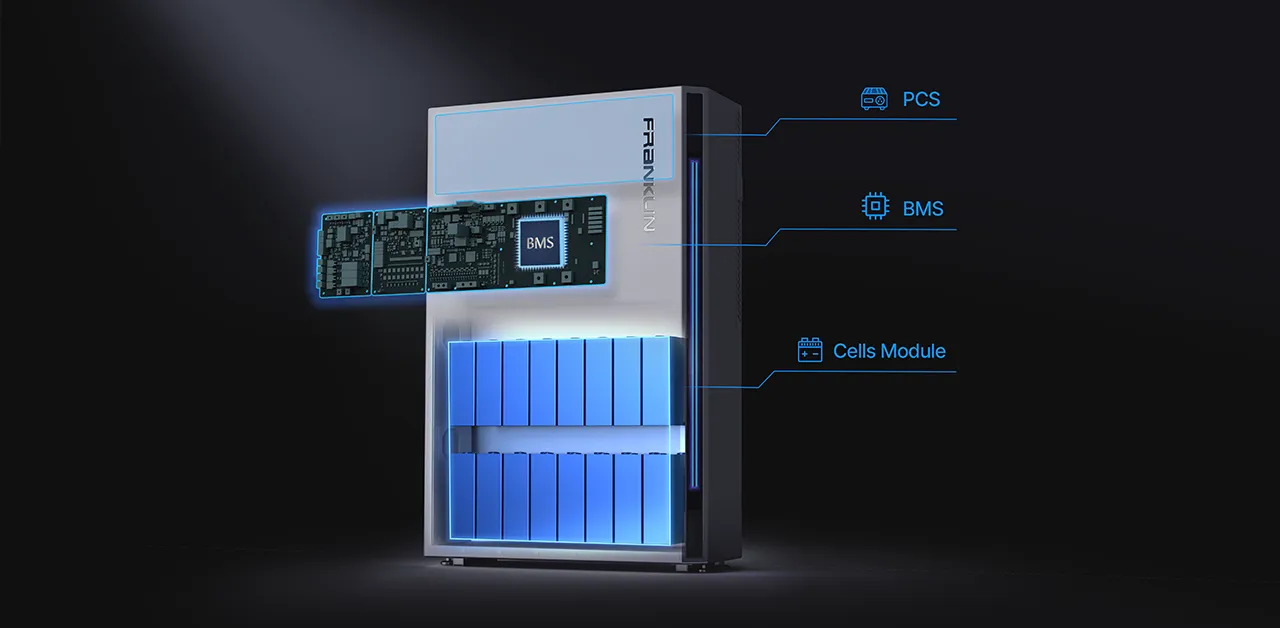
Did you know that battery cells degrade over time? This is why devices such as your mobile don’t seem to last as long when you've been using them for a couple of years. The same is true for your home battery.
That's why it’s so important that your home battery has an intelligent Battery Management System (BMS). The cells in your home battery work like athletes on sports team, and the BMS is their team doctor. It monitors their health to maximise their performance and longevity.
However, not all BMS are created equal. Lower quality, cheaper options may cut costs by reducing the amount of inputs a BMS has, such as only monitoring temperature on 1 or 2 cells in a pack to create an average, whereas premium solutions such as FranklinWH has a dedicated temperature sensor on every one of the aPower's 16 battery cells to ensure the entire team performs at their peak for their entire career.
In this article, we’ll examine three key BMS capabilities that play a central role in counteracting aging and ensuring FranklinWH aPower’s exceptional longevity.
Why Battery Capacity Shrinks Over Time: Cell Imbalance And Management
Over time, many homeowners may feel like their home battery’s capacity fades more quickly than expected. This isn’t usually because the entire pack has uniformly degraded. It’s often because one or a few cells have degraded earlier and fallen behind the others. Once cell imbalance appears, those weaker cells limit the usable capacity of the whole pack in the same way one player can weaken a team.
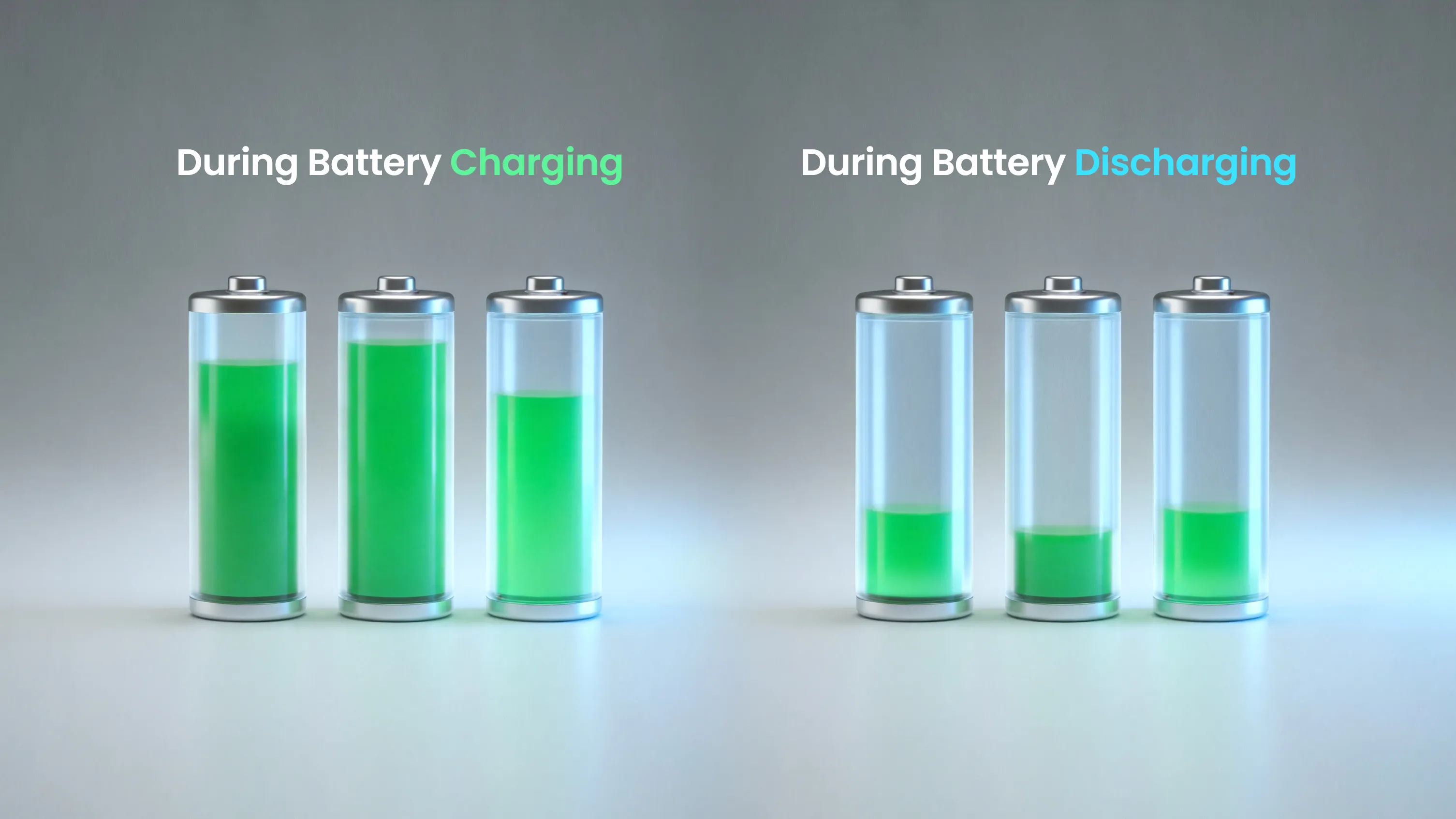
There are two cell imbalance management solutions:
- Passive Balancing: A largely reactive solution. It only dissipates excess energy after imbalances have already formed and does so with limited efficiency. Passive balancing is commonly seen in traditional home batteries.
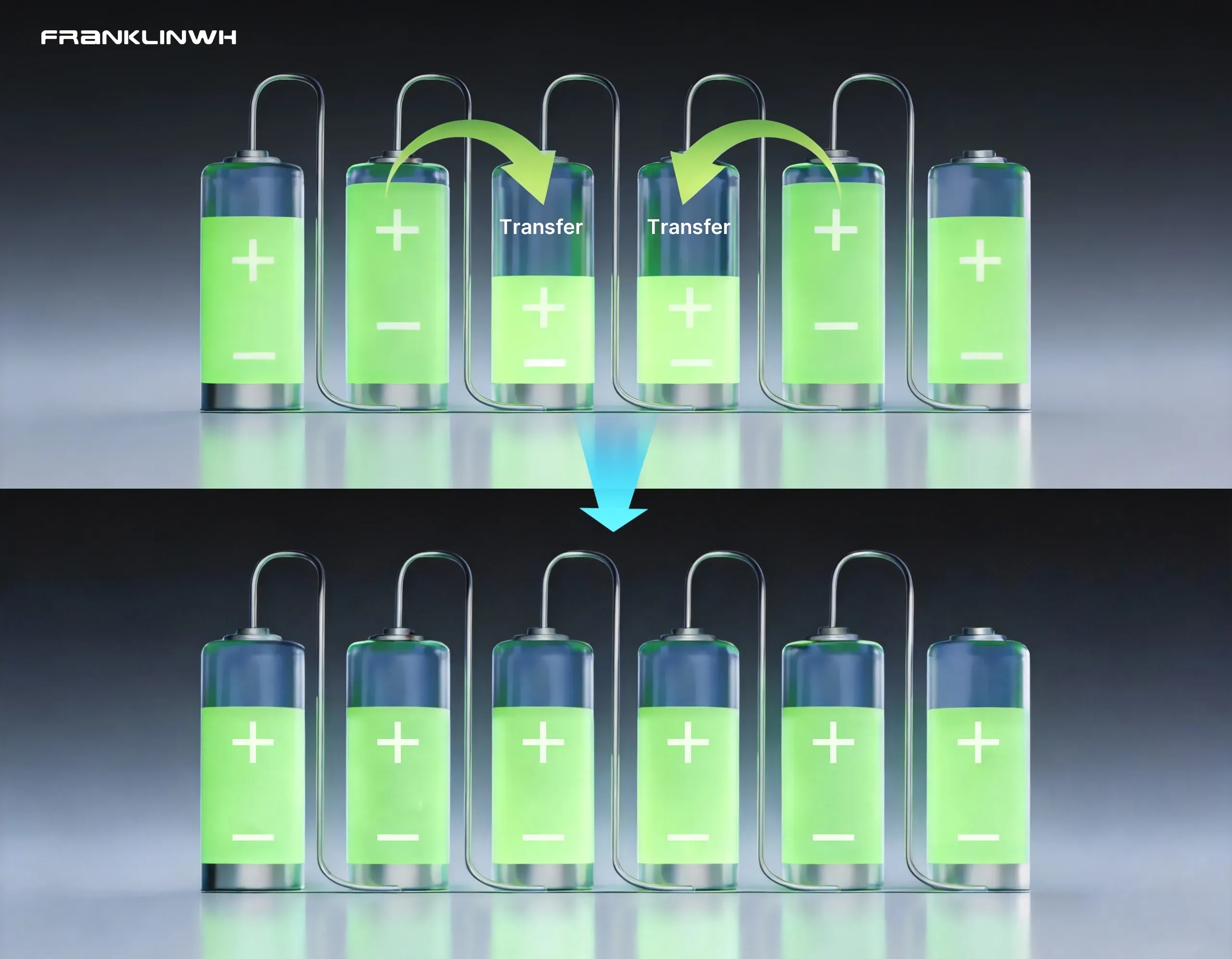
- Active Balancing: A proactive solution, redistributing energy between cells to prevent imbalance from accumulating.
Active balancing is often avoided due to its high complexity and cost. As a result, battery systems that depend solely on passive balancing struggle in the mid-to-late stages of battery life to maintain consistent capacity across individual cells.
FranklinWH uses a dual balancing strategy combining both active and passive balancing. During charging and discharging, the system actively redistributes energy between cells to quickly eliminate differences in state of charge (SOC) or voltage. It then fine-tunes and corrects any remaining imbalance by dissipating excess energy, helping to maintain long-term equilibrium among cells.
Compared with traditional solutions, the balancing capability is improved by more than tenfold, bringing very direct benefits:
- Avoiding “not fully charging” and “not fully discharging”.
- More stable capacity in the mid-to-late stages of life.
- Preventing a single cell from becoming a weak link.
In essence, advanced cell imbalance management improves battery longevity and reliability by keeping all cells performing evenly rather than letting one weak cell drag down the entire pack.
How Thermal Management Makes a Difference in Extreme Weather
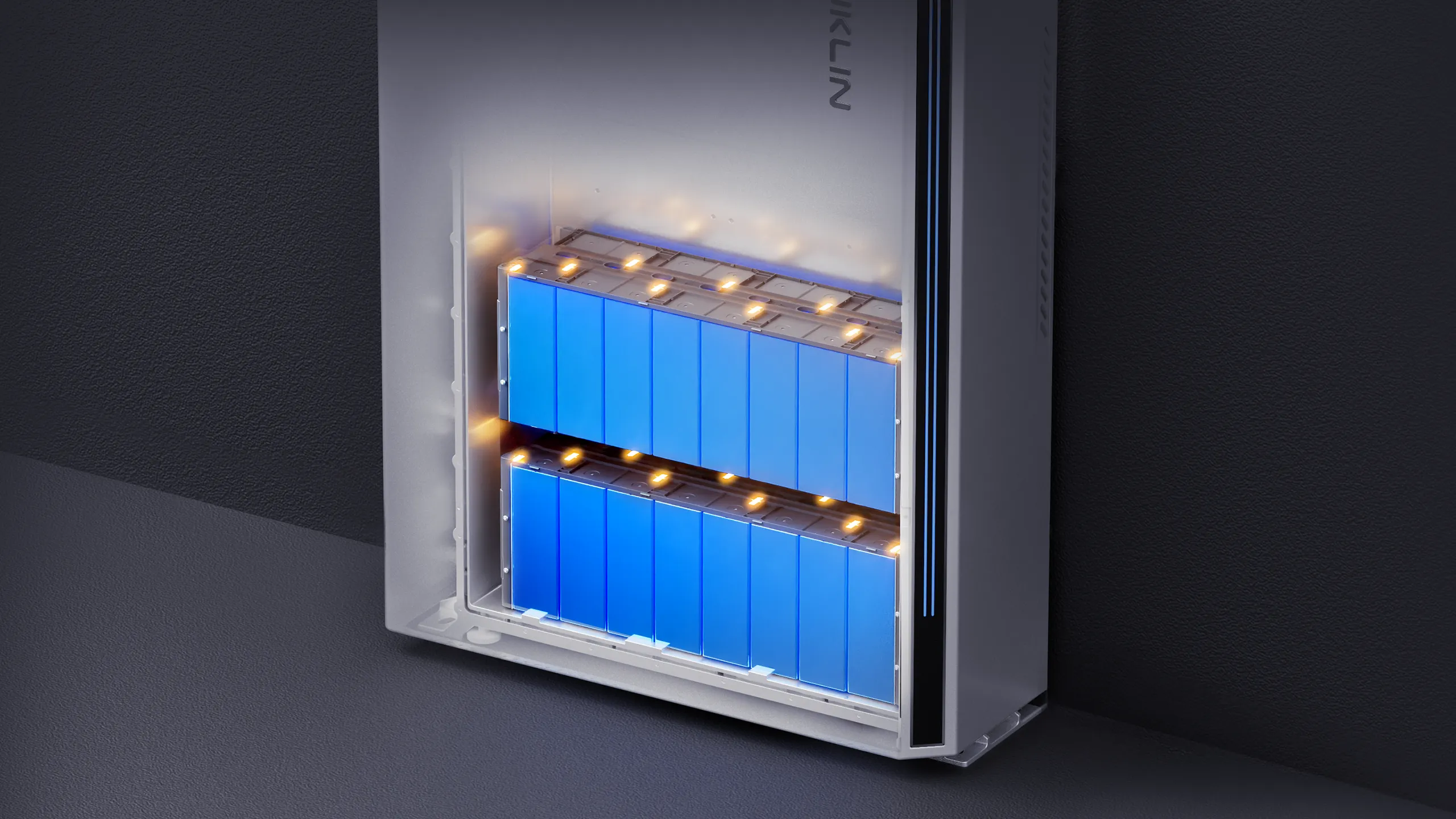
At low temperatures, lithium battery reactions slow and internal resistance increases, limiting power and usable capacity. Many conventional packs rely on a limited number of temperature sensors placed on only a portion of the cells to infer the thermal state of the entire pack. As a result, localized cold spots or hot spots may go undetected, causing uneven thermal conditions, a known risk in battery management.
By contrast, FranklinWH uses a flame-retardant, high-temperature-resistant flexible printed circuit (FPC) with 16 temperature sensors to achieve high-precision temperature measurement for each cell. The approach offers key benefits:
- The BMS can detect detailed thermal behavior and apply targeted heating or cooling actions based on accurate, cell-by-cell data rather than relying on a handful of general temperature readings.
- With minimum temperature differences between cells, a home battery can deliver more stable output and higher heating efficiency in winter.
By combining this with structural pre-compression to reduce both thermal and mechanical stress from accumulated cell expansion, cell aging is further slowed. Experimental data indicate the FranklinWH aPower can be maintained within its optimal temperature range across ambient conditions from –20° C to 50° C.
This is like a team doctor having a constant link to their entire team’s smart watches so they can monitor all aspects of their health and combining it with sports tape to pre-strap high stress areas to reduce the risk of injury.
Batteries Need Health Checks: State of Health (SOH) Management
State of Health (SOH) measures how much capacity a battery retains relative to when it was new. It starts at 100% and declines over time, and premium home batteries tend to age much more slowly due to advanced health management.
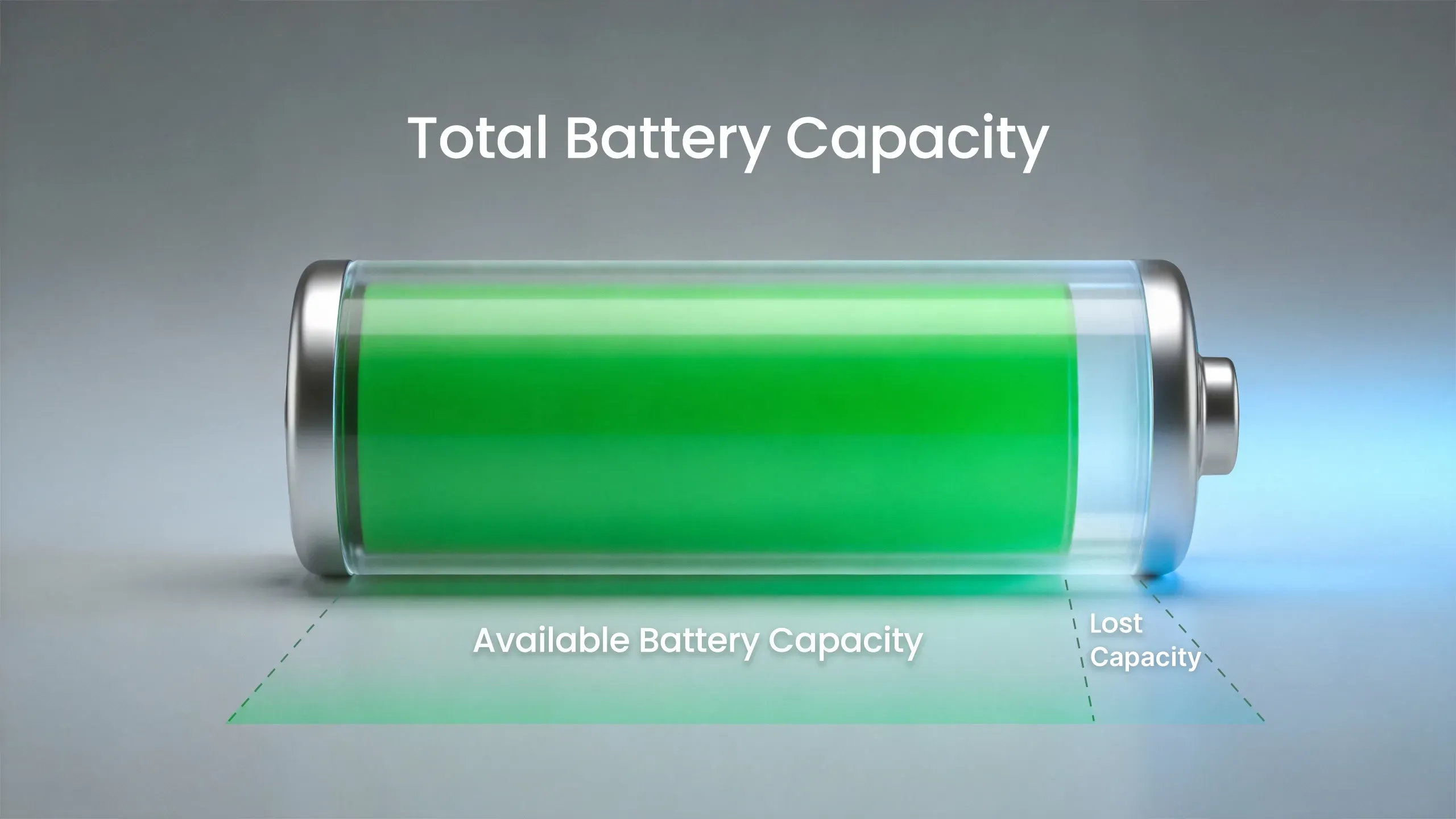
FranklinWH aPower’s monitoring system features a comprehensive health evaluation framework, continuously analysing temperature behavior, charge/discharge curves, and aging trends. Based on the analysis, the system regularly calibrates and verifies SOH to optimize system operation. Think of SOH management as a routine health check by the sport medic. If something drifts outside a healthy range, your doctor doesn’t just report a number. They recommend changes in diet or lifestyle to bring your body back into healthy conditions. The health check ensures you can get the most out of entire “career” of your battery cells.
How FranklinWH aPower X Achieves a 12-Year Warranty
A common industry warranty standard for residential batteries is a 10-year warranty with a minimum of 60% SOH remaining capacity. That level is often defined as the end of life (EOL) threshold, meaning the battery’s capacity has declined to a level considered the end of its useful life under the warranty.
The FranklinWH aPower X offers a 12-year warranty with a 70% SOH guarantee. What’s behind this isn’t bravado, it’s built on an integrated management system that significantly improves battery longevity:
- Cell-level thermal control to manage temperature dynamically and keep cells in their optimal range.
- Dual balancing (active + passive) to maintain long-term consistency across cells.
- SOC monitoring and management to slow overall degradation and accurately track health over time.
Conclusion
Don’t field a team you can’t trust, especially when that team is the battery cells you’re attaching to your home. The FranklinWH aPower X offers you and your family the peace of mind to set and forget, because you can rely on our advanced BMS to take care of their cells today, tomorrow, and well into the future.
