


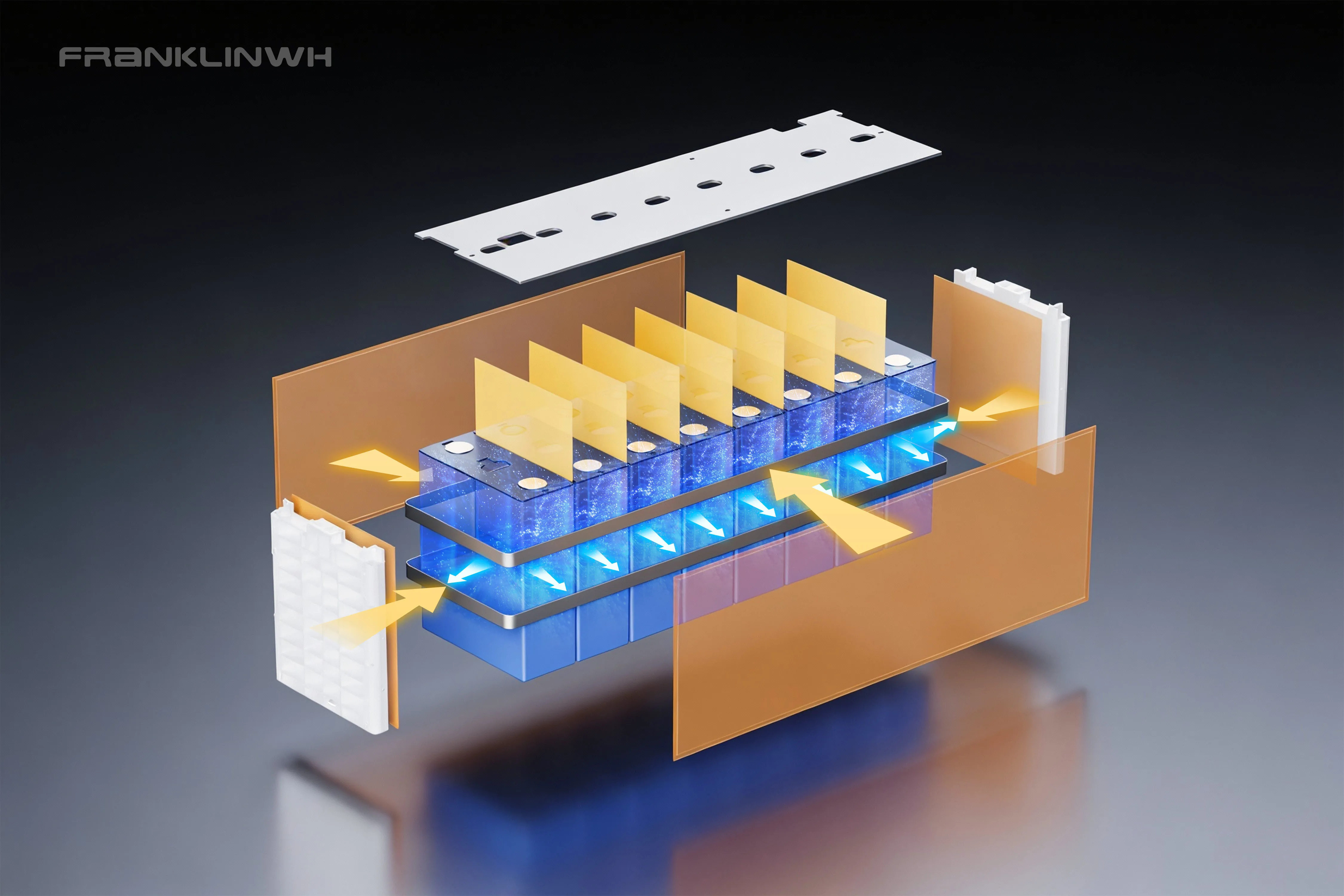
During charge-discharge cycles, lithium-ion battery cells naturally expand and contract, and long-term use can lead to accumulated stress and irreversible swelling. The deformation, if left unmanaged, may cause loose contact inside and weak spots, and consequently early battery failure. However, a moderate, controlled pre-tightening force can balance internal stress, stabilise electrical contact, and reduce mechanical defects.
Do you know why a home battery needs straps for the long haul? Think of this as the solar battery equivalent of strapping down a load in your trailer. Left alone, your load may shift and become damaged in transit. However, with the proper application of pressure, you can expect it to remain safe.
This article dives into how proper pre-compression (preload) improves home battery longevity and safety, a crucial pack-level design factor that is rarely highlighted.
Why Do Battery Cells Expand After Repeated Cycles of Use?
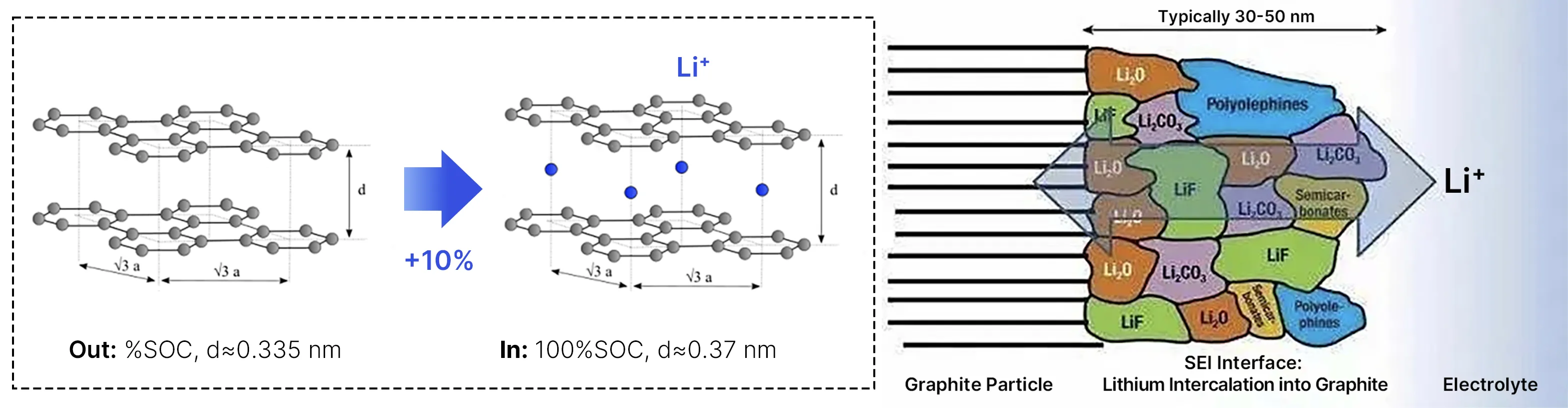
Do you know why the battery cells will get plump as it ages? Over many cycles, the thickness of the cell can increase by up to around 10%. This change in thickness (or volume) is often a result of normal internal chemical and physical processes.
What is Actually Happening Inside the Cells?
- Electrode Expansion: Think of an LFP cell as a stack of very thin layers, like the pages of a book. These layers are the cathode (positive electrode), anode (negative electrode), separator, and electrolyte that sit tightly together. Each “page” is an electrode layer that expands and contracts slightly as lithium ions move in and out. Just as flipping pages changes how a book feels, these tiny volume changes add up across many layers and many cycles, which can lead to noticeable cell expansion over time.
- Irreversible Mechanical Effects from Side Reactions: Inside an LFP cell, a thin protective film called the solid electrolyte interphase (SEI) forms on the anode surface during initial use, preventing further anode electrolyte reactions that generate unwanted by-products. Over many charge-discharge cycles, this film continues to grow and accumulate reaction products, becoming thicker and thicker. Because the layer does not shrink, this contributes to an increase in the battery’s thickness over time, just like wrapping extra layers of paper around a book makes it thicker.
Swelling Force vs. Preload
Swelling force refers to the mechanical pressure generated when a battery cell physically expands against the cell casing during an individual charging. Over time, these repeated forces continue to build up, placing growing mechanical stress on the pack structure. Therefore, the strength and rigidity of the entire pack housing and support elements must be thoughtfully designed to withstand this force.
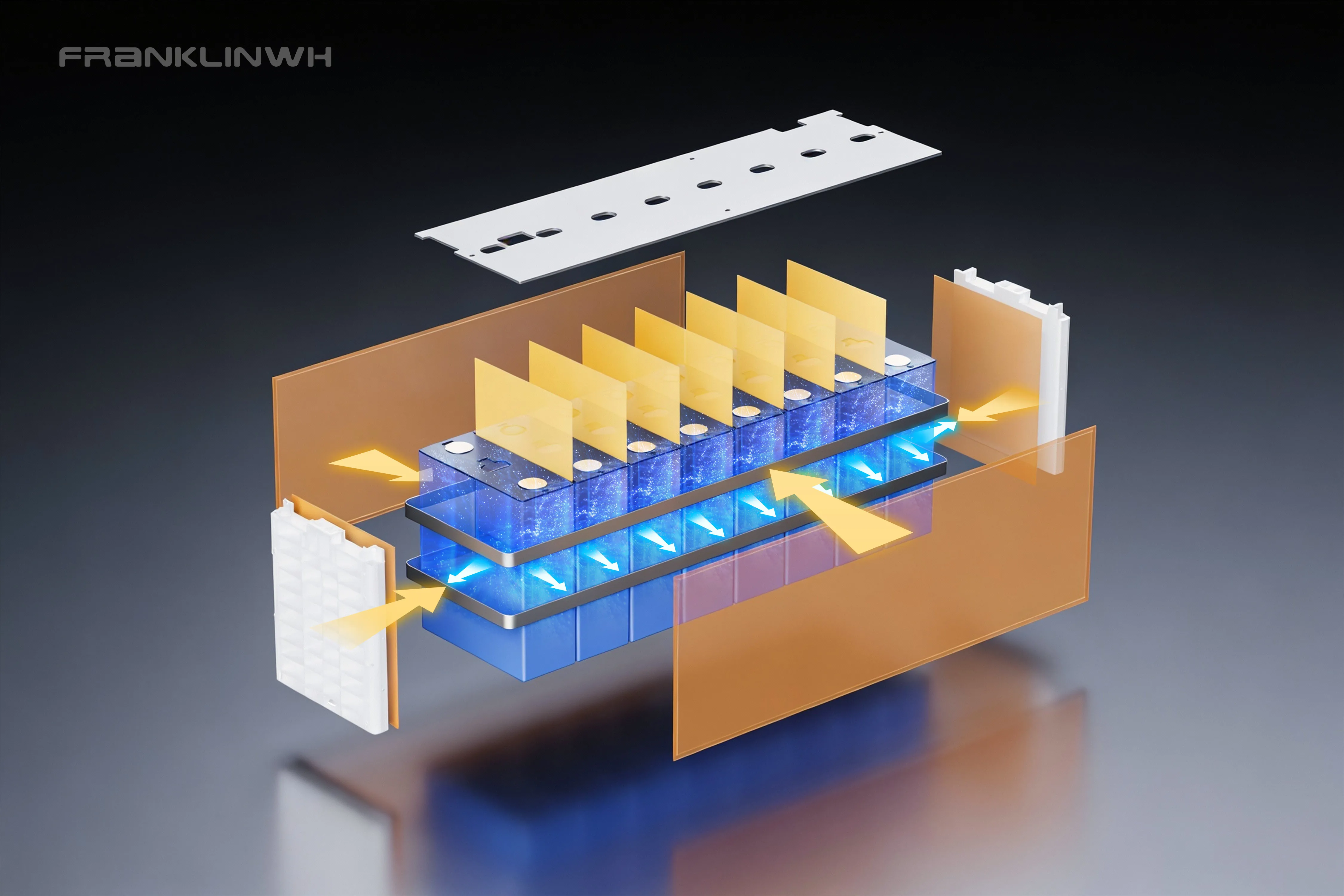
Preload in a battery pack is the intentionally controlled compressive force applied to cells during assembly so they are firmly supported but not over-pressed. The analogy is to give the cell a firm, balanced hug, which is tight enough to keep everything in good contact and resist deformation during use, but not so tight that it damages the cell. Engineers typically achieve this preload through structural frames, springs, or elastic elements built into the pack design.
How Swelling Force and Preload Affect a Home Battery’s Performance?
How do these two forces affect a home battery’s performance? They have a direct impact on both the battery’s lifespan and safety.
What Happens If Preload Is Insufficient?
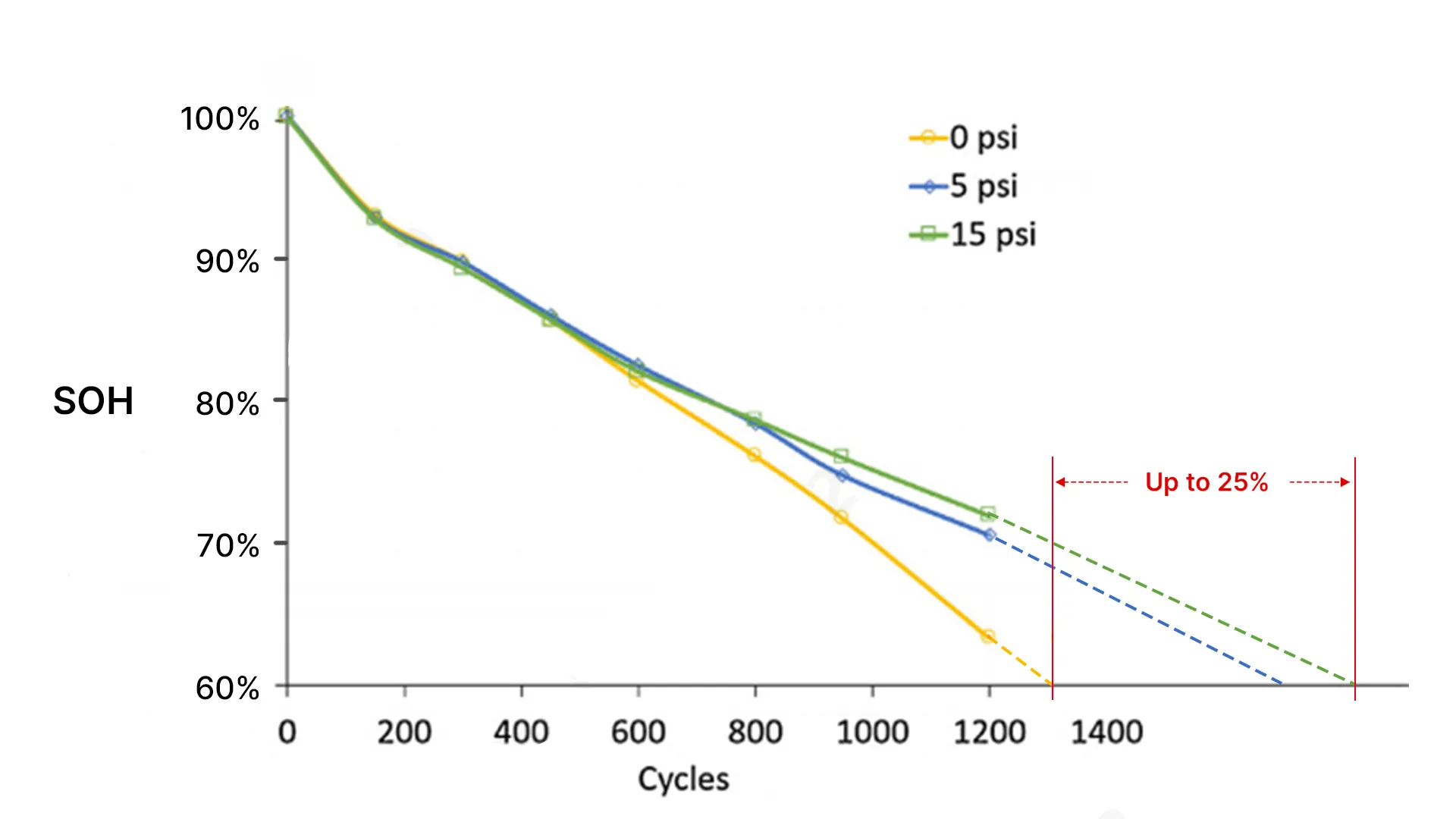
If you picture an LFP cell like a loosely stacked pile of books, with no firm compression holding the layers in place. Then each time you “flip the pages” (charge and discharge), the layers shift a little. Over many cycles, this leads to unstable contact between layers and accumulated misalignment. As a result, the battery’s internal resistance goes up, generating more heat and accelerating the decline of its usable capacity.
If the preload force is too low, the cells also become more vulnerable to vibrations from events such as strong winds or earthquakes. Over time, vibrations may loosen internal structures and electrical connections, which increases the risk of failure and reduces overall battery safety.
Laboratory testing on the 314 Ah LiFePO₄ prismatic cells used in residential energy storage shows an optimal preload force of around 3,000 N, equivalent to the weight force of about a 300 kg object. If the preload force is too low, the cell’s cycle life can be reduced by roughly 15 %–25 % because poor mechanical contact accelerates internal degradation.
What Happens If the Swelling Force Gets out of Control?
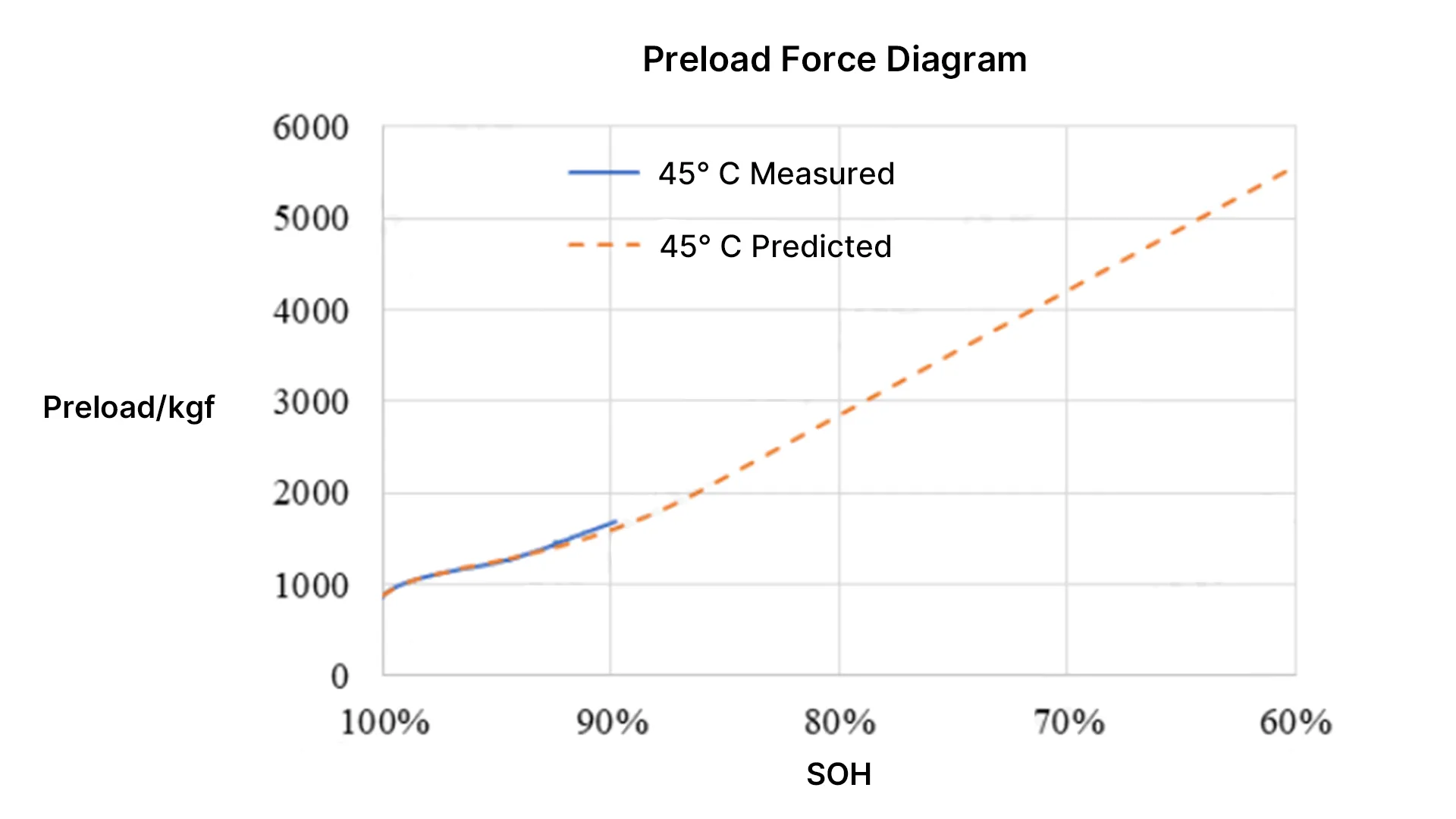
When a fully charged battery cell tries to expand but the pack has no proper mechanical load constraint, the expansion force becomes uncontrolled internal pressure. This can deform the cell’s casing, weakening its protective ability and making it more vulnerable to moisture or short circuits. It can also overstress electrical connections, potentially causing connection failure and increasing safety hazards.
Near the end of life, large-format LFP cells in a residential battery can produce very large internal expansion forces. Effectively, the mechanical push against their casing can be higher than 50,000 N (similar to the weight force of a 5 tonne+ object), according to manufacturers' datasheets. This extreme load must be meticulously considered in the battery pack's mechanical design and structural analysis, because it greatly affects how strong and rigid the cell casing and pack framework need to be.
A Key Challenge in Battery Pack Design
Swelling force and preload force are among the most critical and challenging factors in battery pack design and a hallmark of products built to last because of how the design touches multiple interactive technical areas:
- Mechanical design: Determining how strong the pack must be and how to distribute loads from swelling
- Thermal management: Controlling and accommodating temperature changes that also affect swelling and mechanical stresses
- Electrochemical ageing: As cells age, they swell more, which increases mechanical load
- Long-term reliability: Battery packs should be expected to function safely and effectively for 12–15 years, meaning all these factors must be balanced over a long lifetime.
Final Thoughts
Preload control is not a one-time adjustment increasing clamping force. The pack must maintain the proper mechanical pressure consistently throughout a battery’s long lifetime, with tens of thousands of charge/discharge cycles over many years. The optimal pressure is not a fixed number and evolves with use as it dynamically interacts with temperature, state of charge (SOC), and cell ageing.
This requirement isn’t reflected in simple specification sheets, but it is one of the most important concerns for engineers and a central challenge in mechanical battery pack design.
Learn what makes FranklinWH different, and how we use our understanding of swelling and preload forces to create a breakthrough design that improves our battery longevity by visiting:
