


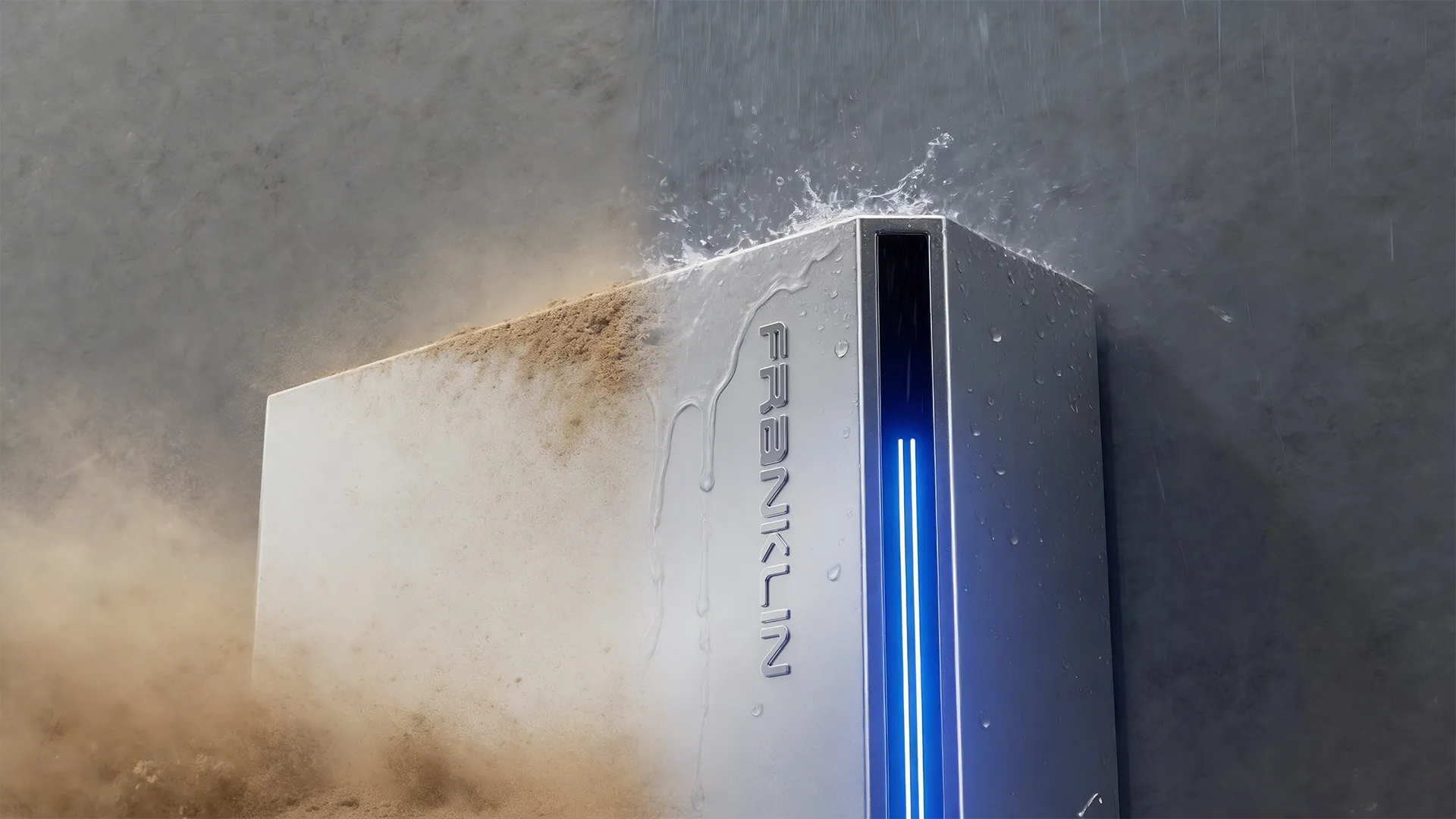
To many homeowners, home batteries all look the same: a metal box that stores and releases energy; but premium home batteries and inferior options differ significantly in regards to safety. What determines safety and the ability to protect itself under abnormal conditions is the Battery Management System (BMS).
For premium home batteries, such as the aPower, safety goes beyond the BMS's ability to monitor voltage and temperature; it's part of the system architecture. Following the widely recognised TÜV UL 1973 battery safety standard throughout the design process, we ensure safety was considered at every step.
In this article, we’ll explore the FranklinWH aPower’s three structured approaches to the BMS and how it contributes to the overall system safety.
Protect the “Brain”: Put the BMS in a Separate Compartment
The BMS is essentially the battery’s “brain.” Where the BMS is placed significantly matters in a battery’s safety. Think of the BMS as a thermal camera. Its effectiveness isn’t just determined by the thermal sensor or optics, but by where it is.
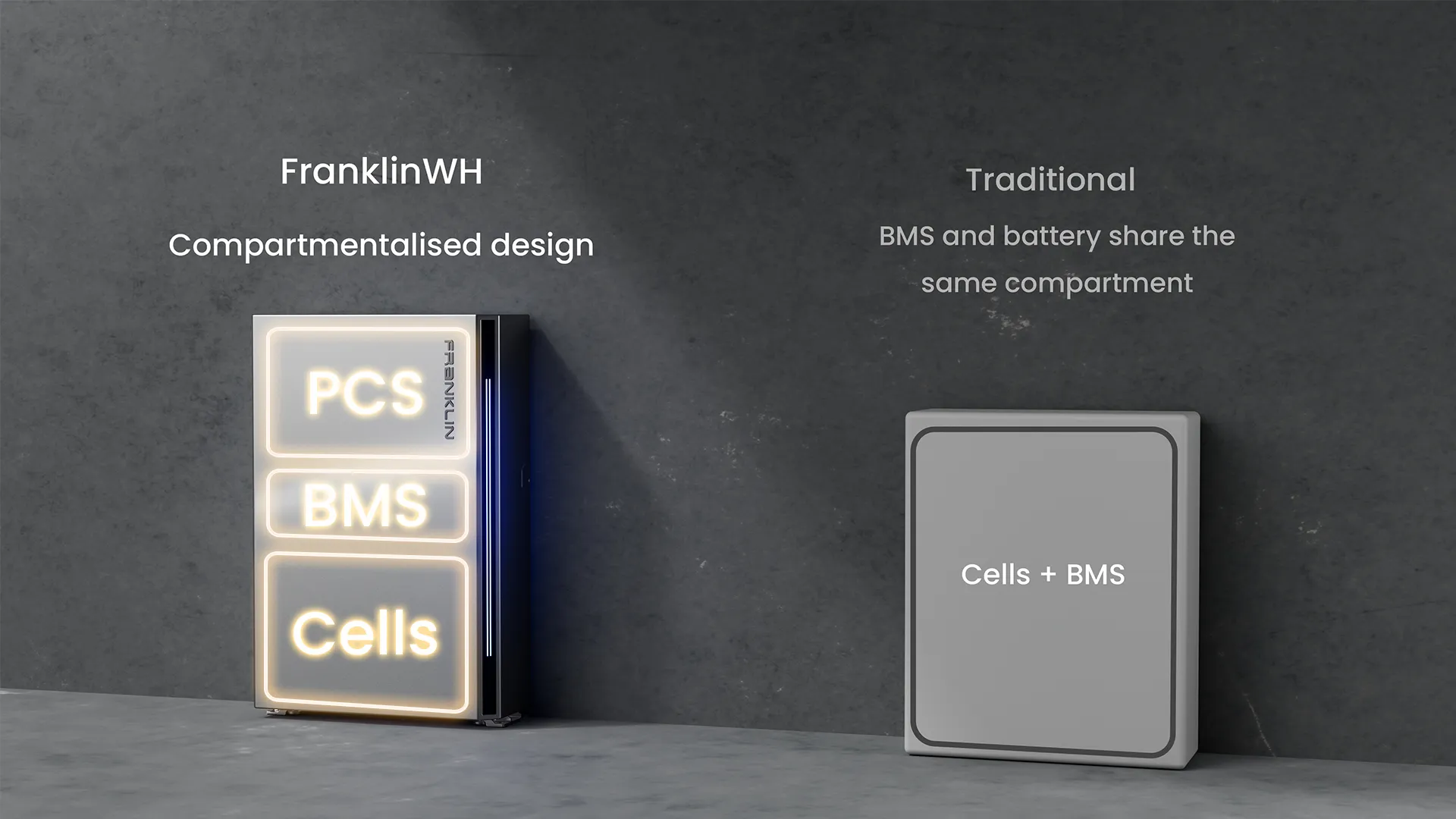
In many battery systems, it sits in the same enclosure as the battery cells. Most of the time, you’d never notice any difference. But when something goes wrong, that design choice really matters. If a cell overheats or starts to fail, the heat or electrolyte can affect the BMS itself. If the BMS goes down, the system loses its ability to keep things in check.
FranklinWH separates the battery cells, BMS, and the power conversion system (PCS) into different compartments, reducing the chance that a problem in one area affects the others. High-temperature insulating materials such as mica, silicone, and epoxy are also used to protect the BMS electronics.
This approach ensures the BMS is always there and ready to step in, shutting things down safely and protecting your home whenever it’s needed.
Two Separate Charge and Discharge Pathways with Independent Switches
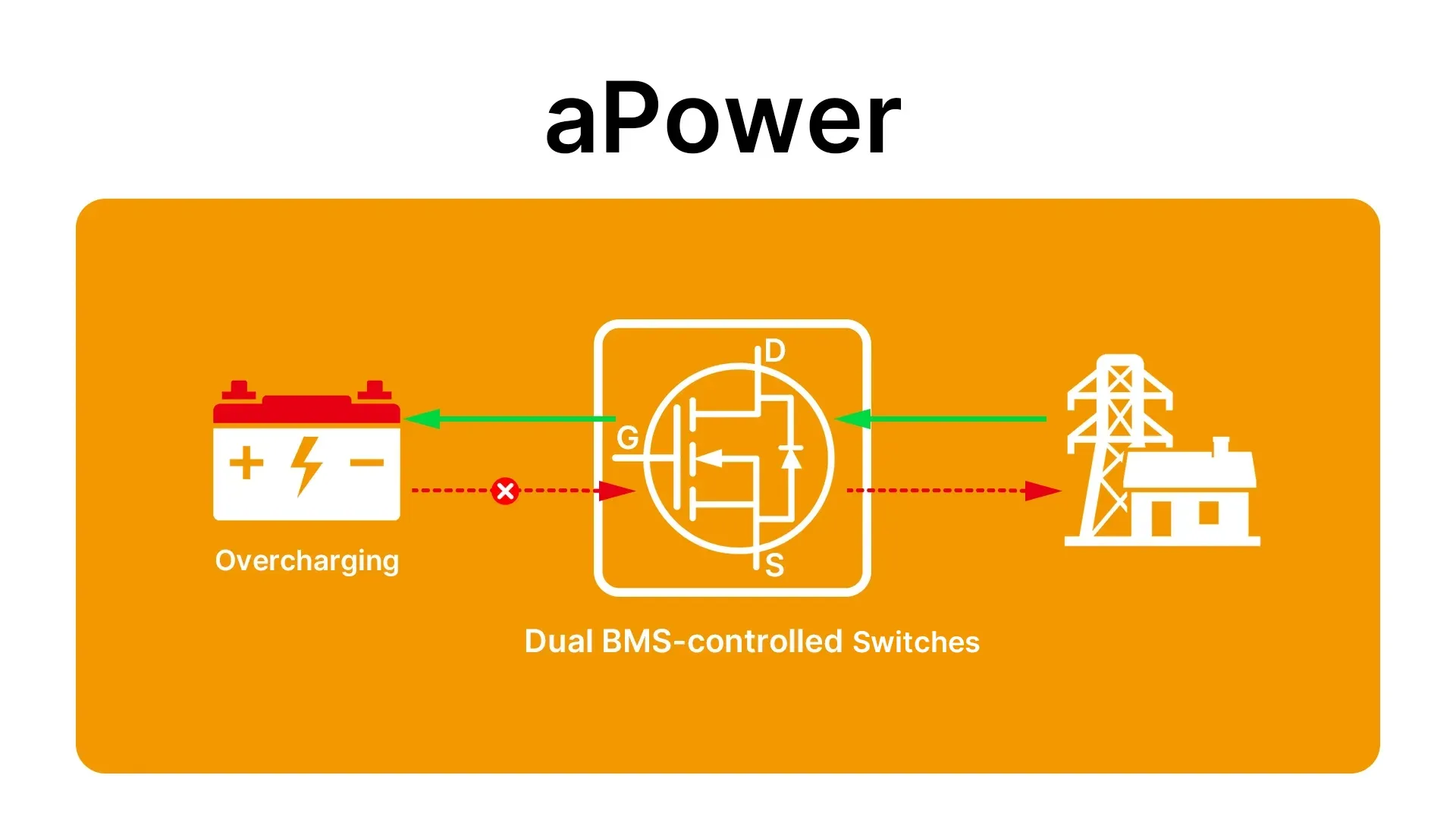
During charging, electrical energy is stored inside the battery, while during discharging, the stored energy flows out to power devices. There are two typical control failure scenarios that can lead to serious battery safety and reliability hazards:
- Overcharge: The battery keeps receiving energy after it reaches its upper reserve limit.
- Over-Discharge: The battery continues delivering power below its lower reserve limit.
The aPower features charging and discharging pathways that are controlled separately, each with its own electronic switch managed by the BMS. The BMS decides whether the battery should accept energy (charge) or supply energy (discharge) based on real-time conditions such as voltage, temperature, and state of charge (SOC), which is a core function of BMS safety control.
If an external device, such as the PCS, behaves abnormally, the BMS can immediately detect it and disconnect the charging or discharging path through the switches, preventing overcharge or over-discharge. Think of this as two tubes with independent smart valves on a water tank. If water flow gets out of control, keeping filling an already full tank or draining from an almost empty one, the smart valves shut off the flow when receiving signals from the central controller, ensuring the tank’s safety by preventing overflow or running dry.
Ultimate Hardware Protection: The Last Resort
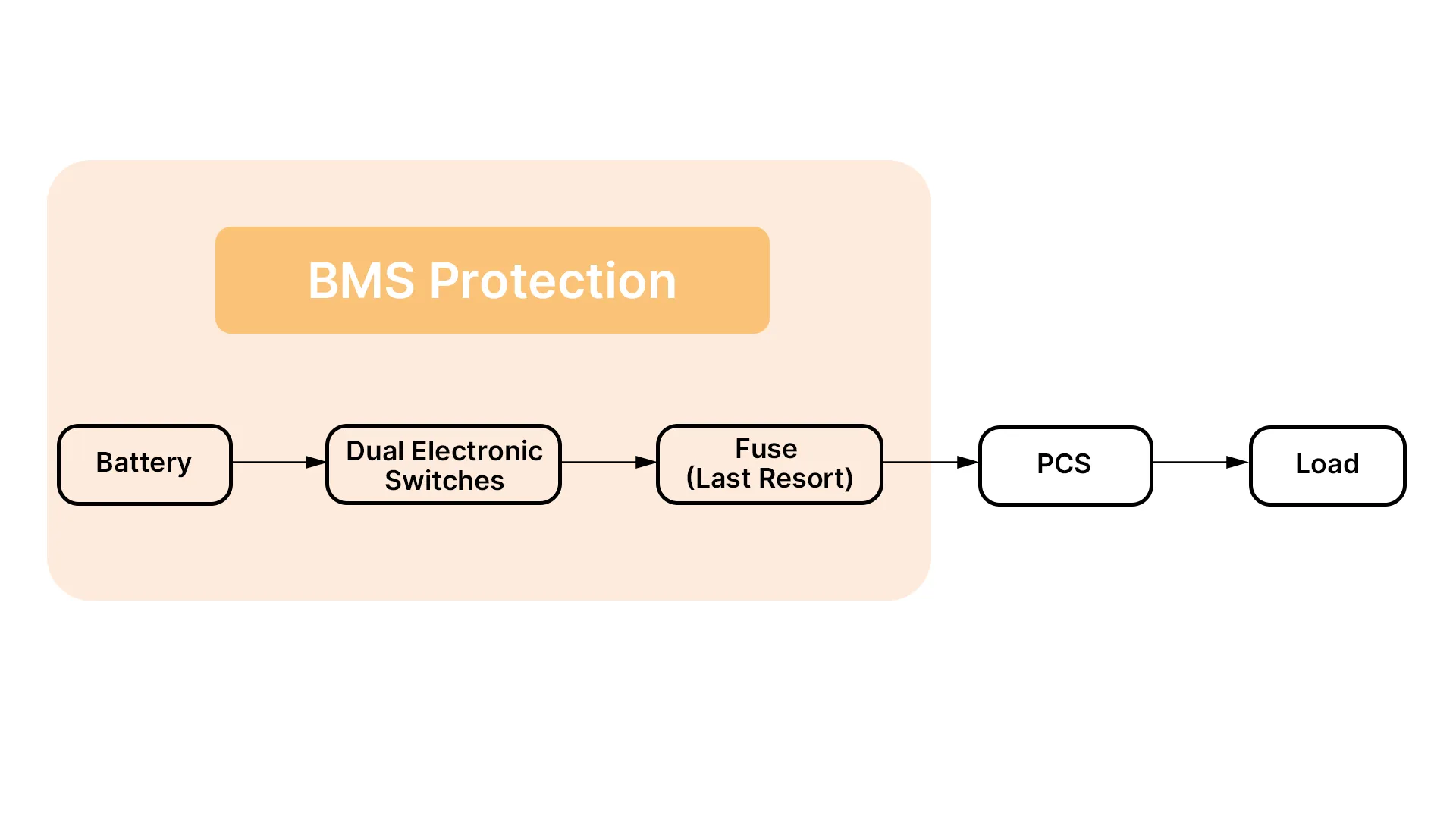
The aPower stands apart with three-layers of battery protection to deliver ultimate safety.
- Early warning: Detects minor issues and intervenes to stop problems from growing.
- Forced protection: Limits or stops charging/discharging if conditions worsen.
- Hardware-level protection: A physical protection (e.g., fuses, MOSFET cut-offs, or dedicated short-circuit protection circuits) against overcurrent, short circuits, or voltage anomalies that works independently of software or communication.
The first two layers are managed by the electronics-based BMS, while the third is a last-resort, physical defense that complements the electronic protections. Think of this as an e-bike, where the electronics manage power and keep the system safe, while the pedals and chain provide a last-resort physical backup.
Conclusion
Because of its thoughtful architectural design, the FranklinWH aPower meets and exceeds the requirements of UL 1973, the widely recognised safety standard for stationary energy storage systems used in homes and infrastructure.
For homeowners, this means the aPower is designed to keep your home powered safely and consistently over time, delivering lasting reliability and the confidence every homeowner deserves.
