


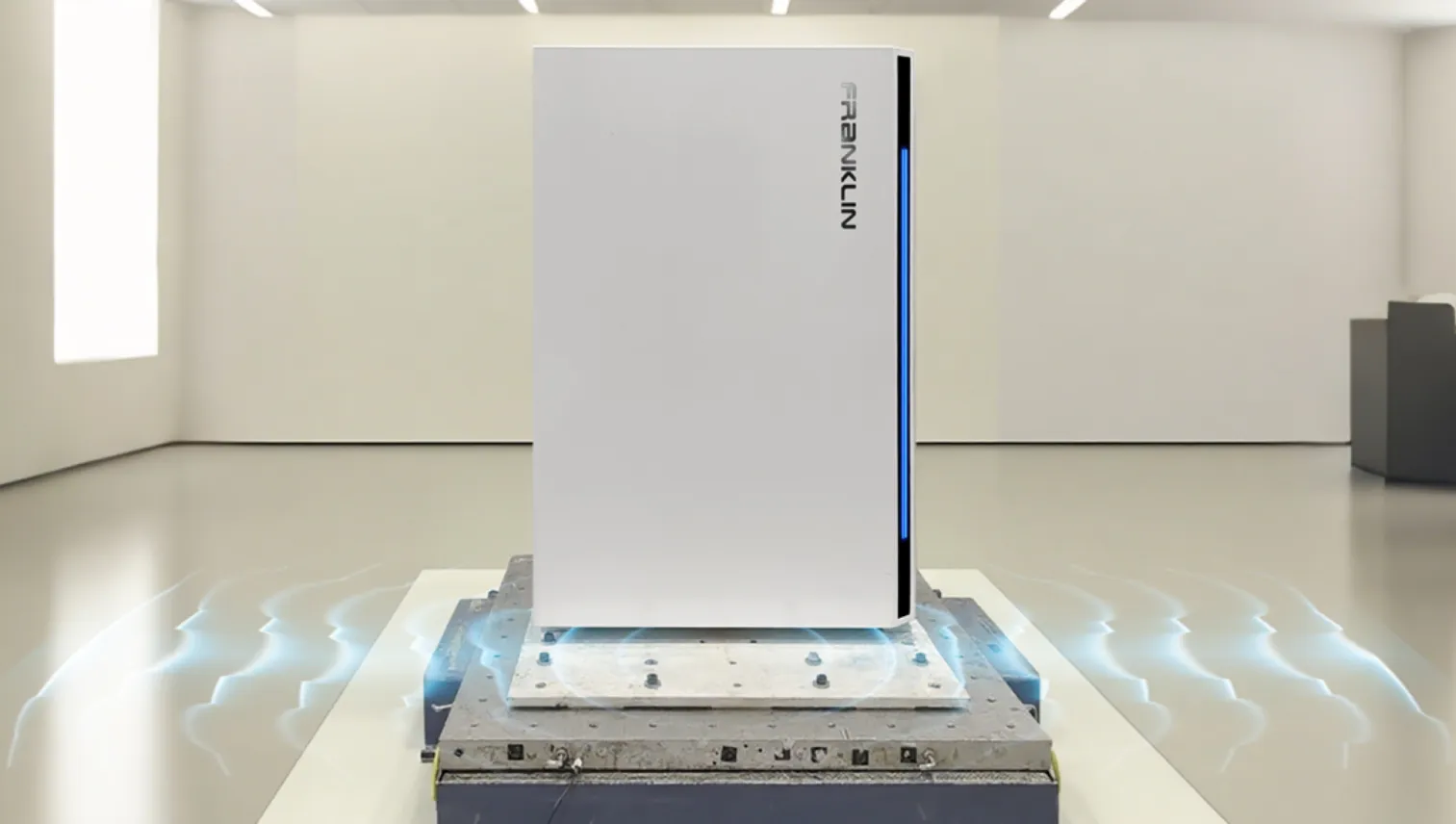
In the previous article, we understand a home battery will get plump, generating outward swelling force that compromises both safety and longevity of the battery after many cycles of use. Applying a preload force is critical to prevent the deformation and extend the battery’s safety and lifespan.
So how is FranklinWH’s aPower battery strapped? What FranklinWH’s philosophy of designing for reliability ensures the cells are given the optimal operating conditions?
Rather than prioritizing the flashy kWh number that’s beyond the practical demand of homeowners in Australia/New Zealand and simply for the sake of maximizing upfront government rebates, FranklinWH’s aPower battery is built to last, with a strong focus on design reliability empowered by a combination of advanced mechanical and material engineering.
This article dives into how FranklinWH designs a breakthrough mechanical structure where the preload force consistently counteracts the swelling force, ensuring ultra safety and reliability as the battery ages.
A Breathing-Style Preload Force Adaptation
The FranklinWH aPower battery boasts a “breathing-style” preload design, an advanced mechanical preload system in a battery pack that is strong enough to hold cells securely but also flexible enough to accommodate the cell’s natural expansion and contraction (breathing) over many cycles. Instead of being rigid, the preload design uses compliant elements so that the pack can adapt to changes in cell size while still maintaining appropriate pressure, balancing force and flexibility throughout the battery’s life.
In the energy storage market, most battery packs use a rigid, fixed displacement (or gap) preload design, which cannot accommodate dynamic cell size change as lithium-ion cells expand/contract with SOC and experience irreversible thickness growth with ageing while applying constant proper pressure.
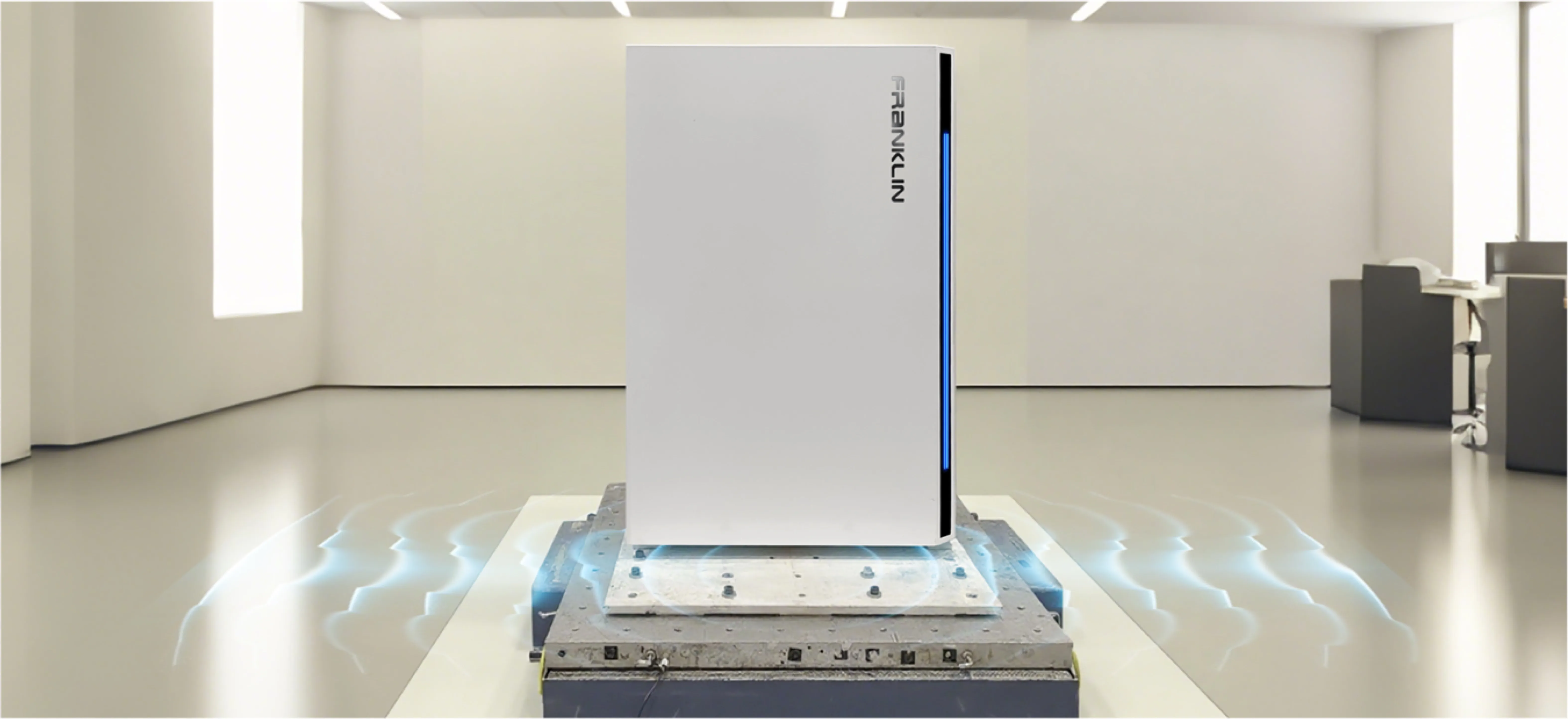
By contrast, FranklinWH leverages a three-part preload system that consists of end plates, threaded rods, and a flexible steel strap, which can maintain the optimal compressive force while accommodating cell breathing. The steel strap provides controlled elasticity so that preload remains stable over time, improving mechanical stability and vibration resistance. This design has been validated against a Level-8 earthquake test and is a hallmark of FranklinWH’s commitment to reliability and the longevity of our solution.
Exceptional Expansion-Resistant Design: Dual Steel Strap Enclosure Provides up to 10-Tonne Protection Capability
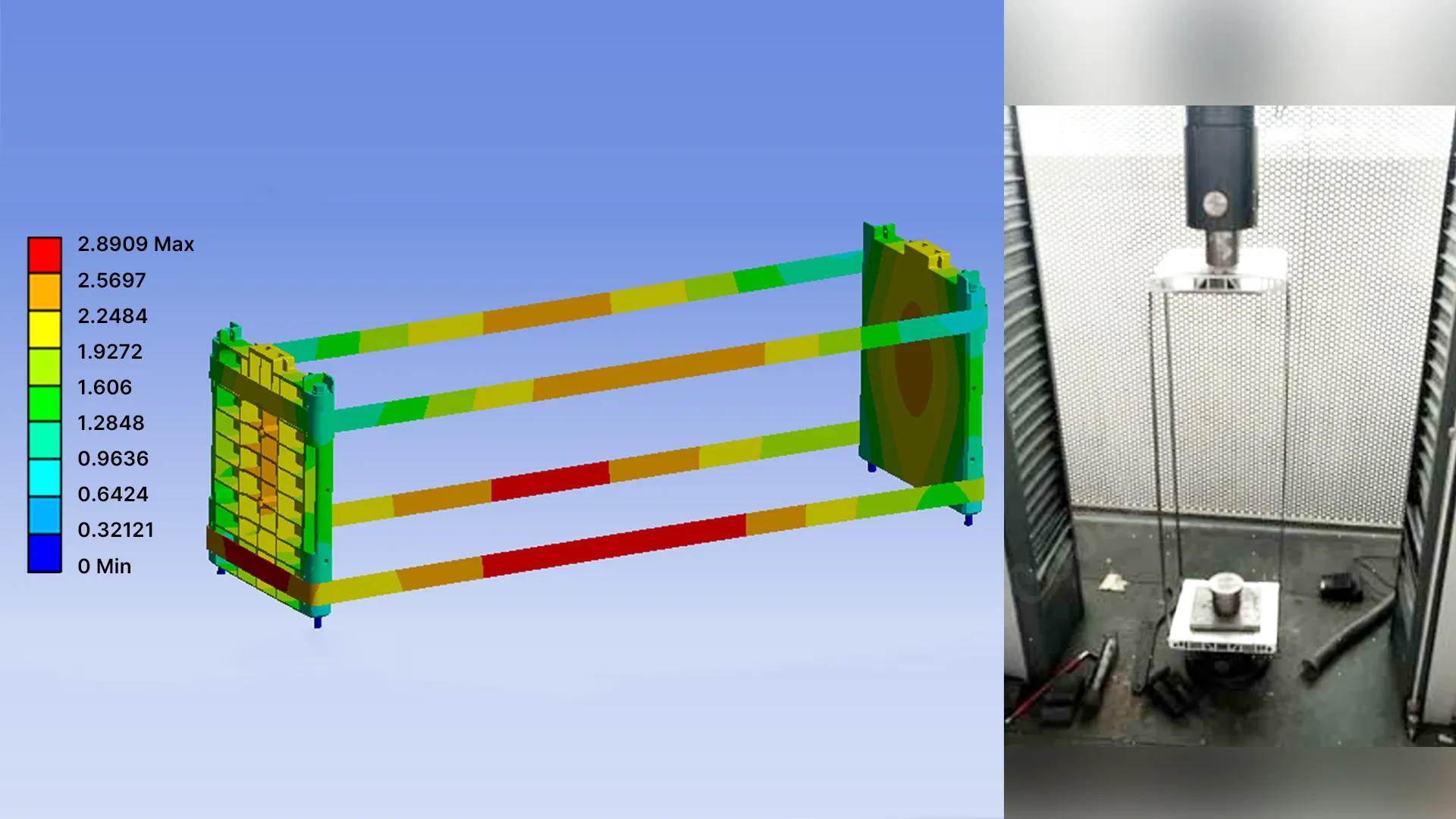
FranklinWH’s engineers combined two opposing end plates, threaded rods, and dual continuous steel straps (each forming a circular wrap) into a robust structural system that, according to calculation and simulation, can withstand up to 100,000 N of tensile force (roughly equivalent to the force from a 10-tonne weight). This design has also passed a 10-tonne tensile load test, which fully validates the structure’s reliability and safety.
Conclusion: Why What’s Considered a Technical Detail Is Worth Understanding for You
You might want to know the technical details, not because you care much about the technical terms themselves such as the swelling force and preload force, but because they’re closely associated with the battery’s safety and reliability.
Battery safety is almost never determined by a single material choice or one datasheet parameter. Instead, it is shaped by multiple hidden engineering and design decisions at the cell, module, and pack levels. Preload and swelling force are only examples. In a mature battery system, there are many other design factors that are equally critical but rarely discussed in marketing.
We’ll explore more of these core design factors in the future so that, beyond marketing claims and datasheets, you get more information to ask better questions in evaluating a battery’s safety and lifespan. Get FranklinWH System with aPower today and start your energy freedom!
