


The FranklinWH aPower, featuring 15 kWh capacity, 5 kW continuous output, alongside the reliability of a 12-year warranty, stands at the pinnacle of home battery storage. To enable the highest level of reliability, FanklinWH learns from the engineering philosophies of the automotive, data center, and semiconductor industries, where failure simply isn’t tolerated. This is reflected across our design, materials, and manufacturing.
This article breaks down the aPower battery’s strengths, explaining why it stands apart from the crowd as the gold-standard of reliability and quality for Australian and New Zealand homeowners.
1. Reliability-Focused Battery Storage Design
Cutting-edge Battery Management System: A Smarter Brain
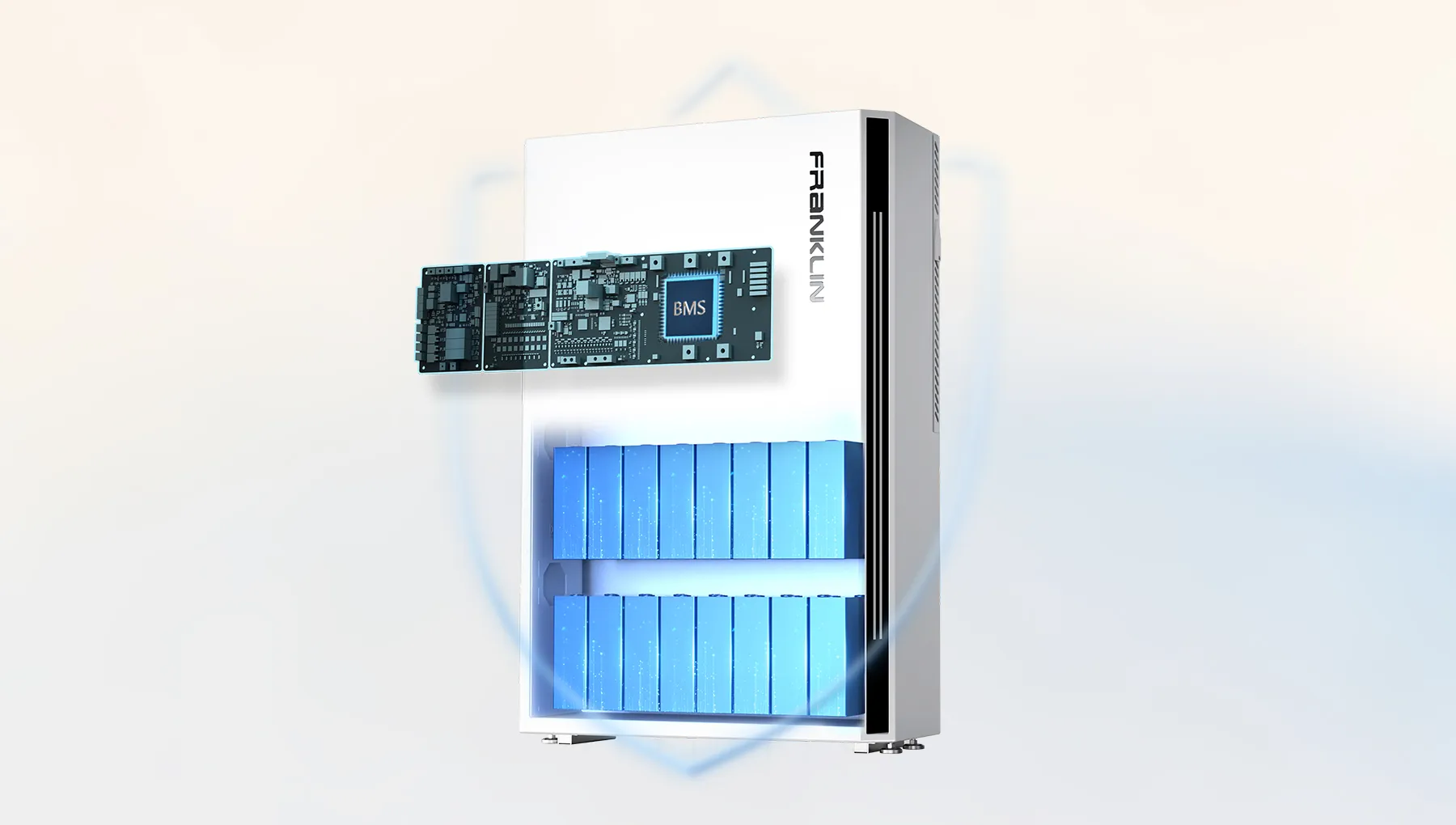
Every home battery unit has a Battery Management System (BMS), but not all BMS are created equal. Think of the BMS as a sports medic, and the aPower’s 16 battery cells as an elite team. The BMS manages the health of the battery cells to ensure they can continue to perform at their peak for longer. The aPower employs an automotive-grade BMS with over 30 protection and control functions, designed to handle extreme conditions, and installed in a separate, isolated compartment away from the cells. This matters because when unexpected issues occur, such as encountering extreme heat, cold, or faults, the BMS can always stay alert and well manage these issues instead of getting overwhelmed.
By contrast, many lower-cost batteries use simpler BMS designs placed right next to the cells, which may save money but increases risk.
Handling Cell Expansion (The Problem No One Talks about)
Battery cells naturally expand as they age. By the end of their life, this gradual buildup of pressure from expansion can push outward with a force of 50–75 kN, powerful enough to lift a small car.
If this force isn’t properly managed, it can damage the internal structure, cause electrical faults, compromise dust and water protection, and significantly reduce battery lifespan.
FranklinWH tackles this with a dual-safety structure; using reinforced end plates and steel band containment, which has been tested to withstand forces up to 100 kN. That makes a significant difference in year five, eight, and ten, exactly when cheaper designs often start to struggle.
Better Balancing Leads to Longer Life
A home battery is made of many cells. Over time, they don’t age evenly. Most brands rely on passive balancing, a reactive solution that keeps all cells working evenly in terms of voltage and state of charge (SOC). This helps early on but becomes less effective as the battery ages.
FranklinWH uses a hybrid active + passive balancing system, inspired by electric vehicles. This design is more proactive and offers tremendous benefits in balancing the cells:
- Up to 10 times more effective than passive-only solutions
- Significantly slows down performance degradation
Consistent Performance Even under Cold Weather
Battery charging efficiency drops below 10° C, and many energy storage systems simply reduce performance in response.
The FranklinWH aPower takes a different approach with a built-in active heating system that keeps cells at an optimal 10–25° C, ensuring reliable operation even down to -20° C. The result is more usable stored solar energy, even in cold climates.
2. The Battery Materials That Actually Matter
Top-Tier Battery Cells
Cells are the heart of any home battery. That’s why it’s important to invest in the most reliable and highest quality cells on the market, and that’s why FranklinWH uses the same battery cells you can expect to findthat rival the safety and reliability of cells used in high-performance EVs.
FranklinWH leverages top-tier cells with PPB-level reliability (parts per billion, meaning only a handful of failures per billion components), while typical industry cells are PPM-level (parts per million, meaning about 1,000 failures per million components). This makes a huge difference over a decade.
Semiconductors inside the system control everything, and FranklinWH relies on automotive-grade components with a failure rate under 10 PPM, compared to about 1,000 PPM for common consumer-grade components, a clear gap in reliability.
Full Cell Monitoring
Monitoring only works if it’s complete. The aPower battery incorporates 16 temperature sensors distributed across the pack, ensuring all cells are tracked and leaving no blind spots. By contrast, cheaper solutions may use selective sensing which may not monitor each battery cell individually, potentially leading to unobserved critical failures.

3. Advanced Energy Storage System Manufacturing: Built to Last
Stronger Internal Connections
Eliminating traditional wire harnesses that feature bundles of separate wires, FranklinWH uses Flexible Printed Circuits (FPC).Think of the FPCs as permanent printed signs that can last through weather and vibration, whereas the traditional method is more like tapped paper notices that do not endure. The FPCs are more resistant to vibration, handle heat and aging more reliably, and can last up to ten times longer than the traditional method. FranklinWH also use pre-tightened alloy copper bars for its busbars, improving heat dissipation by 60% and eliminating loose connections entirely.
Robust Dust, Water And Corrosion Protection
FranklinWH aPower is rated IP67, which means it is completely dust-tight (the “6”) and can safely be submerged in water up to 1 meter for 30 minutes (the “7”).
In general, the higher the numbers in an IP rating, the better the protection against dust and water.
The same is true for the aPower’s C5 rating which means you can install the FranklinWH System with confidence in coastal or beachfront areas without warrying about salt-spray, something many home batteries struggle with.
Automotive-Grade Exterior Finish
The enclosure isn’t just about looks. FranklinWH aPower uses a three-coat, three-bake automotive painting process that provides strong ultraviolet (UV) resistance (protection against a type of electromagnetic radiation that comes from the sun), prevents cracking or fading for over a decade, and holds up in extreme heat and cold.
This is the same process that luxury cars undergo to ensure their paint is still vibrant and the body protected, even when exposed to the elements.
Conclusion
The FranklinWH Systems are widely adopted across Australia, New Zealand, Canada and the US for good reason.
For homeowners, choosing FranklinWH isn’t just about buying an energy storage system. It’s about peace of mind for your family.
Your home deserves a system designed and built for you with long-term reliability, not simply to maximize the kWhs for a government rebate.
Join the FranklinWH family, and learn the difference of true energy freedom.
