


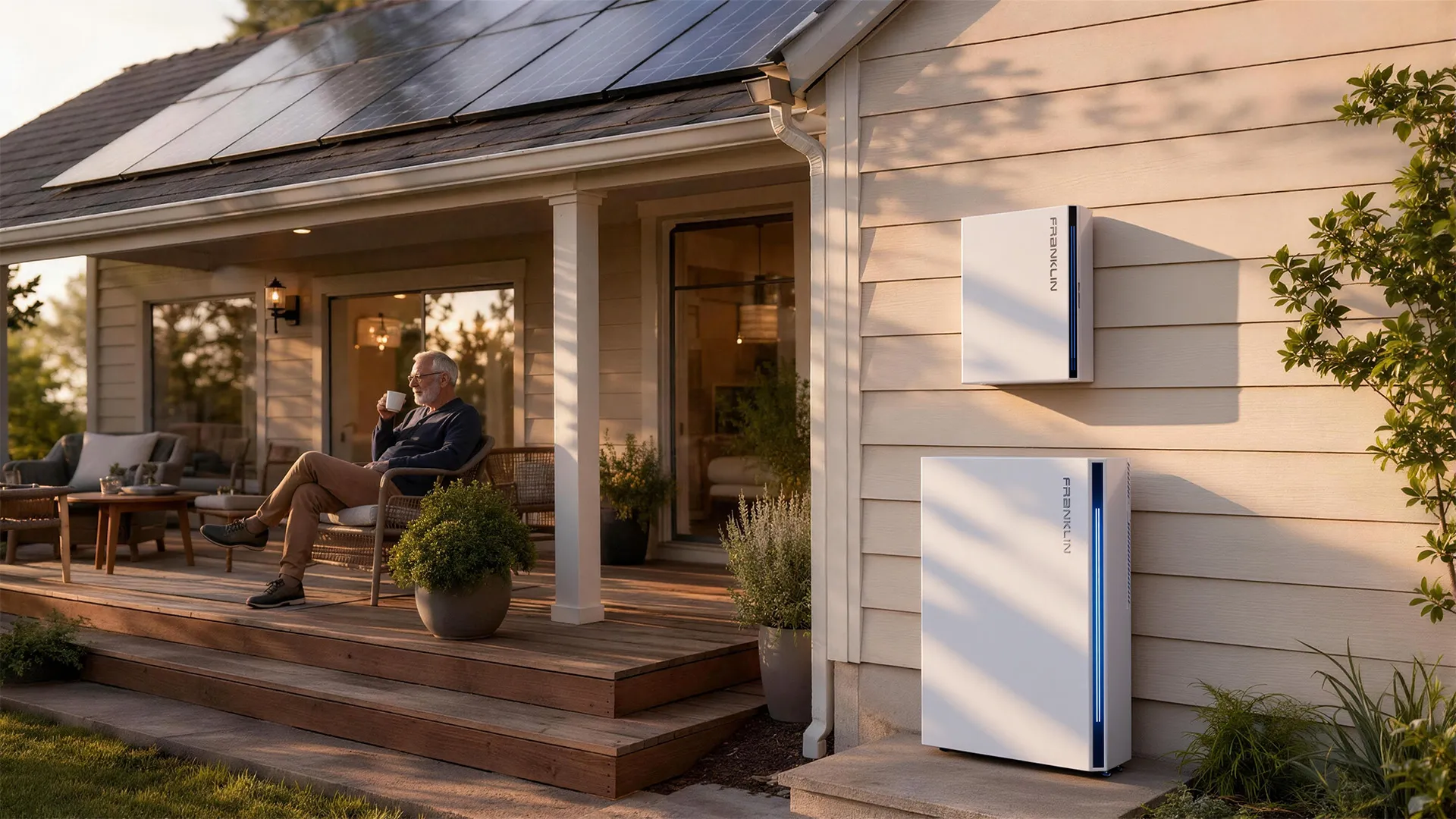
For many Australian and New Zealand families, a home battery is a practical way to get more value from rooftop solar. Without storage, excess daytime solar power is often exported to the grid for a low feed-in credit. In some system designs, surplus generation is simply lost through inverter clipping. A well-sized battery captures more of that solar energy for future use, especially for peak evening hours.
However, bigger is not always better. A battery’s financial value depends on how much of its stored energy is actually needed. If the system is oversized, homeowners may pay for capacity that is rarely used, extending the payback period and lowering their return on investment.
So, what size battery do you need? The right choice depends on your home electricity use, solar panel size, and available federal rebates. With proper sizing, Australian and New Zealand families can avoid paying for unused capacity while maximising self-consumption and bill savings.
Estimate Your Household Electricity Use
The first step in choosing the right sized solar battery is understanding how much electricity your home uses each day and, more importantly, how much of that use happens after sunset. In Australia, a typical household may use around 15–20 kWh of electricity per day, depending on household size, appliance use, climate, and lifestyle.
For battery sizing, the key figure is evening and overnight consumption. While rooftop solar can directly power daytime loads, the battery should store enough surplus solar energy to offset the electricity you would otherwise buy from the grid after sunset.
For example, if a household uses around 17.5 kWh per day and about 65% of that consumption occurs in the evening and overnight, the after-sunset demand would be roughly 11.4 kWh. Adding a 2 kWh buffer for future needs, such as higher appliance use, seasonal variation, or lifestyle changes, brings the target usable battery capacity to about 13.5 kWh.
For a larger household using around 20 kWh per day, the same calculation would suggest a higher storage requirement. If about 65% of daily consumption happens after sunset, nighttime demand would be around 13 kWh. With a 2 kWh buffer, a battery with about 15 kWh of usable capacity may be a good fit.
Know Your Solar Array Size
The next step is to check the size and output of your solar system.
In Australia, many legacy rooftop solar systems are around 6.6 kW, while newer installations are typically larger. A 6.6 kW system can generate roughly 23–28 kWh of electricity per day on average, depending on the location, roof orientation, shading, and seasonal conditions.
Battery sizing should not be based only on the lowest winter production days. Doing so may leave the battery too small to capture useful surplus solar in summer. At the same time, sizing around perfect summer days can lead to over-investment, because the battery may rarely be fully charged during winter or cloudy periods.
A more balanced approach is to use average daily solar production over the year. As a rule of thumb, the sweet spot of usable battery capacity sits around 60–80% of average daily solar generation. This percentage range accounts for the fact that some solar power is used directly during the day, while the rest is available for appropriate storage that covers typical night use of an Australian home.
For example, if a 6.6 kW solar system produces about 25 kWh per day on average, 60% of that output is 15 kWh. A battery with around 15 kWh of usable capacity can therefore be a practical fit for many homes, helping store a significant share of daytime solar for after-dark use without making the system unnecessarily large or too limited.
Battery Sizing under Time-of-Use (TOU) Mode
Under TOU Mode, the battery is scheduled to discharge during expensive peak hours. This means your battery needs to cover electricity consumption during peak windows, not total nighttime use.
The charging energy comes from surplus solar during the day and off-peak grid electricity.
You are still advised to size around total nighttime use, so you can flexibly shift between peak-hour-only consumption and full-night self-consumption. You can participate in virtual power plant (VPP) programs to sell your extra energy to earn additional revenue/credits under TOU mode.
How Federal Rebates Affect Your Choice of Solar Battery Size
Federal rebates can have a direct impact on what solar battery size makes the most financial sense. Under Australia’s Cheaper Home Batteries Program, the discount is delivered through small-scale technology certificates, or STCs, and is calculated based on the battery’s usable capacity.
However, the rebate does not increase at the same rate across all battery sizes. Since 1 May 2026, the first 14 kWh of usable battery capacity receives the full STC factor. Any capacity above 14 kWh and up to 28 kWh receives only 60% of the STC factor, while capacity above 28 kWh and up to 50 kWh receives only 15%. This means the rebate value per additional kWh significantly drops once the battery exceeds 14 kWh of usable capacity.
For many Australian families, the 14–15 kWh capacity range is the sweet spot. It sits close to the point where the strongest rebate support applies, while still aligning with typical after-sunset energy needs. A battery in this range can help store enough daytime solar to minimise evening and overnight grid use while skipping the rebate reduction and keeping upfront cost much lower.
Sizing around the rebate threshold can help avoid over-investment while still capturing significant value from the federal program. However, for homes with exceptionally high electricity use, EV charging, or stronger backup requirements, larger batteries may still make sense despite the rebate reduction.
FranklinWH System with aPower X: Meeting the True Demand of Australian Homeowners
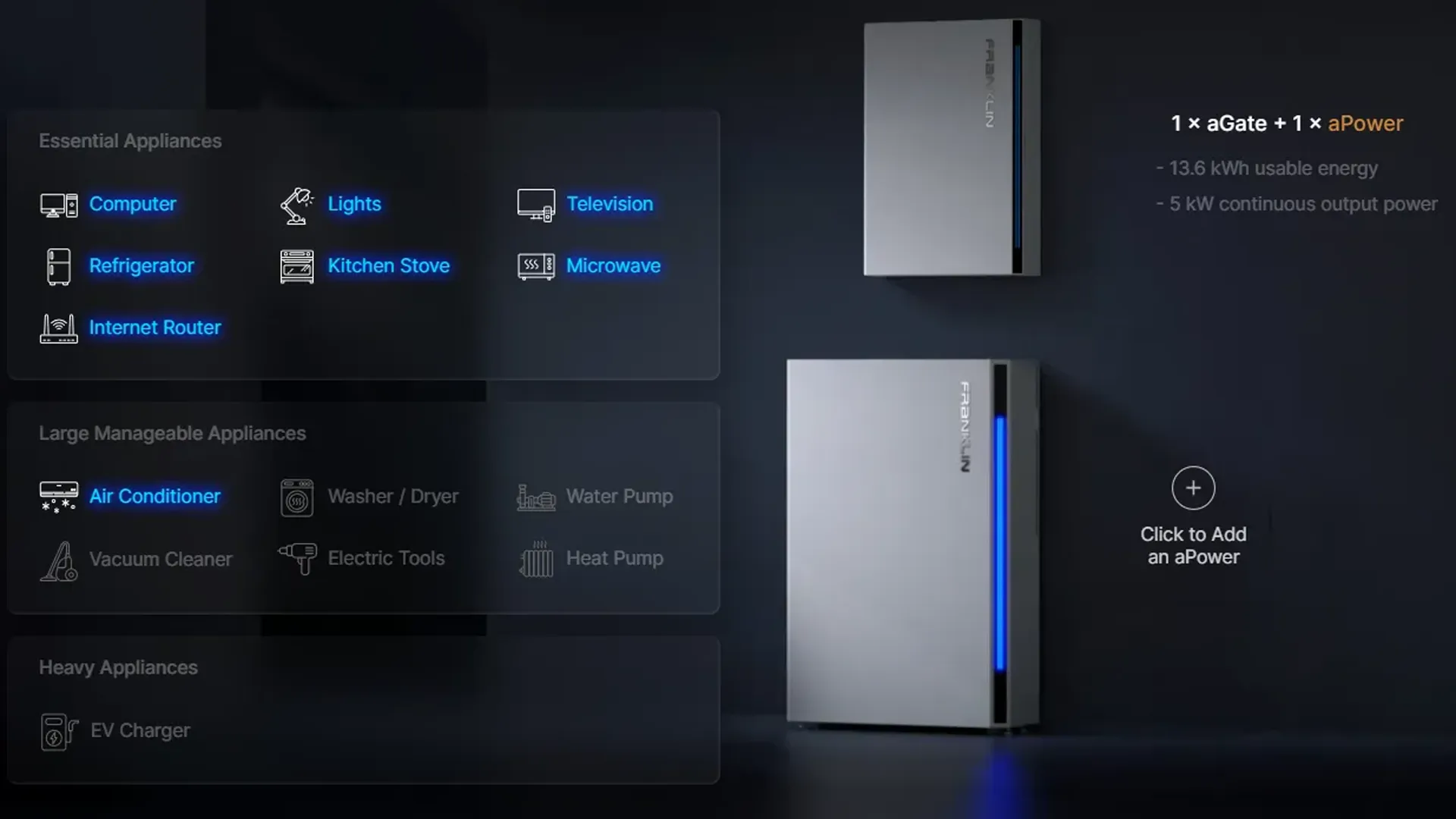
Choosing the right battery is not about buying the largest capacity available. It is about matching storage to real household needs. With 15 kWh of capacity, 5 kW continuous power, and 10 kW surge power for 10 seconds per-battery, the FranklinWH aPower X-02 provides long-lasting power for a wide range of home loads, from essentials to energy-intensive appliances such as a 4-tonne A/C.
For Australian families, this capacity is a practical fit. It can store sufficient daytime solar for after-dark use, while supporting an uninterrupted power experience during outages.
The FranklinWH System is also designed for retrofits. As an AC-coupled solution, it can work with all solar inverters, making it easier to install without changing the original solar setup. The 15 kWh-capacity aPower X-02 in the system also aligns well with the size of many existing residential solar in Australia.
The aPower hits the sweet spot for Australian battery rebates, helping value-conscious households get the most out of their investment.
For homes with higher demand, the FranklinWH System can scale with additional storage. By aligning battery size with actual household needs and with engineered reliability, the FranklinWH System is built for the real needs of Australian and New Zealand families.
Request a free consultation from FranklinWH today to help with your battery sizing!
