



As home energy management systems with battery storage become more popular, terms such as AC-coupled and DC-coupled are often used to describe system architecture.
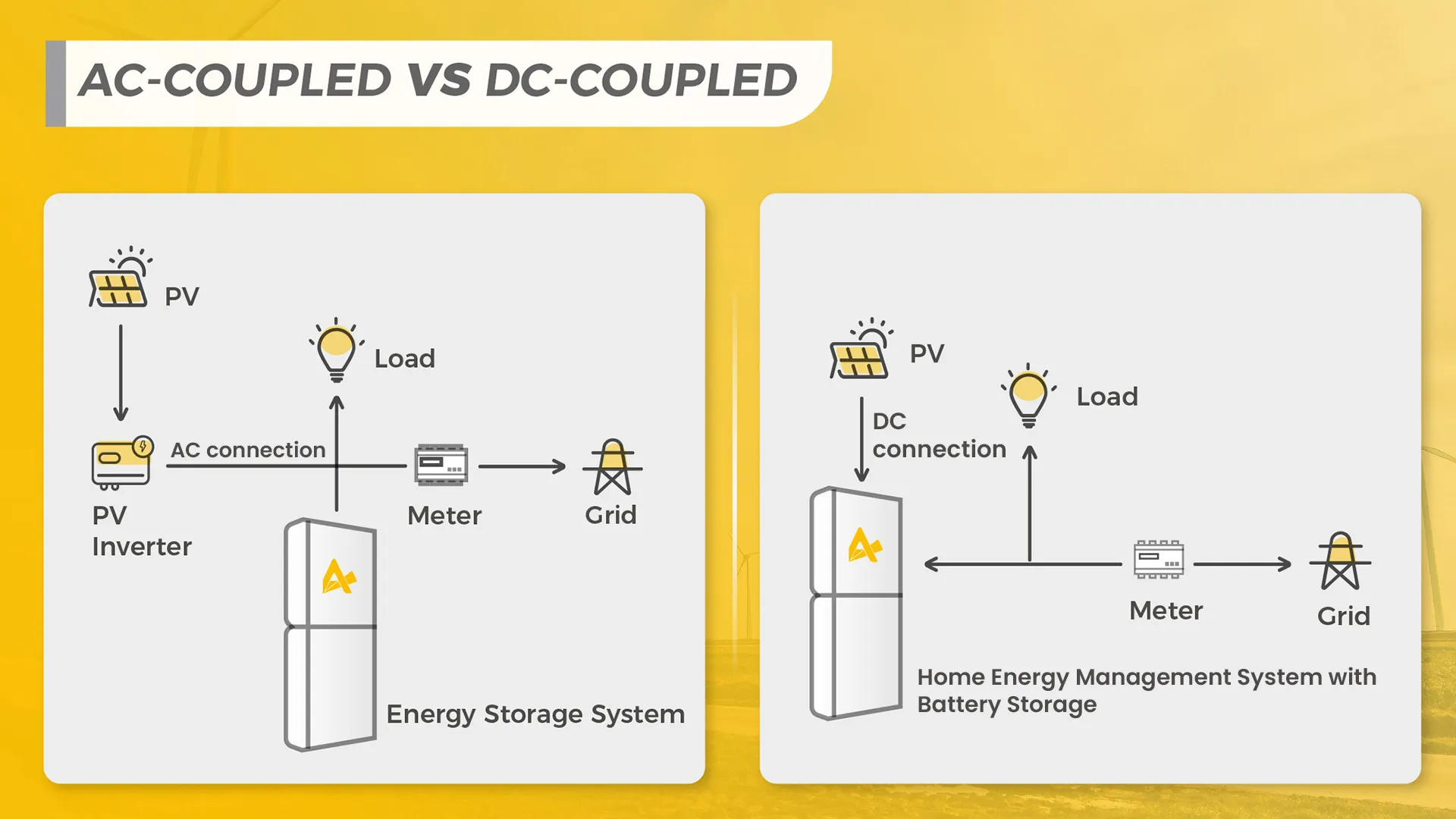
Many people define AC coupling by looking at how solar connects to the battery. If a battery is added to an existing solar system through a separate inverter that outputs AC power, it is generally considered an AC-coupled system. If solar connects directly to the battery through a DC pathway, it is typically considered DC-coupled.
However, when discussing a complete home energy management system (HEMS) that coordinates solar, battery storage, the grid, and household loads, AC coupling refers to more than just the connection between solar and the battery. It describes how battery units are connected within the system when expanding storage.
How to Define an AC-Coupled HEMS
An AC-coupled HEMS is defined by the fact that all batteries within the system are coupled with AC output. Each connected battery has a built-in battery inverter that can convert stored DC energy into AC power independently to power your home. That way, a failure in one battery doesn’t shut down the operation of other connected battery units, improving overall system resiliency and availability.
The Benefits of an AC-Coupled HEMS
The key advantage of an AC-coupled HEMS is its flexibility when expanding battery capacity. As household energy needs grow, homeowners can add more battery units to increase available storage.
In some advanced AC-coupled systems, each added battery unit, such as the FranklinWH aPower X, includes a built-in inverter and can independently output AC power to the home. This allows multiple battery units to work together, increasing not only the amount of stored energy but also the available power output.
By contrast, some systems simply expand storage by adding DC battery modules that only store additional energy. These modules must send power through a primary inverter in a core battery module before reaching home loads, meaning the system’s output capability may remain limited by a single AC output channel, even as storage capacity increases. Additionally, a problem with one DC module may affect the power flow to subsequent modules since they share a common DC power path, potentially paralysing the entire expanded battery system. This is seen in contrast to the AC-coupled battery architecture where parallel battery units will continue to supply power to your home even if one unit fails.
AC-Coupled Battery Energy Storage System
The term Battery Energy Storage System (BESS) is widely used in the energy storage industry. However, when describing an AC-coupled BESS, the term usually refers to how the battery connects with a solar system, specifically, whether the battery unit is connected to an external inverter providing AC power or directly connected to DC solar generation. In an AC-coupled BESS, the solar inverter and battery inverter operate as separate components, usually a third party solar inverter installed when the solar arrays were installed. In a DC-coupled BESS, solar power is connected directly to the battery on the DC side before being converted to AC through the built-in hybrid inverter in the battery.
This definition focuses on the solar-to-battery connection architecture, rather than how the batteries are connected within the system. If a HEMS is designed to connect AC-output capable batteries with integrated inverter, the overall system can still be considered AC-coupled, even if the battery uses a DC-coupled connection with solar.
FranklinWH System: Premium AC-Coupled Home Energy Management and Battery Storage Solution
The FranklinWH System is designed as a premium AC-coupled HEMS with battery storage, helping homeowners maximise clean energy use and energy resiliency.
- Flexible solar inverter compatibility: Agnostic to all solar inverters, the FranklinWH System enables easy battery storage retrofits for existing solar systems without changing any original setup.
- Intelligent energy management: The system intelligently manages multiple energy sources, including solar, the grid, generators, EV power, alongside battery storage, to optimise energy use, generate long-term savings, and provide ultimate peace of mind during outages.
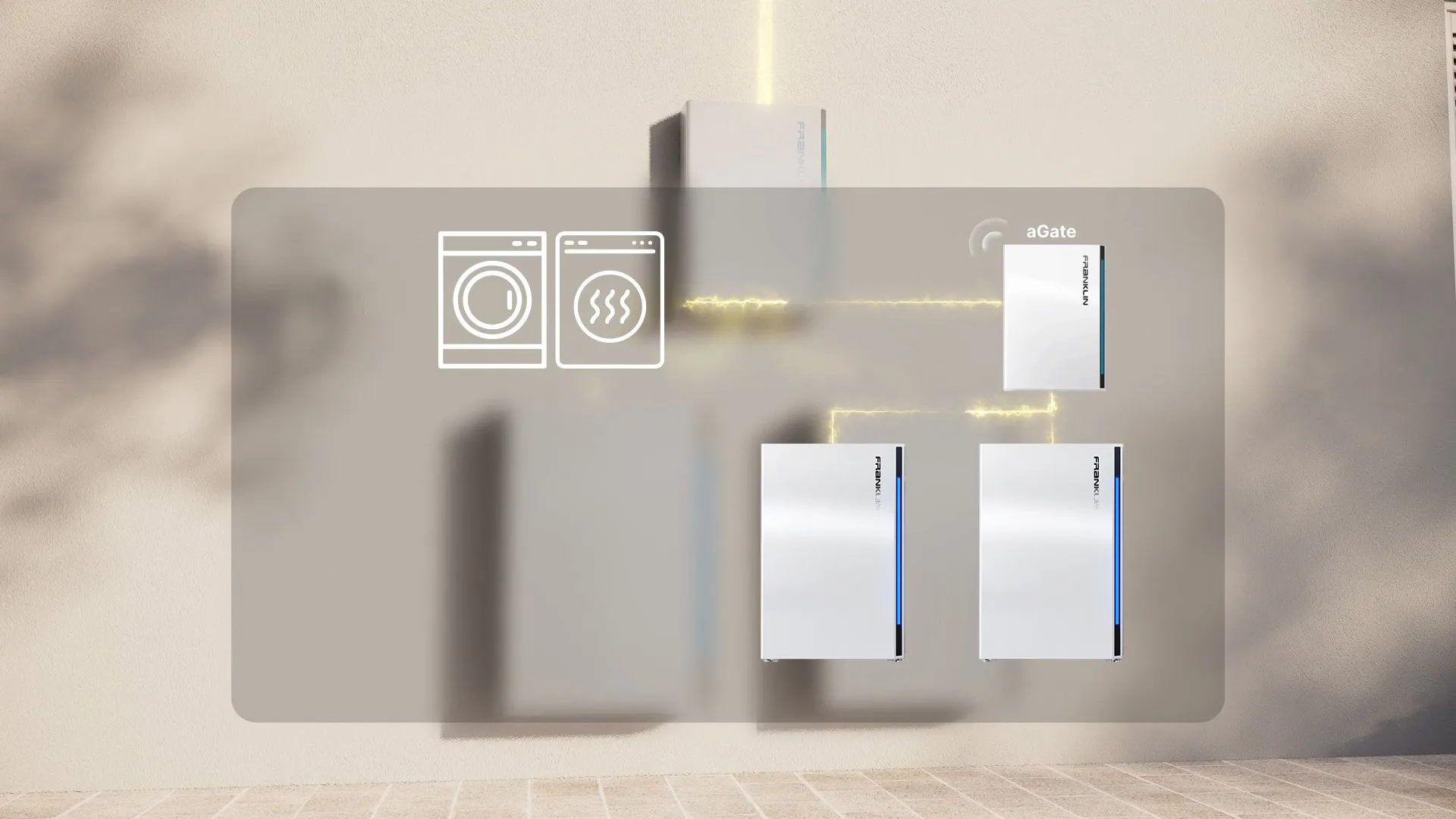
- Scalable storage and power output: With a 15 kWh aPower X battery, the system can scale up to 225 kWh (15 units) per aGate. With AC output capability from each battery unit, system expansion can increase both storage capacity and available power output, meeting increasingly advanced energy demands.
- Long-lasting battery performance: The aPower X offers a 12-year or 60 MWh throughput warranty with no cycle limits, enabling reliable performance throughout its service life.
- Intelligent load management: Smart Circuits prioritise critical appliances by selectively managing individual high-power loads, helping extend backup duration during outages.
- Advanced backup capabilities: Black Start technology automatically resumes solar charging after the battery is fully depleted while the grid remains unavailable. The system also enables agnostic generator integration with automatic start and stop based on battery state of charge or preset schedules.
- Designed for Australian conditions: With IP67 and C5 salt spray protection ratings, along with a wide operating temperature range from -20° C to 50° C, the FranklinWH System is built to operate reliably across diverse Australian environments.
- Enterprise-level reliability for residential energy storage: Certified to data-center-grade reliability standards, the FranklinWH System is the industry’s first to bring enterprise-level power reliability to residential energy storage systems.
- Enhanced battery quality: Through thoughtful battery engineering, from advanced cell management to robust pack-level design. The battery and system-level reliability ensure profitable long-term returns on system investment.
Conclusion
The term AC-coupled can refer to different aspects of a HEMS with battery storage. In the context of solar and battery integration, it typically describes whether the battery connects to the solar system on the AC or DC side. However, it may not be accurate to define an entire HEMS as an AC-coupled system simply by referring to the solar-to-battery connection method. Instead, it is defined by the architecture where the battery units are connected in a way that each one can output AC power independently, regardless of solar-to-battery connection methods.
The FranklinWH System is a premium AC-coupled home energy management and battery storage solution designed to simplify integration, intelligently manage diverse energy sources, and deliver superior scalability and reliability for modern energy needs, enabling unrivaled energy security and substantial long-term value.
Schedule a free consultation with FranklinWH to start your energy freedom journey.
