


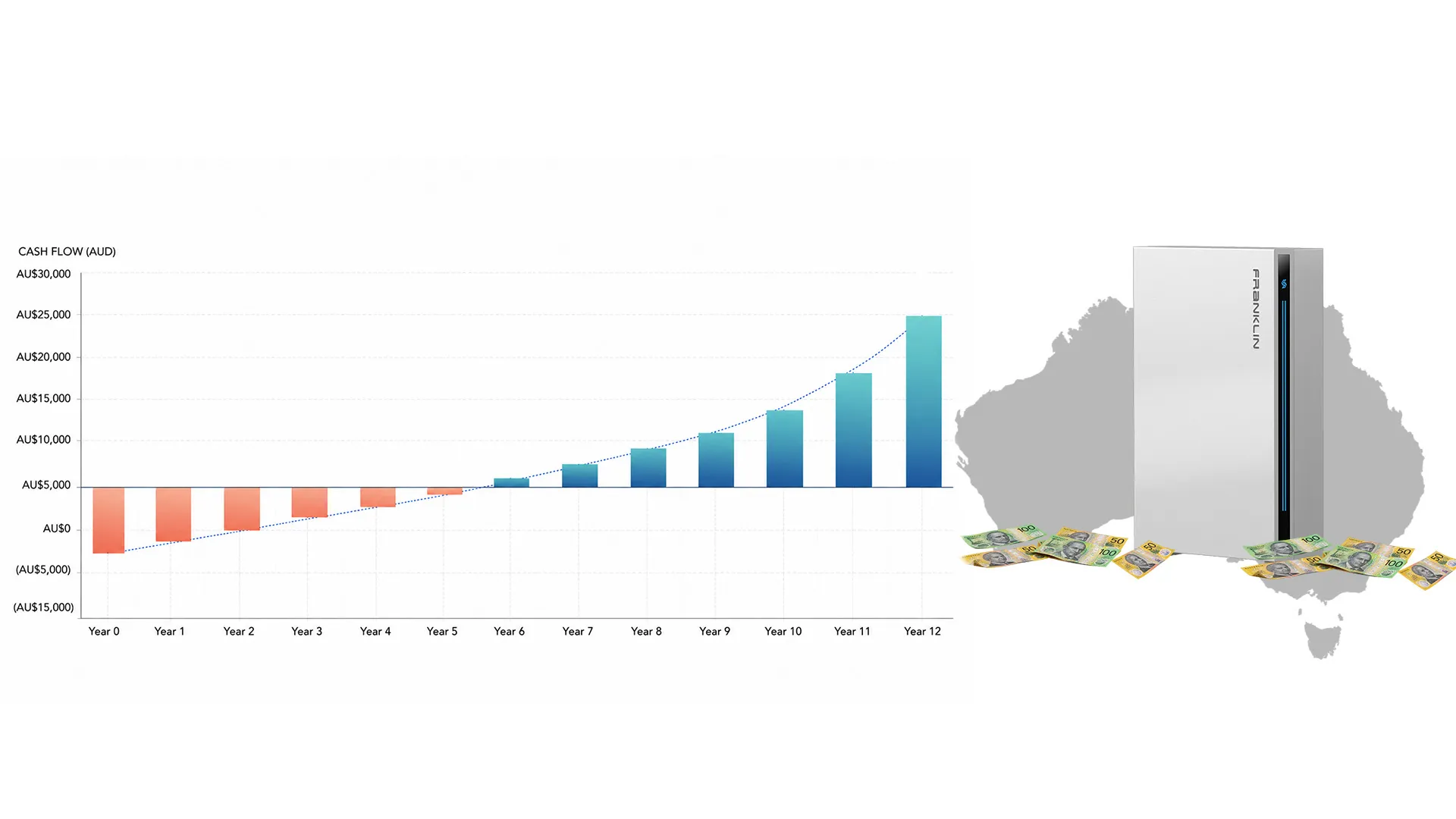
Traditional Time-of-Use (TOU) energy management relies on rigid, scheduled windows that frequently mismatch actual household power habits and fluctuating solar generation. FranklinWH’s Energy Optimiser solves this mismatch by replacing static schedules with real-time, predictive decision-making. Rather than simply reacting to utility clock cycles, it dynamically adjusts battery charging and discharging by continually analysing solar forecasts, load habits, real-time rate structures, and battery SOC to maximise overall household savings.
The Limitations of Time-of-Use (TOU) Optimisation Strategies
Traditional Home Energy Management Systems (HEMS) with TOU strategies typically tie battery charge and discharge windows strictly to grid price peaks and valleys: charging from the grid or excess solar during off-peak hours, and discharging during peak hours to offset high-cost electricity. While straightforward, this logic has two structural flaws.
Household load curves do not naturally align with retailer price windows. During peak tariff periods, a household's actual electricity consumption may be far lower than expected. For instance, a home consuming 15 kWh daily might only use 3 kWh during peak hours, with the remaining 12 kWh spread across other times. The battery has very little to offset when peak rates arrive, drastically compressing arbitrage potential.
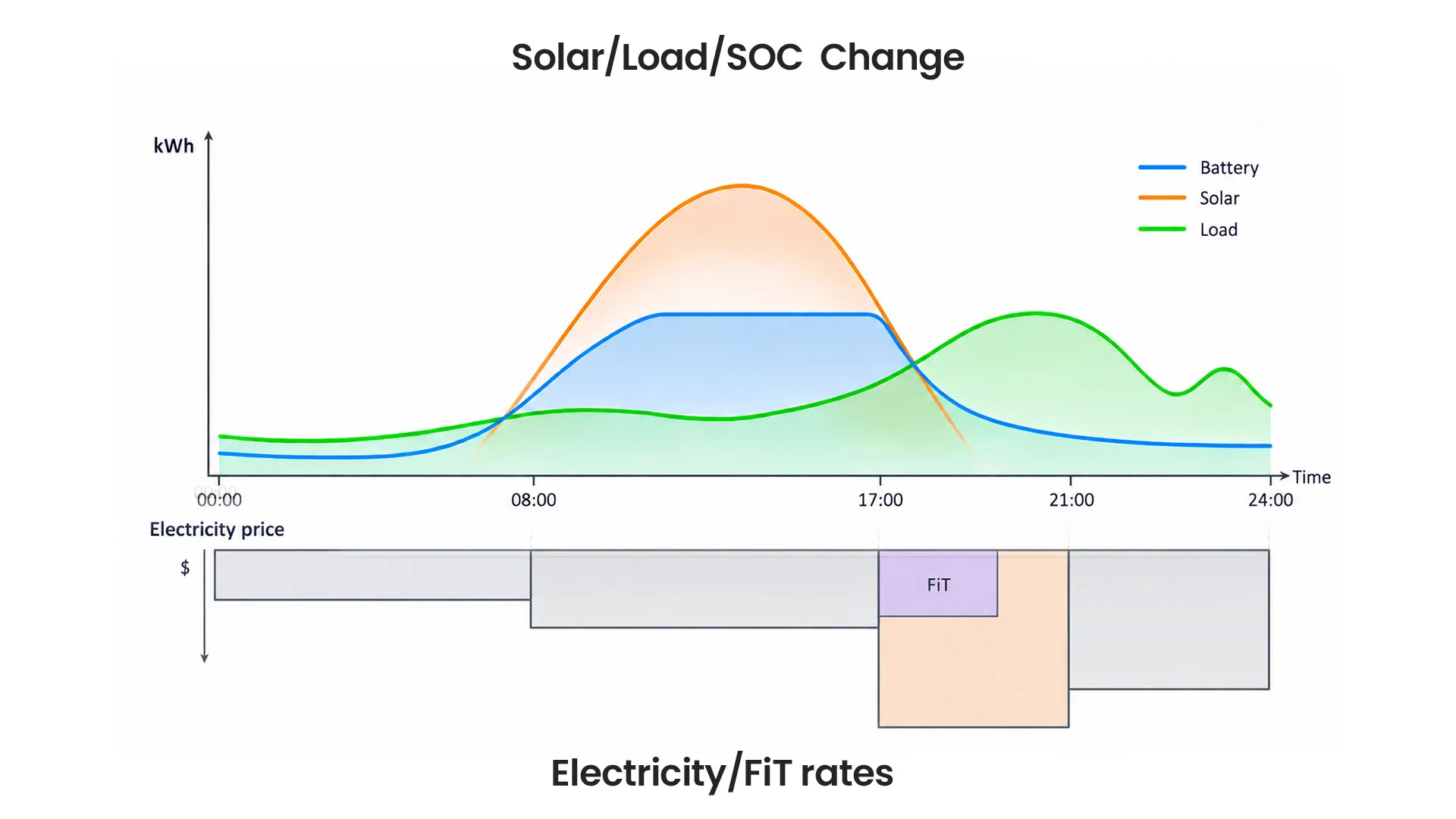
Solar conditions vary significantly by household. A home with a 10 kW system and abundant sunshine may generate far more power than its load demands during the day. Fixed TOU strategies often max out the battery early in the morning before solar generation peaks, forcing the system into standby mode and wasting hours of subsequent surplus solar energy. Once fully charged, the battery holds energy till peak electricity hours, artificially depressing the self-consumption rate.
The core contradiction is this: TOU optimisation is driven by grid price windows rather than actual household use patterns. When a home's consumption habits, solar generation, and battery status do not match rigid schedules, the system fails to capture its full economic potential.
How Energy Optimiser Works
The Energy Optimiser replaces rigid time windows with predictive, dynamic decision-making. Its inputs include solar generation forecasts, weather forecasts, historical household consumption patterns, real-time tariff structures, current State of Charge (SOC), and backup reserve limits. Its output is a rolling charge/discharge strategy that updates continuously as conditions change.
The fundamental difference lies in their questions:
- TOU asks: "What price window is it right now?", and executes a preset action accordingly.
- The Energy Optimiser asks: "Given the current solar forecast, weather forecast, load forecast, and SOC, what is the optimal action for today?"
This means the battery's role extends far beyond simple peak shaving. When solar is abundant, the Energy Optimiser prioritises self-generated solar charging before allocating battery energy from highest to lowest tariff periods. When the sun is unavailable, it leverages price spreads between the lowest tariff and every higher rate tier rather than a binary peak-vs-off-peak split. Under intermittent sunlight, it blends solar maximisation with multi-tier arbitrage. Battery energy is allocated based on the tariff ranking of each load period, rather than whether a rigid peak window has begun.
Three Scenarios Compared: One Home, Different Strategies
Consider a household with a 15 kWh aPower battery, 5 kW output power, and an 18 kWh daily load.
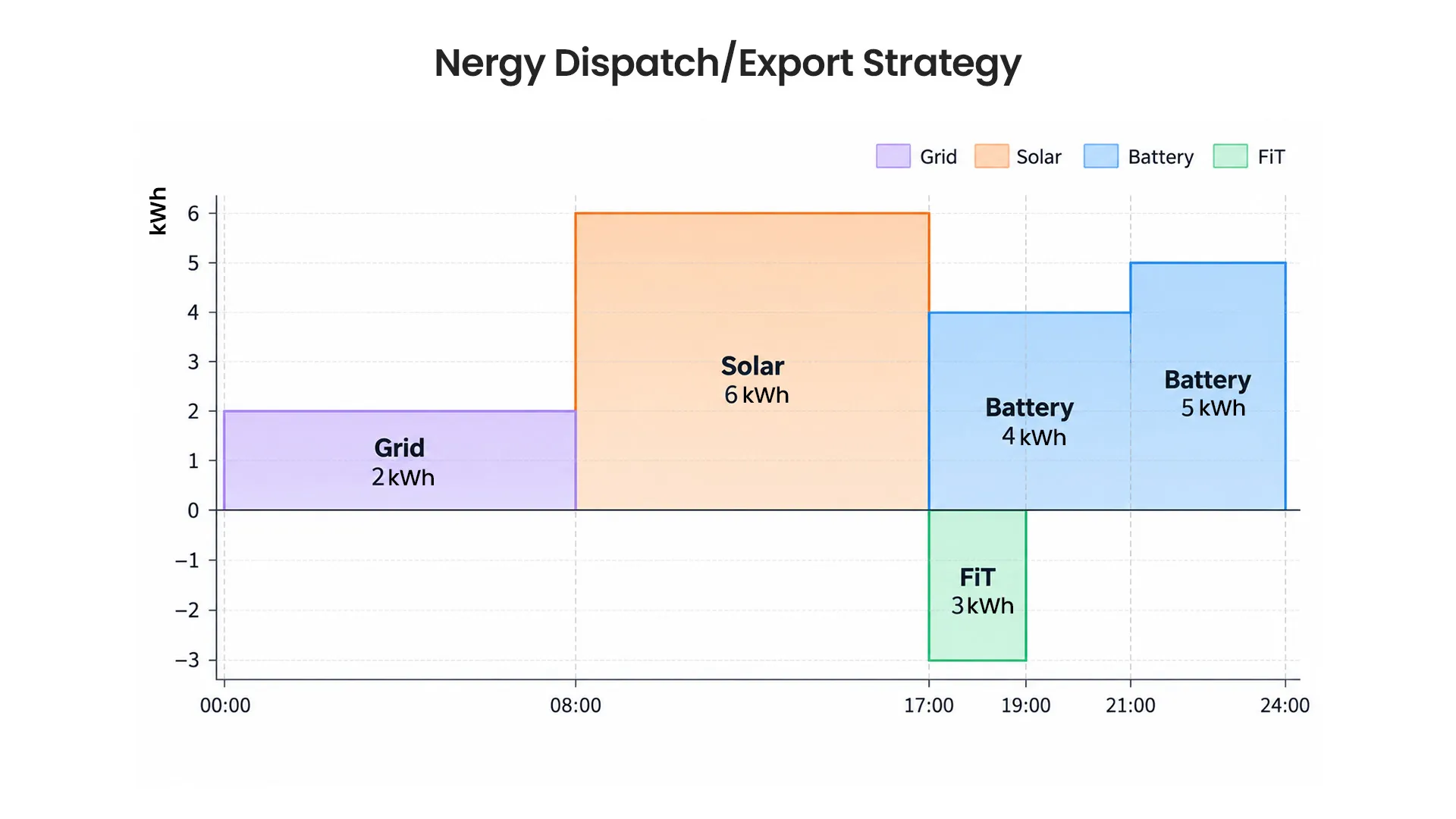
- Peak Rate: 17:00–21:00 (4 kWh)
- Shoulder/Secondary Peak: 21:00–24:00 (5 kWh)
- Daytime Low/Solar Rate: 8:00–17:00 (6 kWh)
- Solar Feed-in Tariff (FiT): Daytime Rate < Peak FiT < Secondary Peak
- Cheapest/Midnight Rate: 0:00–8:00 (3 kWh)
- Reserve SOC: 20% | Initial SOC at 0:00: 20%
Scenario 1: Sunny & Abundant Solar
A TOU strategy would likely charge the battery to full capacity early in the morning and enter standby, wasting afternoon surplus generation.
Energy Optimiser avoids grid charging at midnight, instead allowing the system to maintain the initial 20% SOC reserved for power security. Once the sun rises, self-generated solar fully powers the daytime load (6 kWh) and fills the battery to 100%. During the 17:00–21:00 peak window, the battery discharges 4 kWh to offset high-cost grid electricity. During the 21:00–24:00 shoulder period, it continues discharging 5 kWh to cover the secondary peak. The remaining 3 kWh of usable battery energy is exported back to the grid to capture the favourable evening feed-in tariff. Battery energy flows strategically to the highest-value opportunities rather than stopping at a single peak window.
Scenario 2: Rainy & No Solar
The Energy Optimiser begins charging the battery to 100% at midnight using the lowest off-peak grid rate. Deducting the 20% reserve threshold leaves 12 kWh of usable capacity out of the total 15 kWh.
The system prioritises allocating 4 kWh to the peak window and 5 kWh to the secondary peak window, while exporting the remaining 3 kWh entirely back to the grid during optimal feed-in windows. Daytime loads (6 kWh) are supplied directly by the grid, while midnight loads (3 kWh) pull directly from the grid at the lowest rate. All decisions revolve around one question: "Where does each kWh of battery energy replace the most expensive grid electricity?"
Scenario 3: Intermittent Sun (Solar Covers Only 4 kWh)
The Energy Optimizer still fully charges the battery during the midnight off-peak window, reserving 4 kWh for peak hours and 5 kWh for secondary peak hours, with the remaining 3 kWh designated entirely for grid export.
For the 6 kWh daytime load, 4 kWh is powered directly by real-time solar generation, while the remaining 2 kWh is supplemented by grid power. Solar utilisation and multi-tier grid arbitrage run in parallel rather than as an either-or choice.
If the energy provider does not offer a feed-in tariff or if the export rate is zero, once solar generation falls short during the day, the battery will redirect its remaining 3 kWh surplus, after fulfilling peak and secondary peak requirements, to cover the daytime low-rate period to make up for the solar deficit.
Five Principles for Maximising Economic Value
From these scenarios, we can distill the core decision-making principles of the Energy optimiser:
- Solar-First Priority: When sunlight is available, self-generated solar power meets local loads first, with any surplus used for charging to minimise grid dependency.
- Multi-Tier Arbitrage: When solar is unavailable, the system uses the lowest off-peak charging cost as a baseline, comparing it tier-by-tier against higher rates to capture value wherever a positive price spread exists.
- Strategy Synergy: Maximising solar self-consumption and multi-tier grid arbitrage to run concurrently as a unified optimisation strategy rather than mutually exclusive choices.
- Rate-Ranked Battery Allocation: Once the battery is full (or nearing capacity), discharge quotas are distributed according to the electricity price of each load period from highest to lowest, covering all profitable windows rather than a single peak block.
- Sell High: If peak feed-in tariffs (FiT) exceed the retail purchase price of a given load period, surplus battery capacity is prioritised for grid export to capture maximum financial revenue.
Complementary Features
Beyond core dispatch and export optimisation, the Energy Optimiser incorporates automated features designed to streamline setup and improve battery heating energy efficiency:
- Smart Utility Bill Recognition: By scanning or uploading paper or digital bills, the system automatically recognises the tariff structure and completes configurations without manual entry. When seasonal shifts or rate changes alter utility pricing, homeowners can easily update with a simple paper scan or PDF upload, preventing planning drift caused by outdated rate data.
- Optimised Battery Thermal Management: In cold environments, the system factors in ambient temperature, scheduled charging and discharging times, real-time tariffs, and solar/load forecasts to determine optimal heating windows, duration, and power sources (solar vs. grid). This ensures the battery reaches peak operating temperature for ultimate safety during operation while keeping heating costs as low as possible.

Conclusion
As electricity tariffs grow more granular and household energy profiles more varied, the gap of economics between fixed schedules and dynamic optimisation is likely to widen. The FranklinWH Energy Optimiser is built exactly for this evolving landscape: not a preset routine, but a system that adapts based on changing conditions and keeps asking what the next best action is to maximise potential value.
